

Commercial Mortgage Explained: Complete Guide for 2025
More than $2 trillion in commercial mortgage debt is held by businesses across North America. Securing the right financing for your real estate project can shape the success or failure of your company’s growth plans. Understanding how commercial mortgage loans work, who qualifies, and what risks to watch for gives you an edge before you sign on the dotted line.
Table of Contents
- What Is A Commercial Mortgage Loan?
- Major Types Of Commercial Mortgages
- Key Features And How They Work
- Eligibility Criteria And Application Process
- Risks, Costs, And Common Pitfalls
Key Takeaways
| Point | Details |
|---|---|
| Commercial Mortgages Defined | A commercial mortgage is a loan secured by income-generating properties, distinguishing it from residential mortgages in terms of purpose and requirements. |
| Types of Commercial Mortgages | Major types include traditional, conduit, and government agency-backed loans, each catering to different borrower needs and risk profiles. |
| Eligibility and Application | Borrowers must meet specific financial health criteria and property specifications, with a thorough application process critical for approval. |
| Risks and Financial Considerations | Key risks involve market fluctuations and financial miscalculations, making careful planning and professional guidance essential to investment success. |
What Is a Commercial Mortgage Loan?
A commercial mortgage is a specialized lending instrument designed to help businesses acquire, develop, or refinance income-generating real estate properties. According to Wikipedia, these loans are “secured by commercial property, such as an office building, shopping center, or industrial warehouse.”
Unlike residential mortgages, commercial mortgages serve a broader strategic purpose for businesses. National Association of Insurance Commissioners describes these loans as “essentially a private bond transaction between an insurance company and a borrower, secured by a direct claim on a commercial real estate asset.”
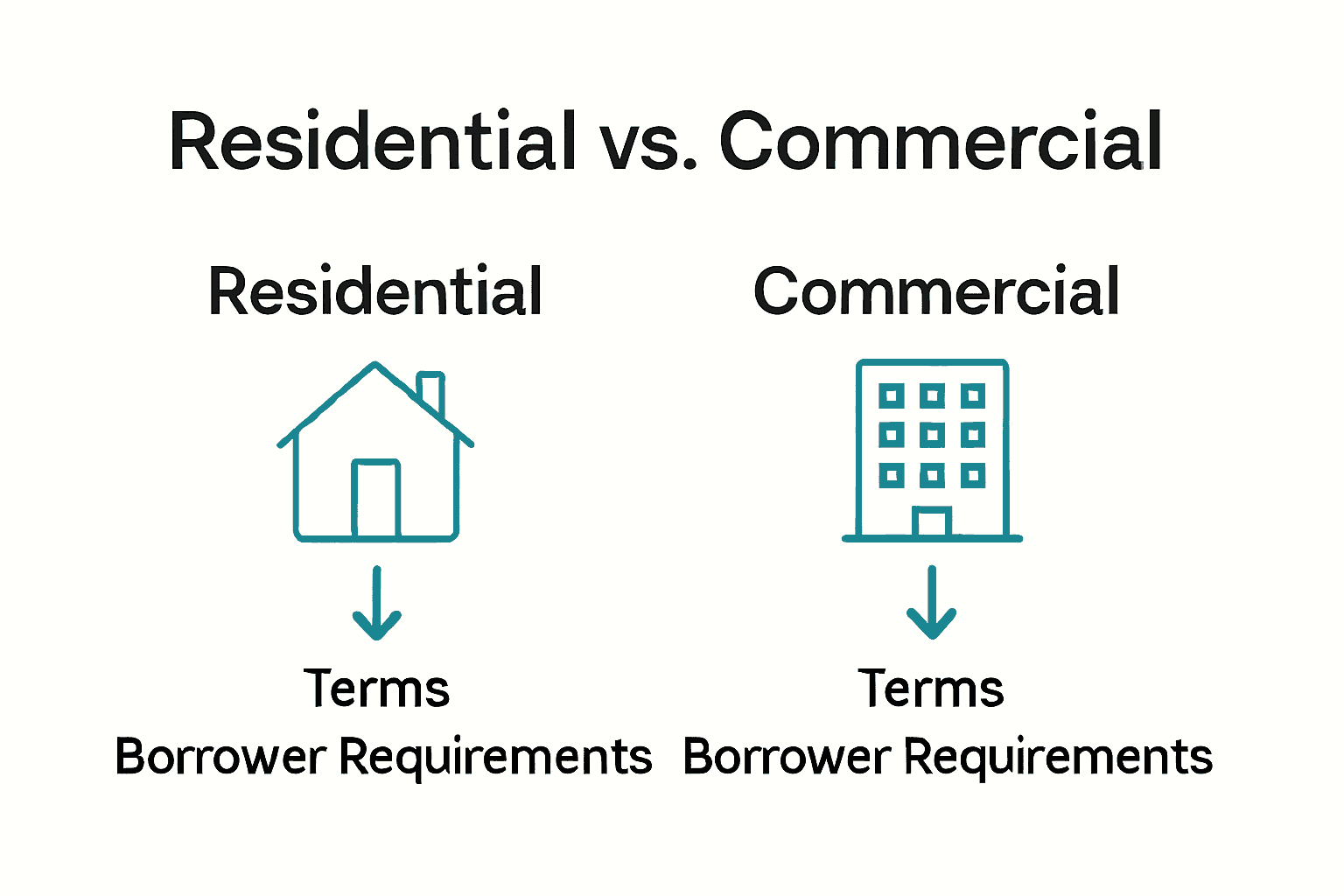
Commercial mortgages typically involve several unique characteristics that distinguish them from standard property loans:
- Loan terms ranging from 5-25 years
- Interest rates often higher than residential mortgages
- Require comprehensive property and business financial documentation
- Loan amounts frequently between $200,000 and several million dollars
- Based on the property’s potential income generation, not just borrower’s credit
Businesses use commercial mortgages for diverse objectives, including purchasing new facilities, refinancing existing properties, funding expansions, or leveraging real estate assets for working capital. Whether you’re a small business owner looking to own your first commercial space or an established corporation seeking strategic property investment, understanding these loans is crucial for smart financial planning.
When exploring alternative commercial financing options, it’s essential to consider how a commercial mortgage might align with your specific business goals and financial strategy.
Major Types of Commercial Mortgages
Commercial mortgages are diverse financial instruments designed to meet various business real estate needs. RBC Global Asset Management identifies several primary categories, including CMHC-insured, conventional, conventional plus, and high yield mortgages, each offering distinct leverage and risk profiles.
Wikipedia further categorizes these loans into three primary types: traditional commercial mortgages, conduit loans, and government agency-backed loans. Each type serves different borrower requirements and property classifications.

Here’s a detailed breakdown of commercial mortgage types:
- Traditional Commercial Mortgages
- Directly provided by banks and financial institutions
- Fixed or variable interest rates
- Typical loan terms between 5-25 years
- Require substantial documentation and property evaluation
- Conduit Loans
- Securitized mortgages sold to investors
- Often have standardized underwriting criteria
- Generally lower interest rates
- Less flexible terms compared to traditional loans
- Government Agency-Backed Loans
- Supported by entities like SBA or CMHC
- Lower down payment requirements
- More lenient qualification standards
- Designed to support small business growth
For small business operators, understanding these mortgage types is crucial for making informed financing decisions that align with specific business objectives and financial capabilities. Each loan type offers unique advantages, and selecting the right commercial mortgage depends on your property type, business stage, and long-term financial strategy.
Key Features and How They Work
Commercial mortgages are complex financial products with nuanced structural elements. According to Wikipedia, they encompass critical features including loan amount, interest rate, term length, amortization schedule, and prepayment flexibility. These loans are distinguished by extensive underwriting and thorough due diligence processes that protect both lender and borrower.
National Association of Insurance Commissioners highlights that commercial mortgages involve intricate financial analysis focusing on key performance metrics such as debt service coverage ratio (DSCR), loan-to-value ratio (LTV), and property-generated cash flow.
Key features of commercial mortgages include:
- Loan Amount: Typically ranges from $200,000 to several million dollars
- Interest Rates: Often higher than residential mortgages
- Term Length: Usually between 5-25 years
- Amortization: Frequently longer than the actual loan term
- Qualification Criteria: Based on property income potential, not just borrower credit
The mechanics of a commercial mortgage work differently from residential loans. Lenders evaluate the property’s potential income, market value, and the borrower’s business financials. This means your commercial property must demonstrate strong revenue-generating capacity to qualify.
For tailored financial solutions that match your specific business needs, understanding these intricate features is crucial. Each commercial mortgage is essentially a custom-designed financial instrument tailored to your unique real estate investment strategy.
Eligibility Criteria and Application Process
Commercial mortgage eligibility requires a comprehensive evaluation of both the borrower and the property. Federal Reserve emphasizes that lenders must maintain a clearly articulated credit policy with sound loan administration and prudent credit underwriting standards.
Wikipedia highlights that the underwriting process involves an extensive financial review, including third-party assessments such as property appraisals and environmental evaluations. This thorough examination ensures the property represents a viable and low-risk investment for the lender.
Key eligibility requirements typically include:
-
Business Financial Health
- Minimum 2-3 years of operational history
- Strong credit score (usually 680 or higher)
- Positive cash flow and profitability
- Debt service coverage ratio (DSCR) of 1.25 or better
-
Property Specifications
- Minimum property value threshold
- Demonstrated income-generating potential
- Good physical condition and marketability
- Located in economically stable area
The application process involves multiple critical steps:
- Initial financial document preparation
- Property valuation and assessment
- Comprehensive business plan submission
- Detailed credit and background checks
- Final underwriting and approval
For self-employed professionals navigating this complex process, understanding these criteria can significantly improve your chances of securing a commercial mortgage. Preparation, thorough documentation, and a strong financial profile are your best allies in this journey.
Risks, Costs, and Common Pitfalls
Commercial mortgages come with a complex landscape of potential challenges that borrowers must carefully navigate. Wikipedia outlines significant risks including property devaluation, borrower default, and unpredictable market fluctuations that can dramatically impact investment stability.
National Association of Insurance Commissioners warns that common pitfalls frequently stem from inadequate due diligence, overestimating property values, and insufficient assessment of borrower creditworthiness. These critical missteps can transform a promising investment into a financial liability.
Key risks and potential cost factors include:
-
Financial Risks
- Market value depreciation
- Interest rate volatility
- Unexpected property maintenance expenses
- Economic downturns affecting property income
-
Cost Considerations
- Higher interest rates (typically 1-3% above residential rates)
- Substantial closing costs
- Appraisal and environmental assessment fees
- Potential prepayment penalties
Most common pitfalls emerge from:
- Inadequate financial planning
- Overestimating property income potential
- Underestimating ongoing operational expenses
- Failing to maintain sufficient cash reserves
- Neglecting comprehensive market research
For tailored financial solutions that mitigate these risks, professional guidance becomes crucial. Understanding these potential challenges allows investors to develop robust strategies that protect their commercial real estate investments.
Simplify Your Commercial Mortgage Journey with Expert Support
Navigating the complex world of commercial mortgages can feel overwhelming. The detailed terms like loan-to-value ratio, debt service coverage, and the extensive qualification process highlighted in the Commercial Mortgage Explained guide often leave business owners uncertain and concerned about making the right financial choice. At Craigburn Capital, we understand how stressful it is to face high interest rates, rigorous underwriting, and the fear of costly pitfalls.
Take control of your commercial financing today with trusted guidance from our experienced mortgage brokers. Whether you are a small business operator or self-employed professional, discover tailored financial solutions that fit your unique goals and property needs. Visit our website at Craigburn Capital now and connect directly with experts who can help you unlock exclusive rates and craft a mortgage plan designed to protect your investment and future. Don’t wait until challenges arise. Start your application process with confidence and clarity today.
Frequently Asked Questions
What is a commercial mortgage?
A commercial mortgage is a loan specifically designed for businesses to acquire, develop, or refinance income-generating real estate properties, such as office buildings or shopping centers.
What are the main types of commercial mortgages?
The main types of commercial mortgages include traditional commercial mortgages, conduit loans, and government agency-backed loans, each with distinct features and eligibility criteria.
What are the key eligibility requirements for a commercial mortgage?
Eligibility typically requires a minimum operational history of 2-3 years, a strong credit score (usually 680 or higher), positive cash flow, and a debt service coverage ratio (DSCR) of 1.25 or better.
What risks should borrowers be aware of when considering a commercial mortgage?
Borrowers should be mindful of financial risks such as market value depreciation, interest rate volatility, and unexpected property maintenance expenses, along with costs like higher interest rates and substantial closing costs.

