
How do construction mortgage draws work in Canada
Construction mortgage draws work like this in Canada: the mortgage pays out in stages, and each draw reimburses work that has already been done. The lender does not hand over the full amount on day one, so someone has to fund each stage until the next draw arrives.
That surprises a lot of builders, developers and owners. They hear “approved for $2 million” and picture $2 million sitting in the account. What actually arrives is a schedule.
How do construction mortgage draws work in Canada?
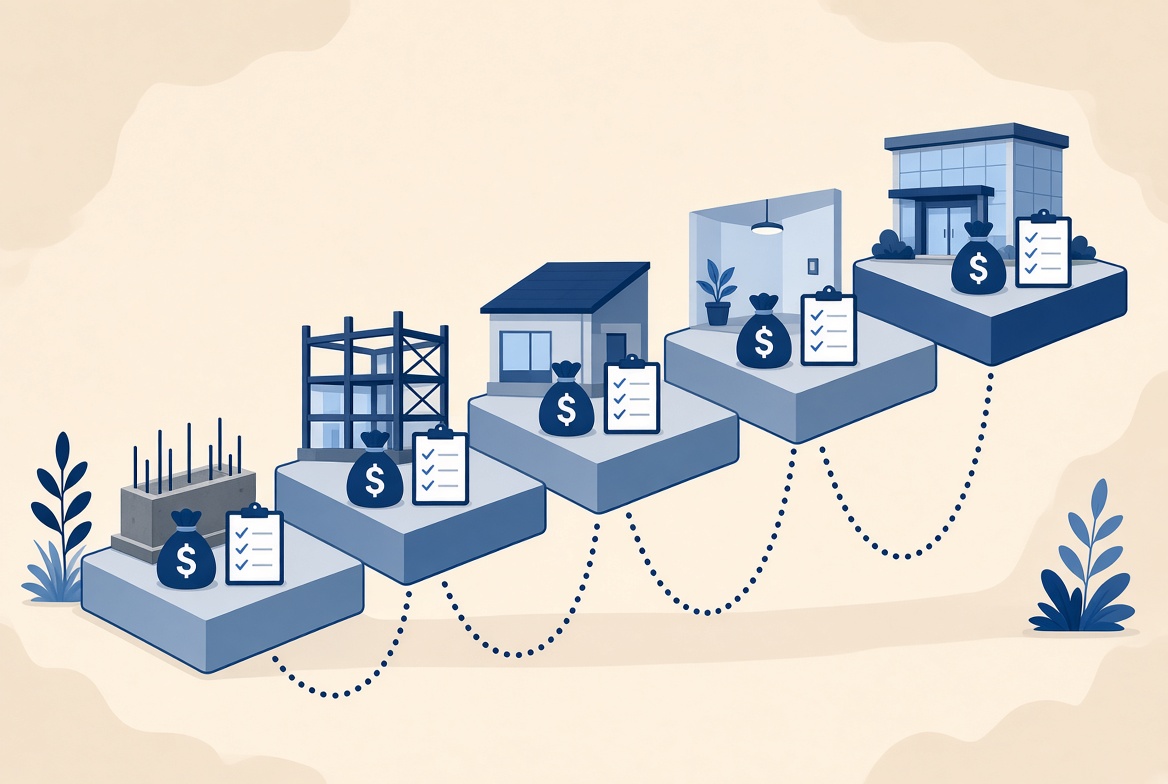
The mortgage is approved for a total amount, but the money is released as the building progresses. Most lenders follow a pattern like this:
- Your equity goes in first. Many lenders want the borrower’s own money spent on the project before theirs.
- A stage gets built. Foundation, framing, roof and lock-up, interior finishes, completion.
- You submit a draw request. It usually comes with invoices and supporting paperwork.
- The lender confirms the work. An inspector, often an independent one, checks that the stage is really done.
- The lender releases the draw, less any holdback, and the cycle repeats for the next stage.
The details differ from lender to lender, so get the draw process in writing before you sign.
Why doesn’t the lender release the whole amount at once?
Because the half-built building is the lender’s security, and a half-built building is worth less than the money that went into it. Paying out in stages keeps the mortgage matched to the value that actually exists on the site. If a project stalls at 60%, the lender is holding a partly finished building and has advanced only what that building supports, not the whole amount.
There is a second reason. Construction lien legislation, such as Nova Scotia’s Builders’ Lien Act, requires owners to hold back a percentage of what they pay contractors, generally 10%, until the work is finished and the lien period has passed. Lenders build that into the draw schedule, so a draw does not always equal the full invoice. The rules vary by province and by project, so confirm the details with your lawyer.
Where does the cash-flow gap come from?
Draws reimburse. They do not pre-fund. Say framing costs $400,000, and the draw arrives about ten business days after the request. That is an example only, and real timing depends on the lender and the inspection. Someone is still paying the crew and the lumber yard for those two weeks, plus whatever holdback has not been released yet. Repeat that across five stages and you have the part of a construction budget that people forget to plan for.
A few other costs usually come along with it:
- Inspection fees. Many lenders charge for each draw inspection.
- Interest on advanced funds. On a progressive-draw mortgage, interest is generally charged only on the money that has been advanced, so the monthly cost grows as the build goes up.
- Cost overruns. Lenders typically want the mortgage to stay “in balance,” meaning the remaining mortgage covers the remaining cost. If the budget rises, you may need to add equity before the next draw is released.
How do you plan around a draw schedule?
- Agree the stages and amounts with the lender before closing, not halfway through the build.
- Match the builder’s payment terms to the schedule, so you are not promising payment faster than draws arrive.
- Keep a cash cushion for the gap between draws and the holdback.
- Submit complete draw requests. Missing invoices or paperwork are the most common reason a draw is delayed.
- Book inspections early, so the next draw is not waiting on a calendar.
Who builds the draw schedule for me?
I do, together with my commercial lending partner. You send me one application, and I take your file to the lenders who fit it. Before anything is signed, I lay out how the draws will work: the stages, what each draw needs, how much is held back, and where the cash gap will fall. You see it in plain numbers before the build starts, not on the day a draw is late.
You are not chasing lenders for terms and trying to compare their draw rules. That part is my job. You can read how I handle larger projects on my commercial financing page, and how private lending works when a build or renovation needs a faster or more flexible structure.

Frequently Asked Questions
How do construction mortgage draws work in Canada?
The lender approves a total mortgage amount but releases the money in stages as the work is completed. For each stage you submit a draw request, the lender confirms the work is done, and then it releases that portion, usually less a holdback. The details vary by lender, so get the process in writing.
Why doesn’t the lender release the whole amount at once?
The partly built property is the lender’s security, so the lender releases funds as the building’s value grows. Paying out in stages also lets the lender account for lien holdbacks and check that the money is going into the project.
How long does it take to get a construction mortgage draw?
It depends on the lender, the inspection and how complete the paperwork is. Allow several business days, sometimes longer, from the draw request to the funds arriving, and plan your cash flow around that gap.
Do I need my own money before the first draw?
Often yes. Many lenders want the borrower’s equity put into the project first, and you will usually need cash on hand to cover the gaps between draws and any holdback. Confirm the requirements with the lender before you commit.
This post is general information, not legal or financial advice. Lender requirements, holdback rules and timelines vary by lender, province and project, and all financing is subject to lender approval.
Planning a build and want the draw schedule laid out before you start? Send me your application and I will walk you through it.
I look forward to hearing from you in regard to your mortgage needs.
902-465-5533. I answer.
Patrick
p.s. Ready to start? Apply here: https://craigburn-capital.mtg-app.com
p.s. Prefer to talk it through first? Book a time with me here: Schedule a call
p.s. FSRA Principal Broker License #M23006699, Craigburn Capital. NS Brokerage 2026-3000179, NS Broker 2026-3000180.
p.s. Get the Craigburn mortgage app: https://craigburn-capital.mtg-app.com
Patrick Sawler is a mortgage broker and owner of Craigburn Capital, licensed in Nova Scotia and Ontario, with private financing available in New Brunswick and PEI. He answers his phone. Service aussi disponible en français.
Call 902-465-5533 or start your application today.