
Tag Archive for: mortgage excellence

Roll the dice

Getting Approved Isn’t Luck. It’s a Checklist.

Most people treat commercial mortgage approval like a roll of the dice — you submit your application, hold your breath, and hope for the best. It isn’t luck. Every underwriter who reviews your file is working through the same short list of boxes, in roughly the same order, every single time. Know the checklist, and the outcome stops feeling random.

Here’s exactly what’s being checked — and how to make sure every box comes back green before you submit.

Box 1: Debt Service Coverage Ratio (DSCR)

The underwriter’s first question is simple: does the property’s income actually cover the mortgage payment? Most lenders want to see a DSCR of 1.25 or higher — meaning the property generates 25% more income than what’s needed to service the debt.

Here’s what that looks like in real numbers. Say you’re buying a 4-unit property in Halifax generating $48,000 in annual net operating income. Your proposed mortgage payment is $32,000 a year. That’s a DSCR of 1.50 — comfortably above the 1.25 threshold, and a deal most lenders would be glad to underwrite. Drop the rents to $38,000 against that same $32,000 payment, and your DSCR falls to 1.19 — under the line, and now the deal needs a bigger down payment, a lower purchase price, or it waits.

Before you submit: run your own DSCR calculation using realistic (not optimistic) rent projections. If it’s under 1.25, either the price needs to come down, the down payment needs to go up, or the deal needs to wait.

Box 2: Loan-to-Value (LTV) Ratio

The second box is how much you’re borrowing relative to what the property’s worth. Lenders typically want 75% or lower, though this varies by property type — multi-family with CMHC insurance can go up to 85%, while special-purpose properties may cap out at 50-65%.

Using the same 4-unit example: if the property appraises at $900,000 and you’re requesting a $650,000 loan, that’s a 72% LTV — inside the typical 75% ceiling. Push the loan to $700,000 on that same appraisal and you’re at 78%, which pushes you outside most conventional lenders’ comfort zone and into a smaller pool of options.

Before you submit: know your LTV cold, and know which bucket your property type falls into. Walking in with the wrong expectation here is one of the most common reasons deals stall.

Box 3: Financial Statements

Underwriters want to see the real financial picture — personal and business income statements, balance sheets, and two to three years of tax returns. This isn’t a formality; it’s how they verify everything else in your application actually holds up.

Before you submit: have these organized and current before you apply, not scrambled together after a lender asks. A clean, complete package the first time signals you’re a low-friction borrower.

Box 4: Property Viability

The underwriter isn’t just assessing you — they’re assessing the property. Is it in a location with real demand? Does it meet zoning and regulatory requirements? Would it hold its value if you needed to exit?

Before you submit: have comparable sales, a realistic rent roll, and confirmation the property is zoned for its intended use.

Box 5: Your Experience

If this is your first commercial property, that’s not disqualifying — but it is a checked box either way. Lenders factor in whether you (or a partner) have managed similar properties or businesses before.

Before you submit: if you’re a first-timer, consider bringing in a co-signer or property manager with a track record. It directly offsets this box.

Box 6: Down Payment Strength

Most commercial mortgages require 20-30% down. More than the minimum does real work for you — it lowers your LTV, often improves your rate, and reduces the debt load the lender is underwriting against.

Before you submit: know that every extra percentage point down is negotiating leverage, not just a bigger check.

Box 7: Your Total Portfolio Exposure

This one surprises a lot of first-time commercial buyers. Lenders don’t just look at the single property in front of them — they look at your total exposure across everything you already own. If you’re carrying three other mortgages, even performing ones, that changes how much additional risk a lender is willing to take on with you specifically.

Before you submit: have a clear summary of your existing portfolio ready — every property, every mortgage balance, every income stream tied to them. If you’re actively expanding, this is a box worth discussing with your broker before it becomes a surprise mid-application.

Your LTV and DSCR are two of the seven boxes above — but they’re also the two numbers worth understanding in more depth before you apply anywhere. I’ve broken down how commercial LTV actually works, and built a free Cap Rate & Deal Analyzer that runs your cap rate and DSCR side by side — worth running your numbers through before you submit.

When the Checklist Doesn’t Line Up

If one or two boxes aren’t where they need to be, that doesn’t mean the deal is dead — it means you go to a different door.

Credit unions often have more flexibility than the big banks on income verification and property type, while still operating under regulated, conventional terms.

Monoline lenders — mortgage-only institutions with no branches, working exclusively through brokers — sometimes offer more competitive rates and more flexible underwriting than traditional banks, precisely because mortgages are their entire business.

Private lenders evaluate the same boxes but weigh them differently — a DSCR or LTV that a bank rejects outright might be perfectly financeable through a private bridge loan, at a higher rate, as a short-term solution while you strengthen your position for conventional refinancing later.

This is where working with a broker changes the outcome — not because of luck, but because I know which lender’s checklist your file actually fits.

Frequently Asked Questions

What DSCR do I need for a commercial mortgage in Canada?
Most conventional lenders want a minimum DSCR of 1.25, meaning the property’s income covers the mortgage payment with 25% to spare. Some alternative and private lenders will consider deals closer to 1.0-1.15, typically at a higher rate.

What’s a good LTV for commercial financing?
75% or lower is the general benchmark for conventional lenders, though CMHC-insured multi-family properties can go up to 85%. Special-purpose properties (like self-storage or single-tenant industrial) are typically capped lower, around 50-65%.

Can I get approved for a commercial mortgage with no prior experience?
Yes — lack of experience isn’t disqualifying, but it is a factor lenders weigh. Bringing in an experienced co-signer or a property management partner can offset this and strengthen your application.

Why Work With Me

I don’t submit your file and hope. I go through this exact checklist with you before we ever approach a lender, so we’re not finding out about a weak box after a decline — we’re fixing it in advance, or steering to the lender whose criteria already fits your numbers.

If you’re preparing for a commercial purchase or refinance, let’s run your file against this checklist together before you apply anywhere.

Patrick

p.s- You can click on this link to start the process whenever you are ready. Schedule your meeting with me here.

p.s.s- I should tell you that I am licensed in Nova Scotia Brokerage (2025-3000179) Broker (2025-3000180), Ontario(M18001555).

p.s.s.s You can download my new mortgage app here

Retail vs Industrial Real Estate

Retail vs. Industrial: Where to Invest in Commercial Real Estate in 2026

Investing in commercial real estate continues to be a strong wealth-building strategy, but choosing the right sector is crucial for success. As we move through 2025, two dominant sectors—retail and industrial—present unique opportunities and challenges for investors. With evolving consumer behaviors, shifting market dynamics, and macroeconomic factors influencing demand, determining the best investment path requires careful analysis.

Retail Real Estate: A Sector in Transition

The retail sector has faced substantial transformation over the past decade, primarily driven by e-commerce growth and changing shopping habits. However, despite initial concerns about the “death of retail,” this sector remains resilient and continues to evolve in ways that create investment opportunities.

1. The Resurgence of Experiential and Service-Based Retail

While traditional brick-and-mortar stores have faced headwinds, experiential retail—such as entertainment centers, restaurants, fitness studios, and service-based businesses—has gained traction. Consumers are prioritizing experiences over products, making these spaces highly attractive for investors.

2. The Strength of Essential Retail

Grocery stores, pharmacies, medical offices, and discount retailers have remained stable performers. These tenants provide consistent foot traffic and long-term lease stability, making them a lower-risk investment option within the retail sector.

3. The Role of Mixed-Use Developments

Developers are incorporating retail spaces into mixed-use developments that combine residential, office, and entertainment components. Investing in retail units within well-planned mixed-use projects can provide high occupancy rates and increased property value over time.

4. Challenges in the Retail Sector

Retail investments are not without risks. The continued dominance of online shopping means some retail spaces, especially in secondary markets, may struggle with vacancies. Additionally, fluctuating consumer spending due to economic conditions can impact retailers’ profitability and their ability to pay rent.

Industrial Real Estate: The Powerhouse of Commercial Real Estate

The industrial sector has been one of the best-performing asset classes in recent years, fueled by e-commerce growth, supply chain demands, and technological advancements.

1. E-Commerce and Logistics Boom

Online shopping continues to drive demand for warehouse and distribution centers. With companies prioritizing last-mile delivery and optimizing supply chains, industrial properties in key transportation hubs remain a hot commodity for investors.

2. The Growth of Manufacturing and Production Facilities

Domestic manufacturing is experiencing a resurgence as companies seek to reduce reliance on overseas production. This has increased demand for industrial properties that can house production facilities, specialized manufacturing, and research and development centers.

3. The Rise of Multi-Tenant Industrial Properties

Smaller industrial spaces catering to multiple tenants, such as e-commerce startups, small manufacturers, and third-party logistics providers, are gaining popularity. These properties provide diversification and reduce risk by not relying on a single large tenant.

4. Challenges in the Industrial Sector

While industrial real estate remains strong, high acquisition costs and rising interest rates pose financing challenges. Additionally, zoning regulations and limited land availability in prime markets can restrict new developments, potentially driving up property prices and making entry more competitive for investors.

What the Numbers Actually Look Like

Here in Atlantic Canada, the gap between these two sectors shows up clearly in cap rates and vacancy. Well-located industrial properties — warehouse and distribution space near the Halifax port or along the 102/103 corridors — have been trading in the 6-7% cap rate range, with vacancy consistently under 3%. Essential retail (grocery-anchored plazas, pharmacy-anchored strips) sits closer to 7-8% cap rate, with vacancy in the 5-8% range depending on tenant mix. Experiential and service retail can swing wider in both directions depending on the specific tenant’s staying power.

The takeaway: industrial’s lower cap rate reflects lower perceived risk and higher demand — you’re paying more for the same dollar of income because the tenant base is considered more stable. Retail’s higher cap rate can mean a better initial yield, but it comes with more tenant-mix risk to underwrite carefully.

Retail vs. Industrial: Which One Is the Better Investment in 2026?

Both retail and industrial real estate have compelling investment potential, but the right choice depends on your investment goals, risk tolerance, and market conditions.

  • Retail may be a better choice if:
    • You are targeting high-traffic locations with strong experiential or service-based retail.
    • You are investing in essential retail tenants with long-term leases.
    • You want to be part of a mixed-use development where retail complements residential and office spaces.
  • Industrial may be the better choice if:
    • You want a high-demand asset class with strong long-term appreciation potential.
    • You prefer lower tenant turnover and stable rental income from logistics and manufacturing tenants.
    • You are willing to navigate zoning and development challenges for a high-reward investment.

How to Secure the Best Financing for Your Investment

Whether you choose retail or industrial real estate, securing the right financing is key to maximizing your returns. Market conditions, interest rates, and lender requirements can vary between sectors, making expert guidance essential.

Why I Am the Ideal Mortgage Broker to Assist You

Financing retail and industrial properties isn’t the same conversation — different lenders favor different sectors, and the underwriting priorities shift depending on tenant type, lease structure, and location. As an experienced commercial mortgage broker, I provide:

  • Sector-Specific Lender Relationships – I know which lenders are actively pursuing industrial deals right now, and which ones remain comfortable with retail despite the sector’s reputation.
  • Realistic Underwriting Guidance – Whether it’s a grocery-anchored plaza or a multi-tenant warehouse, I help you understand what a lender will actually approve before you make an offer.
  • Market Insight – I track cap rates and vacancy trends across both sectors in Atlantic Canada specifically, not just national averages.
  • Two Numbers Worth Knowing Before You Decide – Whichever sector you’re leaning toward, run your loan-to-value and cap rate first. I’ve broken down how commercial LTV actually works, and built a free Cap Rate & Deal Analyzer to help you compare deals side by side.

If you’re weighing retail against industrial for your next investment, let’s talk through the financing side before you commit to either.

I look forward to hearing from you in regard to your mortgage needs.

Patrick

p.s- You can click on this link to start the process whenever you are ready. Schedule your meeting with me here.

p.s.s- I should tell you that I am licensed in Nova Scotia Brokerage (2025-3000179) Broker (2025-3000180), Ontario(M18001555).

p.s.s.s You can download my new mortgage app here
Future of Office space in Canada

The Future of Office Spaces in Canada: Should You Invest?

The commercial real estate landscape in Canada has undergone a major shift in recent years, with office spaces being at the center of this transformation. The rise of remote and hybrid work models, fluctuating demand, and evolving tenant needs have left many investors questioning whether office space remains a viable investment. Despite the challenges, opportunities still exist for those who can adapt to market trends and leverage strategic financing solutions.

The Changing Office Space Landscape in Canada

1. The Hybrid Work Revolution

The pandemic accelerated the adoption of remote and hybrid work models, reducing the overall demand for traditional office spaces. Many companies have downsized their office footprints, opting for flexible workspace solutions that accommodate employee preferences. However, this doesn’t mean the office is obsolete. Instead, it is evolving.

2. The Rise of Flexible and Co-Working Spaces

With companies seeking more adaptable solutions, co-working spaces and flexible office leases have become increasingly popular. Investors looking to enter the office space market can benefit from this trend by investing in properties that can be reconfigured for shared workspaces or short-term leasing arrangements.

3. A Flight to Quality

While some office buildings face higher vacancy rates, Class A office spaces in prime locations continue to attract tenants. Companies are prioritizing high-quality office spaces with modern amenities, sustainable features, and health-conscious designs to entice employees back to the office. Investors focusing on premium office properties may find opportunities in this shift.

4. Suburban vs. Urban Office Demand

Downtown office markets have experienced fluctuating demand as some companies relocate to suburban areas where rents are lower and commuting is more convenient. Suburban office investments, particularly in growing economic hubs, could be a smart move for investors looking to capitalize on changing workforce preferences.

5. Government and Institutional Influence

Government policies and incentives, such as tax breaks and grants for green office buildings, are encouraging investments in sustainable office spaces. Additionally, some large institutions and corporate tenants are making long-term commitments to office leases, signaling stability in certain segments of the market.

Why Office Space Still Holds Investment Potential

Despite challenges, office spaces remain an essential part of the commercial real estate sector. Here’s why investing in office properties can still be a smart move:

1. Long-Term Lease Stability

Office leases tend to be longer-term compared to other commercial real estate sectors, providing investors with stable, predictable income streams. Businesses that require physical space, such as law firms, financial institutions, and tech hubs, continue to seek well-located office properties.

2. Adaptive Reuse Opportunities

Investors can repurpose underutilized office spaces into mixed-use developments, residential units, or hybrid office-retail spaces. Converting office buildings into residential apartments or student housing is becoming a viable investment strategy in cities with housing shortages.

3. Increasing Demand for ESG-Compliant Buildings

Environmental, social, and governance (ESG) factors are driving office space demand. Companies are seeking eco-friendly, energy-efficient buildings to meet corporate sustainability goals. Investing in green-certified office properties can attract high-quality tenants and improve asset value.

4. Lower Acquisition Costs in Certain Markets

Due to the uncertainty surrounding office demand, some office properties are currently available at discounted prices. Investors with a long-term perspective can capitalize on lower acquisition costs and reposition properties to meet future market needs.

5. The Need for Centralized Collaboration Hubs

Even with hybrid work models, businesses still require office spaces for collaboration, meetings, and maintaining company culture. Investing in well-designed, amenity-rich office buildings that cater to these needs can yield strong returns.

What This Looks Like Here in Halifax

The national trends above are playing out locally with real numbers behind them. As of Q2 2026, Halifax’s office vacancy sat at 9.0%, holding steady despite a slowdown in leasing activity — a genuinely tight market by Canadian standards, where a “balanced” market is typically considered around 10%. The flight-to-quality trend isn’t theoretical here either: Class A net asking rents have climbed to $20.04 per square foot, with landlords able to push pricing because limited high-quality supply meets sustained tenant demand.

The takeaway for investors: this isn’t a market flooded with empty towers looking for any tenant. It’s a market where good buildings in the right location are performing well, while older, lower-class stock is where the real repositioning opportunity — and risk — lives.

Key Considerations Before Investing in Office Space

1. Location Matters More Than Ever

Prime locations with strong tenant demand, good transit access, and vibrant surroundings remain resilient. Conducting thorough market research is essential to choosing the right office investment.

2. Flexibility is Key

Future-proof office investments must offer flexibility in design, lease terms, and usage. Buildings with open floor plans, tech-enabled workspaces, and adaptive layouts will have a competitive advantage.

3. Financing the Investment

Interest rates, loan terms, and lender requirements play a crucial role in office space investments. Securing the right financing strategy will determine profitability and long-term success.

Why I Am the Ideal Mortgage Broker to Assist You

Navigating the complexities of commercial office space financing requires expertise and access to the right lending solutions. As an experienced mortgage broker specializing in commercial real estate, I provide:

  • Access to a Wide Range of Lenders – I work with major banks, private lenders, and alternative financing sources to find the best loan options for your investment.
  • Customized Financing Strategies – Whether you’re purchasing, refinancing, or repositioning an office building, I tailor financing solutions to align with your goals.
  • Market Insights and Expert Guidance – With in-depth knowledge of the Canadian commercial real estate market, I help you identify profitable investment opportunities.
  • Streamlined Loan Approval Process – I simplify the mortgage application process, saving you time and ensuring a smooth experience.

If you’re considering investing in office spaces, I’m here to help you secure the right financing to maximize your returns. Contact me today to discuss your commercial mortgage needs and take advantage of the evolving office space market!

I look forward to hearing from you in regard to your mortgage needs.

Patrick

p.s- You can click on this link to start the process whenever you are ready. Schedule your meeting with me here.

p.s.s- I should tell you that I am licensed in Nova Scotia Brokerage (2025-3000179) Broker (2025-3000180), Ontario(M18001555).

p.s.s.s You can download my new mortgage app here
Whether you’re eyeing a Class A building or a repositioning opportunity in an older asset, the numbers above only tell half the story — your actual return depends on your financing structure. I’ve broken down how commercial LTV actually works, and built a free Cap Rate & Deal Analyzer to help you run the numbers on any office property you’re considering.

Dive into your next investment

Is Now the Right Time to Invest in Commercial Property? A Market Analysis

The commercial real estate market in Canada has been through significant changes in recent years, shaped by economic conditions, shifting work environments, and evolving investor sentiment. If you’re considering investing in commercial property, you’re likely wondering: is now the right time? The answer depends on a handful of factors — market trends, financing conditions, and long-term investment potential — not a single headline number.

Current Market Trends in Canadian Commercial Real Estate

Demand for Industrial and Multifamily Properties Remains Strong

While some sectors of commercial real estate are experiencing volatility, industrial properties and multifamily residential buildings continue to perform exceptionally well. E-commerce growth has fueled demand for warehouses and distribution centers, while housing shortages in major cities have kept multifamily investments attractive.

Split illustration showing strong demand in industrial warehouse and multifamily residential properties with upward trend arrows

Office Market Uncertainty Presents Opportunities

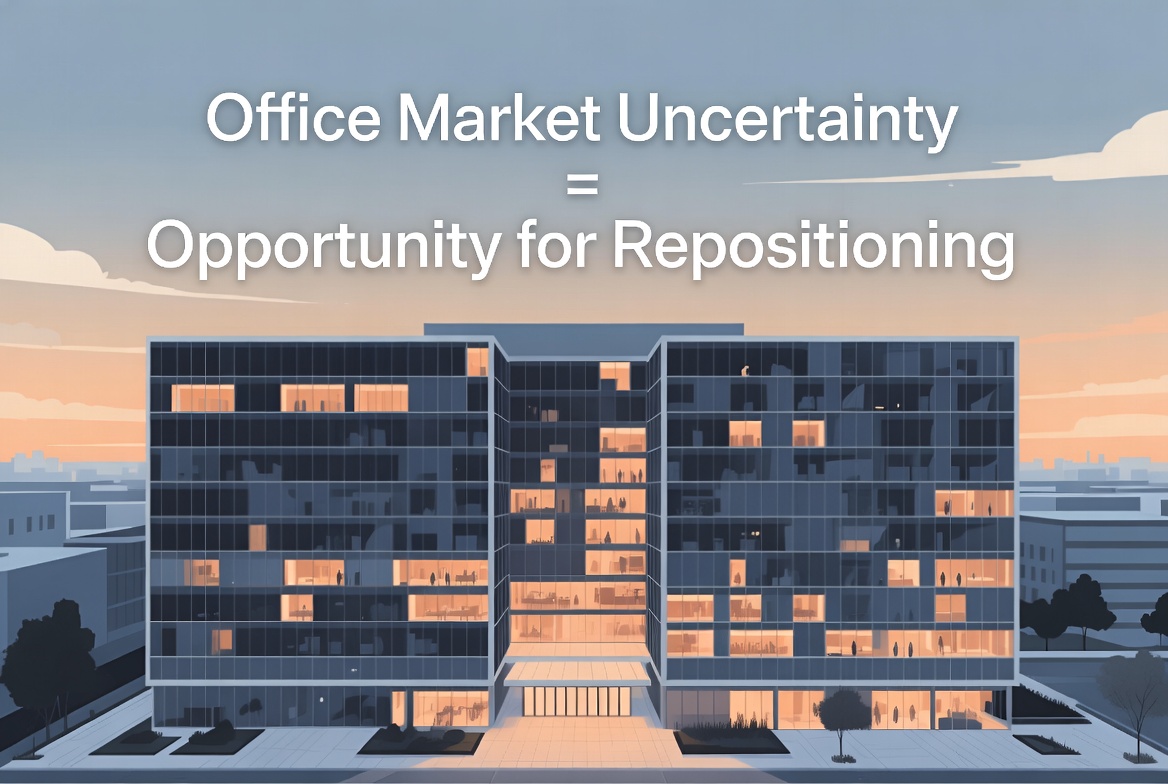
The rise of remote and hybrid work has reshaped office space demand. While traditional office spaces are experiencing some vacancies, many companies are reconfiguring their work environments rather than abandoning office space altogether. This shift presents opportunities for investors who can repurpose or reposition office buildings to meet modern workplace needs.

Illustrated office building at dusk with the text Office Market Uncertainty equals Opportunity for Repositioning

Retail Sector Adjustments

The retail sector is transforming, with large-scale retailers embracing omnichannel strategies. Investors who focus on high-traffic retail spaces or properties suited for experiential businesses — dining, entertainment, service-based tenants — may find profitable opportunities here.

Interest Rates and Their Impact on Investments

Interest rates remain a major factor in underwriting decisions. Recent years of rate movement increased borrowing costs and pushed investors toward more cautious deal structuring. As rates stabilize, the investors doing well aren’t the ones waiting for a “perfect” rate — they’re the ones structuring deals that work at today’s rate.

Why Investing in Commercial Property Still Makes Sense

Despite market fluctuations, commercial real estate remains one of the more reliable vehicles for long-term wealth building. Here’s why:

Inflation Hedge

Real estate historically serves as a hedge against inflation, since property values and rental income tend to rise alongside it. That makes commercial properties an attractive long-term hold even in an uncertain rate environment.

Passive Income and Appreciation

Investors benefit from stable rental income while also seeing property values appreciate over time. Well-chosen commercial properties in high-demand areas can generate meaningful returns on both fronts.

Financing Options That Still Work

Even with rates higher than a few years ago, lenders continue to offer competitive terms for well-structured commercial deals. The difference between an average financing outcome and a strong one usually comes down to how the deal is packaged and who’s presenting it — not just the rate on offer.

Opportunities in Distressed Assets

Market fluctuations often create distressed sales, where properties trade below market value. These situations can provide strong entry points for investors willing to do the underwriting work.

How to Make a Smart Investment Decision

Research Market Conditions

Understanding regional market trends is essential. Some areas are experiencing a commercial real estate boom, while others are still recovering. Do your homework, or work with someone who already has, to understand local supply and demand dynamics before you commit.

Secure the Right Financing

Your financing structure can make or break an investment. Working with an experienced mortgage broker helps you access the best available terms — whether through traditional lenders, private financing, or CMHC-backed programs — rather than settling for whatever the first lender you call happens to offer.

Evaluate Property Potential Properly

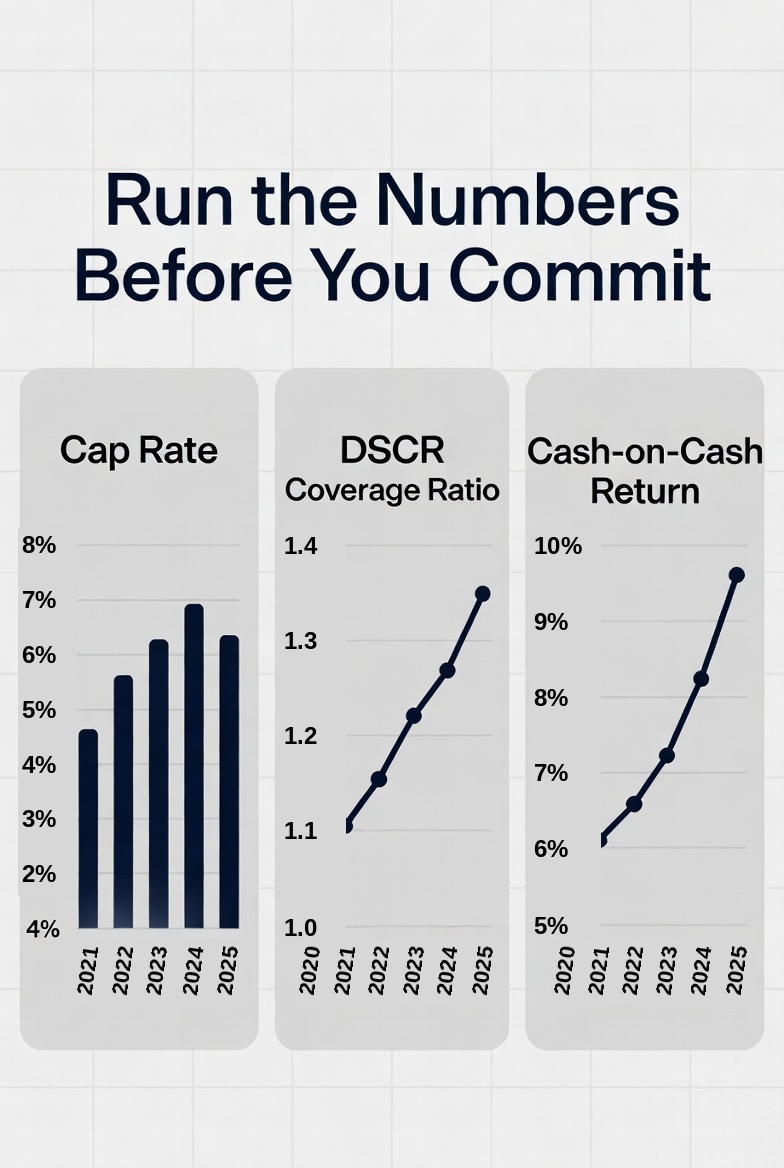
Not all commercial properties are created equal. Location, tenant quality, lease terms, and future growth potential all factor into whether a property is worth the investment. This is also where the numbers matter more than the story: a property can look great on paper and still be a mediocre deal once the real cash flow is worked out. I built a free Cap Rate & Deal Analyzer that shows you cap rate, DSCR, and cash-on-cash return side by side — so you can see what a deal actually pays you after financing, not just what it looks like before it.

Three charts showing cap rate, DSCR coverage ratio, and cash-on-cash return trends from 2021 to 2025

Plan for Market Fluctuations

Real estate is cyclical, so it’s worth planning for both short-term uncertainty and long-term growth. Diversifying across property types and maintaining a financial cushion helps you navigate changing conditions without being forced into a bad decision at the wrong time.

Where This Leaves You

None of this means timing doesn’t matter — it does. But “the right time” has less to do with waiting for perfect conditions and more to do with whether your specific deal, on its specific numbers, works today. Industrial and multifamily remain strong. Office and retail carry real opportunity for investors willing to look past the headlines. And financing, structured properly, is still very much available for the right deal.

If you’re weighing a commercial property investment and want a clear-eyed read on whether the numbers actually work, let’s talk about your specific deal — not a generic market outlook.

Let's talk about your specific deal, contact Patrick Sawler at 902-465-5533 or craigburn.com

Patrick Sawler | Principal Broker | Craigburn Capital | 902-465-5533 | craigburn.com

NS Brokerage 2025-3000179 | Broker 2025-3000180 | ON M23006699

Understanding Commercial LTV

Understanding Loan-to-Value (LTV) Ratios in Commercial Mortgage Lending

Loan-to-Value (LTV) ratios play a crucial role in commercial mortgage lending, influencing borrowing power, interest rates, and financing terms. Whether you’re an investor, developer, or business owner, understanding how LTV ratios impact your loan application can help you secure the best possible financing for your commercial project. In this blog post, we will explore the significance of LTV ratios, how they are calculated, their impact on lending decisions, and strategies to optimize your borrowing potential.

What Is Loan-to-Value (LTV) Ratio?

The Loan-to-Value (LTV) ratio is a key metric used by lenders to assess the risk associated with a commercial mortgage loan. It represents the percentage of a property’s appraised value or purchase price that is being financed by the lender. The formula for calculating LTV is:

LTV Ratio = (Loan Amount / Property Value) × 100

Here’s a real-world example closer to home. Say you’re looking at a 6-unit multi-family building in Dartmouth, appraised at $1,400,000. A lender offers you a loan of $980,000. Your LTV ratio would be:

LTV = ($980,000 / $1,400,000) × 100 = 70%

This means the lender is financing 70% of the property’s value, and you’d need to cover the remaining 30% — $420,000 — as your down payment.

How LTV Ratios Impact Commercial Mortgage Lending

Lenders use LTV ratios to determine the level of risk associated with a loan. The higher the LTV, the greater the risk for the lender, as a larger portion of the property’s value is financed. Here are some ways LTV ratios impact borrowing power and loan terms:

1. Loan Approval and Borrowing Power

Lenders have maximum LTV thresholds based on the type of property and risk profile. Typical LTV limits for commercial mortgages include:

  • Multi-Family Residential Properties: Up to 85% (with CMHC insurance)
  • Office and Retail Buildings: 65%-75%
  • Industrial Properties: 70%-75%
  • Special-Purpose Properties: 50%-65%

If your LTV ratio is too high, you may need to provide a larger down payment or seek alternative financing options.

2. Interest Rates and Financing Costs

Lower LTV ratios typically result in more favorable loan terms, including lower interest rates. Lenders view low-LTV loans as less risky, which can translate to cost savings over the life of the loan. Conversely, higher LTV loans often come with higher interest rates and stricter lending conditions.

3. Private vs. Traditional Lenders

While banks and institutional lenders impose strict LTV limits, private mortgage lenders may offer higher LTV ratios in exchange for higher interest rates. This can be a valuable option for borrowers who need additional leverage but may not qualify for traditional financing.

4. Impact on Loan Insurance and CMHC Financing

For multi-unit residential properties, the Canada Mortgage and Housing Corporation (CMHC) offers mortgage insurance that allows borrowers to access higher LTV ratios (up to 85%) with lower interest rates. CMHC-backed loans are an excellent option for investors looking to maximize leverage while securing favorable terms.

5. Refinancing and Equity Access

LTV ratios also determine how much equity you can access when refinancing a commercial property. If property values appreciate, you may qualify for additional financing by maintaining an acceptable LTV ratio. However, if property values decline, your LTV ratio may increase, making refinancing more challenging.

Strategies to Optimize Your LTV Ratio and Secure Better Financing

Understanding how LTV ratios work can help you take strategic steps to secure better loan terms. Here are some ways to improve your LTV ratio:

1. Increase Your Down Payment

The simplest way to reduce your LTV ratio is by making a larger down payment. This lowers the lender’s risk and improves your chances of securing a competitive interest rate.

2. Choose CMHC-Insured Financing for Multi-Unit Properties

If you’re investing in multi-family properties, CMHC-insured loans allow you to access higher LTV ratios with lower interest rates, improving cash flow and long-term profitability.

3. Improve Property Value

Enhancing the property’s value through renovations, tenant improvements, or lease restructuring can help lower your LTV ratio when refinancing or obtaining additional financing.

4. Consider Alternative Financing Options

If traditional lenders impose restrictive LTV limits, private lenders or bridge financing may offer flexible solutions to meet your investment goals.

5. Work with an Experienced Commercial Mortgage Broker

Navigating LTV requirements and financing options can be complex. Working with a commercial mortgage broker ensures you receive expert guidance and access to the best loan products tailored to your needs.

LTV Is Only Half the Picture

Knowing your LTV tells you how much you can borrow. It doesn’t tell you whether the deal is actually a good one — that’s what cap rate is for. I built a free tool that runs both cap rate and DSCR side by side, so you can see your borrowing power and your actual return in the same place.

Try the Cap Rate & Deal Analyzer →

Why Work With Me?

Securing commercial mortgage financing requires expertise, market knowledge, and strong lender relationships. As a seasoned commercial mortgage broker, I specialize in helping investors and business owners secure the best financing solutions for their projects. Whether you need funding for a multi-unit residential development, office space, or industrial property, I am here to guide you every step of the way.

Ready to take the next step in your real estate investment journey? Contact me today to discuss your goals and find the perfect apartment building for your portfolio. Together, we can turn your investment dreams into reality.

I look forward to hearing from you in regard to your mortgage needs.

Patrick

p.s- You can click on this link to start the process whenever you are ready. Schedule your meeting with me here.

p.s.s- I should tell you that I am licensed in Nova Scotia Brokerage (2024-3000179) Broker (2024-3000180), Ontario(M18001555) & in British Columbia(BCFSA #504098).

p.s.s.s You can download my new mortgage app here

Don’t miss out on this opportunity to secure the best financing terms for your next multi-unit development. Contact me today!

With my experience and industry connections, I’ll ensure you get the most competitive terms to make your commercial property investment a success.

Top 5 challenges in financing your commercial real estate project

Top 5 Challenges and How to Overcome Them

Securing financing for commercial real estate projects can be complex, with various obstacles that investors and developers must navigate. From stringent lending requirements to market fluctuations, understanding these challenges and how to overcome them can make a significant difference in securing the right funding. Here are the top five challenges in commercial real estate financing and strategies to tackle them.

1. Stringent Lending Requirements

The Challenge: Traditional lenders, such as banks and credit unions, impose strict lending criteria, requiring extensive documentation, strong credit history, and significant down payments. Borrowers with limited liquidity or unconventional projects may struggle to qualify.

How to Overcome It:

  • Work with a commercial mortgage broker who has relationships with multiple lenders and can present your application in the best light.
  • Consider alternative lenders, such as private or non-bank lenders, who may have more flexible terms.
  • Strengthen your financial position by reducing debt, improving credit scores, and demonstrating strong cash flow.

2. High Interest Rates and Financing Costs

The Challenge: Commercial real estate loans often come with higher interest rates and additional costs, such as appraisal fees, legal expenses, and lender fees, which can impact overall profitability.

How to Overcome It:

  • Shop around and negotiate with lenders to secure the most competitive rates and terms.
  • Explore CMHC-insured financing for multi-family properties to access lower rates and higher loan-to-value ratios.
  • Consider short-term bridge financing as an interim solution if long-term rates are currently high but expected to drop.

3. Market Volatility and Economic Uncertainty

The Challenge: Fluctuations in interest rates, inflation, and economic downturns can make lenders more cautious and impact the availability of commercial real estate loans.

How to Overcome It:

  • Diversify your financing sources to reduce reliance on a single lender.
  • Secure fixed-rate loans to protect against interest rate increases.
  • Conduct thorough market research and risk analysis before investing to ensure the project remains viable under different economic conditions.

4. Property Valuation and Loan-To-Value (LTV) Ratio Limitations

The Challenge: Lenders base loan amounts on the property’s appraised value, and if the valuation comes in lower than expected, it can reduce borrowing capacity and require a larger down payment.

How to Overcome It:

  • Ensure the property is well-maintained and has strong financials before appraisal.
  • Provide detailed financial statements, lease agreements, and market comparables to justify a higher valuation.
  • If the valuation is too low, consider negotiating seller financing or bringing in additional equity partners.

5. Lengthy Approval and Funding Processes

The Challenge: Commercial mortgage approvals can take weeks or even months due to detailed underwriting processes, property appraisals, and legal reviews, causing delays in closing deals.

How to Overcome It:

  • Prepare all necessary documents in advance, including financial statements, business plans, and property details.
  • Work with an experienced commercial mortgage broker to streamline the process and expedite approvals.
  • Consider alternative financing solutions, such as private lenders, who can provide quicker funding options when needed.

Why Work With Me?

Securing commercial mortgage financing requires expertise, market knowledge, and strong lender relationships. As a seasoned commercial mortgage broker, I specialize in helping investors and business owners secure the best financing solutions for their projects. Whether you need funding for a multi-unit residential development, office space, or industrial property, I am here to guide you every step of the way.

Ready to take the next step in your real estate investment journey? Contact me today to discuss your goals and find the perfect apartment building for your portfolio. Together, we can turn your investment dreams into reality.

I look forward to hearing from you in regard to your mortgage needs.

Patrick

p.s- You can click on this link to start the process whenever you are ready. Schedule your meeting with me here.

p.s.s- I should tell you that I am licensed in Nova Scotia Brokerage (2024-3000179) Broker (2024-3000180), Ontario(M18001555) & in British Columbia(BCFSA #504098).

p.s.s.s You can download my new mortgage app here

Don’t miss out on this opportunity to secure the best financing terms for your next multi-unit development. Contact me today!

With my experience and industry connections, I’ll ensure you get the most competitive terms to make your commercial property investment a success.

Financing your commercial project

How to Secure Financing for Your Next Commercial Property in Canada

Securing financing for a commercial property in Canada can be a complex process, but with the right approach and guidance, it can be an achievable goal. Whether you’re an investor, developer, or business owner looking to acquire a new property, understanding the steps involved in obtaining commercial mortgage financing is crucial. In this guide, we’ll walk you through the process and show you how to maximize your chances of approval.

Step 1: Understand Your Financing Needs

Before approaching lenders, clearly define the purpose of your commercial mortgage. Ask yourself:

  • What type of property are you purchasing? (e.g., office building, multi-family residential, industrial space)
  • How much financing do you require?
  • What is your expected return on investment?

Having a clear financial plan will help you determine the loan amount and type of financing that suits your needs.

Timeline: This step is on you — most buyers spend one to two weeks here, though it’s worth doing properly rather than quickly.

Step 2: Assess Your Financial Position

Lenders evaluate commercial mortgage applications based on financial stability and risk. You’ll need to provide:

  • Business and personal financial statements
  • Credit history and credit score
  • Proof of income and cash flow projections
  • Details of existing assets and liabilities

A strong financial profile improves your chances of securing favorable terms.

Timeline: If your financials are already organized, this is a few days of gathering. If they’re scattered across accountants, past years, and multiple entities, budget one to two weeks.

Step 3: Gather the Required Documentation

Lenders will require key documents to assess your application, including:

  • Property details (location, size, zoning, and market value)
  • Lease agreements (if applicable)
  • Business plan or investment strategy
  • Down payment source and proof of funds
  • Bio’s on the principals 
  • Company financials and personal net worth statements 

Being prepared with these documents will expedite the approval process.

Timeline: This is the single biggest variable in the whole process. Buyers with a clean, complete package ready to go can submit within days. Buyers scrambling to track down lease agreements or bios on principals can lose two to three weeks here — entirely avoidable with advance preparation.

Step 4: Choose the Right Type of Commercial Mortgage

Different loan products cater to varying needs, including:

  • Conventional Commercial Mortgages: Offered by banks and lenders, typically requiring a 25-35% down payment.
  • CMHC-Insured Loans: Available for multi-family residential properties, offering lower interest rates and higher loan amounts.
  • Bridge Financing: Short-term loans for transitional projects or quick acquisitions.
  • Private Mortgages: Ideal for borrowers who need alternative financing solutions due to credit issues or unique property types.

Understanding these options allows you to choose the best fit for your investment strategy.

Timeline: A same-day decision if your broker has already narrowed the options based on your Step 1 answers — which is exactly why this conversation should happen early, not after you’ve picked a lender on your own.

Step 5: Work with a Commercial Mortgage Broker

Navigating the commercial mortgage market can be challenging, but working with an experienced broker simplifies the process. A broker can:

  • Assess your financial situation and recommend suitable lenders
  • Negotiate competitive rates and terms
  • Guide you through the application and approval process

Timeline: This isn’t really a discrete step — it should be happening in parallel with Steps 1 through 4, not after them. The earlier a broker is involved, the more time gets saved everywhere else.

Step 6: Submit Your Application and Negotiate Terms

Once you’ve selected a lender, submit your application along with the required documentation. Be prepared for lender due diligence, which may include property appraisals and financial analysis. Negotiating key terms like interest rates, loan amortization, and repayment structures can significantly impact your bottom line.

Timeline: Expect one to three weeks from submission to a formal commitment, depending on the lender and whether an appraisal is required. Private and alternative lenders can move faster; conventional bank underwriting typically sits at the longer end of that range.

Step 7: Finalize the Loan and Close the Deal

After approval, review the loan agreement carefully before signing. Work with legal and financial professionals to ensure the terms align with your business goals. Once finalized, the lender will fund the loan, allowing you to proceed with your property acquisition or development.

Timeline: Once approved, closing typically takes one to two weeks for legal review and fund transfer — longer if title issues or last-minute conditions surface.

Why Work With Me?

Securing commercial mortgage financing requires expertise, market knowledge, and strong lender relationships. As a seasoned commercial mortgage broker, I specialize in helping investors and business owners secure the best financing solutions for their projects. Whether you need funding for a multi-unit residential development, office space, or industrial property, I am here to guide you every step of the way.

Ready to take the next step in your real estate investment journey? Contact me today to discuss your goals and find the perfect apartment building for your portfolio. Together, we can turn your investment dreams into reality.

I look forward to hearing from you in regard to your mortgage needs.

Patrick

p.s- You can click on this link to start the process whenever you are ready. Schedule your meeting with me here.

p.s.s- I should tell you that I am licensed in Nova Scotia Brokerage (2025-3000179) Broker (2025-3000180), Ontario(M18001555).

p.s.s.s You can download my new mortgage app here

Add it up, and a well-prepared file can move from first conversation to funded deal in as little as three to five weeks. A disorganized one can easily stretch past two months — not because the lender is slow, but because each step above waited on the one before it instead of running in parallel.

That’s the real value of bringing a broker in at Step 1 instead of Step 5: the timeline compresses because the right lender gets picked early, and your documentation gets built for that lender specifically instead of being assembled generically and reworked later.

Before you start this process on your own, know your numbers. I’ve broken down how commercial LTV actually works, and built a free Cap Rate & Deal Analyzer — run your deal through both before Step 1.

Read before shovel ready

Why “Shovel Ready” Isn’t the Finish Line

Every developer I talk to has heard the phrase ‘shovel ready’ thrown around like it’s a finish line. It’s not. It’s a starting gun. And a lot of projects trip over their own feet in the sprint that follows — because the financing conversation happened too late.

Here’s what I mean. By the time a project is genuinely shovel ready — permits in hand, site prepped, engineering signed off — that window is already closing. Lenders want your capital stack, equity position, and program eligibility lined up well before that stage, not scrambled together once the excavators are booked.

So before you get anywhere near “shovel ready,” here’s what actually needs to happen first.

Know Your Financing Program Before You Know Your Site Plan

I see developers finalize unit mix, finishes, and building envelope decisions before they’ve had a real conversation about what financing programs their project could qualify for. That’s backwards. Some of the best terms available for multi-unit construction in Canada right now are tied to specific program criteria — and if you design around those criteria from day one, you save yourself a redesign (and a financing headache) later.

The single biggest opportunity most developers underuse: CMHC’s MLI Select program.

What MLI Select Actually Does

MLI Select is CMHC’s insured financing program built specifically for multi-unit residential construction, and it rewards projects that check one or more of three boxes:

  1. Affordability — a percentage of units held at below-market rental rates
  2. Energy Efficiency — building performance that beats national code by a meaningful margin
  3. Accessibility — units designed to barrier-free and universal design standards

The more of these your project hits, the better your financing terms get. This isn’t a minor incentive — it changes the entire math of a project.

Infographic showing CMHC MLI Select's three scoring categories: affordability, energy efficiency, and accessibility

Why It’s Worth Building Around

Higher loan-to-value ratios. Depending on how your project scores, you can access LTVs up to 95%. That’s a significant reduction in the upfront equity you need to bring to the table — capital you can redeploy into your next project instead of tying it up in this one.

Longer amortization. MLI Select allows amortization periods up to 50 years for projects that score well across all three categories. Stretch the amortization, lower the monthly debt service, and the project’s cash flow profile improves for the life of the loan.

Lower insurance premiums. Qualifying projects can see meaningfully reduced CMHC insurance premiums, sometimes with premium refunds available. That’s real money back into your project budget, not just a rate discussion.

Lower long-term operating costs. Energy-efficient buildings aren’t just a box to check for financing purposes — better insulation, high-performance windows, and efficient mechanical systems reduce your operating costs for as long as you own the asset. That’s a benefit that outlives the mortgage.

Market positioning. Tenants, investors, and municipalities increasingly favour buildings that check these boxes. A project built to MLI Select standards is more marketable on both the leasing side and, eventually, the exit side.

The Part Everyone Skips: Building Your Score Before You Build Your Plans

Developers qualify for MLI Select benefits on a scoring system — the more of the three categories your project satisfies, the stronger your terms. Here’s the problem: most developers only find this out after their architectural plans are locked in, at which point retrofitting for a better score is expensive or impossible.

The fix is simple but requires discipline: bring your broker into the conversation at the concept stage, not the permit stage. Before finishes are chosen, before unit counts are locked, before your engineer starts stamping drawings — that’s when a five-minute conversation about affordability set-asides, energy targets, or accessibility unit counts can meaningfully shift your final loan terms.

A Practical Pre-Shovel-Ready Checklist

Before you consider yourself close to shovel ready, make sure you can answer these:

  • Have you had a financing conversation before finalizing your unit mix and building envelope?
  • Do you know which MLI Select criteria your project can realistically hit, and has that shaped your design?
  • Have you modelled your project’s cash flow under both a standard insured mortgage and an MLI Select-qualified structure, to see the real dollar difference?
  • Is your equity position built around the LTV you actually qualify for, or an assumption?
  • Have you accounted for how amortization length changes your debt service coverage ratio, and whether that opens up additional lending capacity?
Pre-shovel-ready checklist covering site analysis, budget and financing, permitting, design, contractor assembly, and project timeline

If you’re answering “not yet” to more than one of these, you’re not as close to shovel ready as you think — and that’s a good thing to find out now rather than after the plans are stamped.

Before you start modelling any of this on your own, know your numbers first. I built a free Cap Rate & Deal Analyzer that runs cap rate and DSCR side by side, so you can see your borrowing power and your actual return in the same place — run your project through it before you lock in a single design decision.

Where This Fits Into the Bigger Picture

None of this happens in isolation from the rest of your capital stack. Whether you’re layering senior debt with mezzanine financing, bringing in equity partners, or coordinating a bank takeout down the line, the earlier your MLI Select strategy is set, the cleaner the rest of your financing structure falls into place around it. I’d rather have this conversation with you six months before your shovel goes in the ground than six weeks before.

If you’re planning a multi-unit residential development anywhere in Nova Scotia or Ontario, let’s talk about what your project could look like under MLI Select before your plans are finalized — not after.

Split comparison showing the outcome of talking to a broker too late versus at the right time before starting a construction project

Patrick Sawler | Principal Broker | Craigburn Capital | 902-465-5533 | craigburn.com

NS Brokerage 2025-3000179 | Broker 2025-3000180 | ON M23006699

Trade War

The U.S.-Canada Tariff War: A No-Win Scenario for Both Nations

The recent imposition of a 25% import tariff by the United States on Canadian goods, followed by Canada’s retaliatory duty on American goods, has escalated tensions between the two nations. While tariffs are often framed as tools to protect domestic industries, the reality is that they create a lose-lose situation for both countries. Below, we explore 10 ways this tariff war harms Americans, 10 ways it harms Canadians, and why this is ultimately a no-win scenario for both nations.


10 Ways the Tariff War Harms Americans

  1. Higher Consumer Prices: Tariffs on Canadian goods, such as lumber, aluminum, and dairy, increase costs for American manufacturers and consumers. These added expenses are passed on to consumers in the form of higher prices for everyday goods.
  2. Job Losses in Dependent Industries: Industries reliant on Canadian imports, such as construction (which uses Canadian lumber), may face layoffs or reduced hiring due to increased costs.
  3. Reduced Export Opportunities: Canadian tariffs on American goods make U.S. exports less competitive in Canada, one of America’s largest trading partners. This could lead to reduced sales and revenue for U.S. exporters.
  4. Supply Chain Disruptions: Many U.S. industries rely on seamless cross-border supply chains. Tariffs disrupt these networks, leading to delays, inefficiencies, and increased operational costs.
  5. Agricultural Sector Suffering: Canadian tariffs on American agricultural products, such as soybeans and pork, hurt U.S. farmers who depend on the Canadian market for a significant portion of their income.
  6. Increased Inflation: As tariffs drive up the cost of imported goods, inflationary pressures could rise, affecting the purchasing power of American households.
  7. Strained Diplomatic Relations: The tariff war undermines the long-standing U.S.-Canada alliance, potentially weakening cooperation on critical issues like national security and climate change.
  8. Uncertainty for Businesses: Tariffs create an unpredictable trade environment, discouraging investment and long-term planning for American businesses that rely on cross-border trade.
  9. Retaliation Beyond Tariffs: Canada could respond with non-tariff measures, such as stricter regulations or reduced cooperation on shared initiatives, further harming U.S. interests.
  10. Damage to Global Reputation: The U.S. risks being seen as an unreliable trading partner, which could discourage other nations from entering into trade agreements or partnerships.

10 Ways the Tariff War Harms Canadians

  1. Higher Costs for Imported Goods: Canadian consumers and businesses will face higher prices for American products, from electronics to machinery, due to the 25% duty.
  2. Economic Slowdown: Reduced trade with the U.S., Canada’s largest trading partner, could slow economic growth and lead to job losses in export-dependent industries.
  3. Hurt Manufacturing Sector: Canadian manufacturers relying on U.S. components will face increased production costs, making their products less competitive globally.
  4. Decline in Exports: Canadian exporters, particularly in sectors like steel, aluminum, and agriculture, will suffer as American buyers seek cheaper alternatives.
  5. Increased Unemployment: Industries hit hardest by U.S. tariffs, such as lumber and automotive, may be forced to cut jobs, leading to higher unemployment rates in Canada.
  6. Weakened Dollar: Trade tensions could lead to a depreciation of the Canadian dollar, increasing the cost of imports and reducing consumer purchasing power.
  7. Reduced Investment: Uncertainty caused by the tariff war may deter foreign investors from putting money into Canadian businesses, stifling innovation and growth.
  8. Strained Provincial Economies: Provinces heavily reliant on trade with the U.S., such as Ontario and Alberta, could face significant economic challenges, exacerbating regional disparities.
  9. Impact on Small Businesses: Small and medium-sized enterprises (SMEs) with limited resources may struggle to absorb the additional costs imposed by tariffs, leading to closures or downsizing.
  10. Damage to Bilateral Relations: The tariff war could erode trust between the U.S. and Canada, making it harder to resolve future disputes and collaborate on shared goals.

Why This Is a No-Win Scenario

The U.S.-Canada tariff war is a classic example of a lose-lose situation. Both nations are deeply interconnected, with billions of dollars in goods and services crossing the border annually. Tariffs disrupt this symbiotic relationship, creating economic pain on both sides without addressing the underlying issues that led to the trade dispute.

For Americans, the tariffs mean higher prices, job losses, and reduced export opportunities. For Canadians, they result in economic uncertainty, higher costs, and weakened industries. Neither country gains a competitive advantage; instead, both suffer from reduced trade, strained relations, and long-term economic damage.

Moreover, the tariff war undermines the spirit of cooperation that has defined U.S.-Canada relations for decades. Rather than fostering growth and innovation, it creates barriers that hinder progress and prosperity for both nations. In a globalized economy, where supply chains and markets are interconnected, protectionist measures like tariffs are counterproductive.


Conclusion

The U.S.-Canada tariff war is a stark reminder that trade disputes rarely have winners. While tariffs may be intended to protect domestic industries, they often result in unintended consequences that harm consumers, businesses, and economies on both sides of the border. Instead of resorting to punitive measures, both nations should focus on dialogue and collaboration to resolve their differences and strengthen their economic partnership. After all, the U.S. and Canada are stronger together than they are apart.

I look forward to hearing from you in regard to your mortgage needs.

Patrick

p.s- You can click on this link to start the process whenever you are ready. Schedule your meeting with me here.

p.s.s- I should tell you that I am licensed in Nova Scotia Brokerage (2024-3000179) Broker (2024-3000180), Ontario(M18001555) & in British Columbia(BCFSA #504098).

p.s.s.s You can download my new mortgage app here

Shush it’s private (Mortgage that is)

Unlock Your Development Potential: Why Canadian Real Estate Developers Should Turn to Private Mortgage Funds

The Canadian real estate market is booming, but for developers, securing the financing needed to get projects off the ground can be a daunting challenge. Traditional lenders often come with rigid requirements, lengthy approval processes, and limited flexibility, leaving many developers struggling to bridge the gap between vision and execution. Enter private mortgage funds—a powerful, often overlooked financing solution that can be the key to unlocking your next development project. If you’re a real estate developer in Canada, here’s why private mortgage funds should be on your radar, and why I’m the perfect broker to help you navigate this game-changing option.

The Challenges of Traditional Financing

Real estate development is a capital-intensive business. Whether you’re building a residential subdivision, a commercial complex, or a mixed-use development, the costs can be staggering. Traditional lenders, such as banks, often require extensive documentation, strong credit scores, and a proven track record of successful projects. Even if you meet these criteria, the approval process can be slow, delaying your project timeline and potentially causing you to miss out on lucrative opportunities.

Moreover, traditional lenders may not fully understand the unique challenges of your project. They might undervalue the potential of a development in an up-and-coming neighborhood or hesitate to fund a project with unconventional elements. This lack of flexibility can stifle innovation and limit your ability to bring your vision to life.

The Power of Private Mortgage Funds

Private mortgage funds offer a compelling alternative. These funds are typically backed by private investors or investment groups who are looking for higher returns than those offered by traditional investment vehicles. Because they are not bound by the same regulations as banks, private mortgage funds can offer more flexible terms, faster approvals, and tailored financing solutions.

Here are just a few reasons why private mortgage funds are an ideal choice for real estate developers:

1. Speed and Efficiency: Time is money in real estate development. Private mortgage funds can often provide funding in a matter of days or weeks, rather than the months it might take for a traditional loan to be approved. This speed can be critical in securing a property or meeting project deadlines.

2. Flexible Terms: Private lenders are often more willing to work with developers to create customized financing solutions. Whether you need a short-term bridge loan, funding for a unique project, or a loan with interest-only payments during the construction phase, private mortgage funds can accommodate your needs.

3. Focus on Potential, Not Just Credit Scores: Private lenders are more interested in the potential of your project than your credit score or past financial history. If you have a solid business plan and a promising development, private mortgage funds can provide the capital you need to get started.

4. Access to Larger Loan Amounts: Private mortgage funds often have deeper pockets than traditional lenders, making it easier to secure the larger sums of money required for major development projects.

5. Less Red Tape: Without the bureaucratic hurdles of traditional lenders, private mortgage funds can streamline the approval process, allowing you to focus on what you do best—developing exceptional properties.

Real-World Applications

Imagine you’ve identified a prime piece of land in a rapidly growing area. You know that developing a mixed-use residential and commercial property there could yield significant returns, but traditional lenders are hesitant due to the project’s complexity. A private mortgage fund, on the other hand, sees the potential and offers you the financing you need with terms that align with your project timeline. With the funds in hand, you can move forward quickly, securing the land and breaking ground before your competitors even have a chance to react.

Or perhaps you’re in the middle of a development project and unexpected costs arise. Traditional lenders might balk at providing additional funding, but a private mortgage fund can step in with a bridge loan to keep your project on track.

Why I’m the Perfect Broker to Help You

Navigating the world of private mortgage funds can be complex, but you don’t have to do it alone. As an experienced broker specializing in private financing solutions, I have the expertise and connections to help you secure the funding you need. I understand the unique challenges faced by real estate developers and can match you with the right private mortgage fund to meet your specific needs.

My deep knowledge of the Canadian real estate market, combined with my strong relationships with private lenders, allows me to negotiate favorable terms and secure financing quickly. Whether you’re a seasoned developer or just starting out, I’ll work tirelessly to ensure your project gets off the ground.

Don’t let financing hurdles stand in the way of your next great development. Contact me today to learn how private mortgage funds can help you unlock your project’s potential. Together, we can turn your vision into reality.

I look forward to hearing from you in regard to your mortgage needs.

Patrick

p.s- You can click on this link to start the process whenever you are ready. Schedule your meeting with me here.

p.s.s- I should tell you that I am licensed in Nova Scotia Brokerage (2024-3000179) Broker (2024-3000180), Ontario(M18001555) & in British Columbia(BCFSA #504098).

p.s.s.s You can download my new mortgage app here