Why Lenders Ask About Money You Haven’t Spent Yet

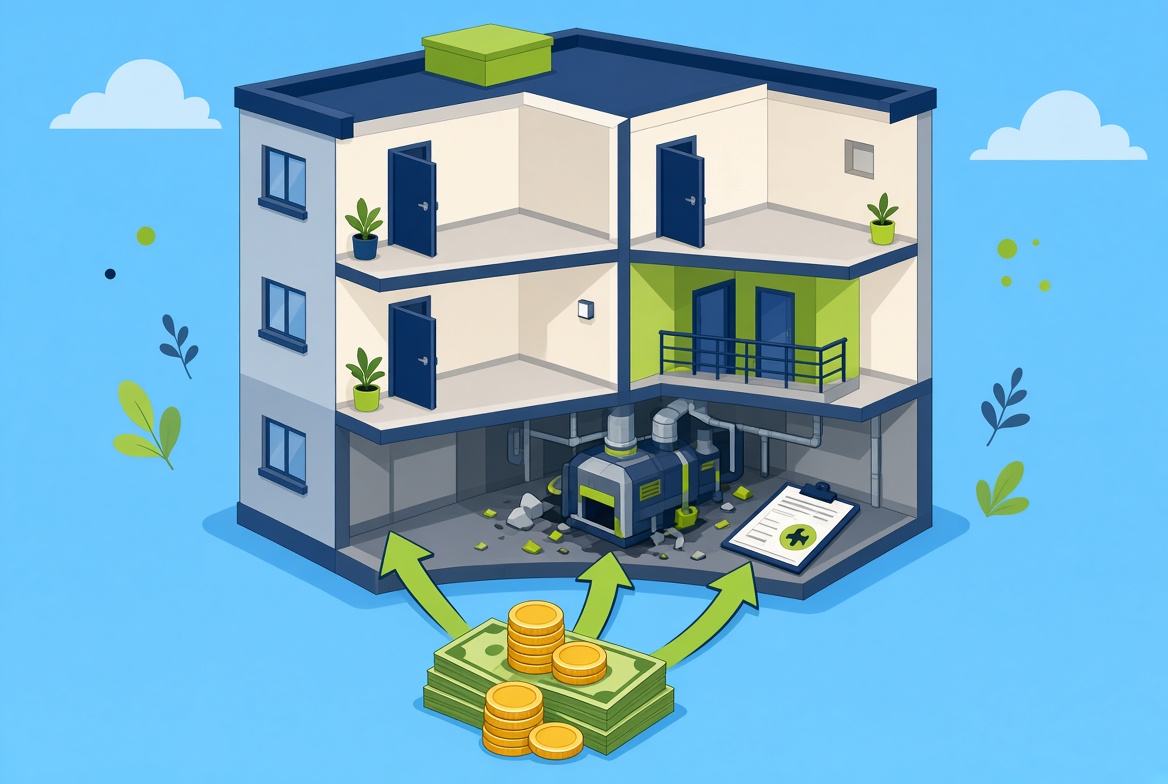
How much cash reserves do lenders want after closing? There is no single number, but many lenders like to see several months of carrying costs still in the bank once the deal funds. The down payment gets you to the closing table. What is left afterward tells a lender whether you can keep the building standing when something goes sideways.
I get why this one feels odd. You have already proven you have the money, so why does a lender care about money you have not spent yet? Because a deal can look perfect on paper and still stall when every last dollar goes into the purchase. Here is how lenders think about it.
Why do lenders care about money I have not spent yet?
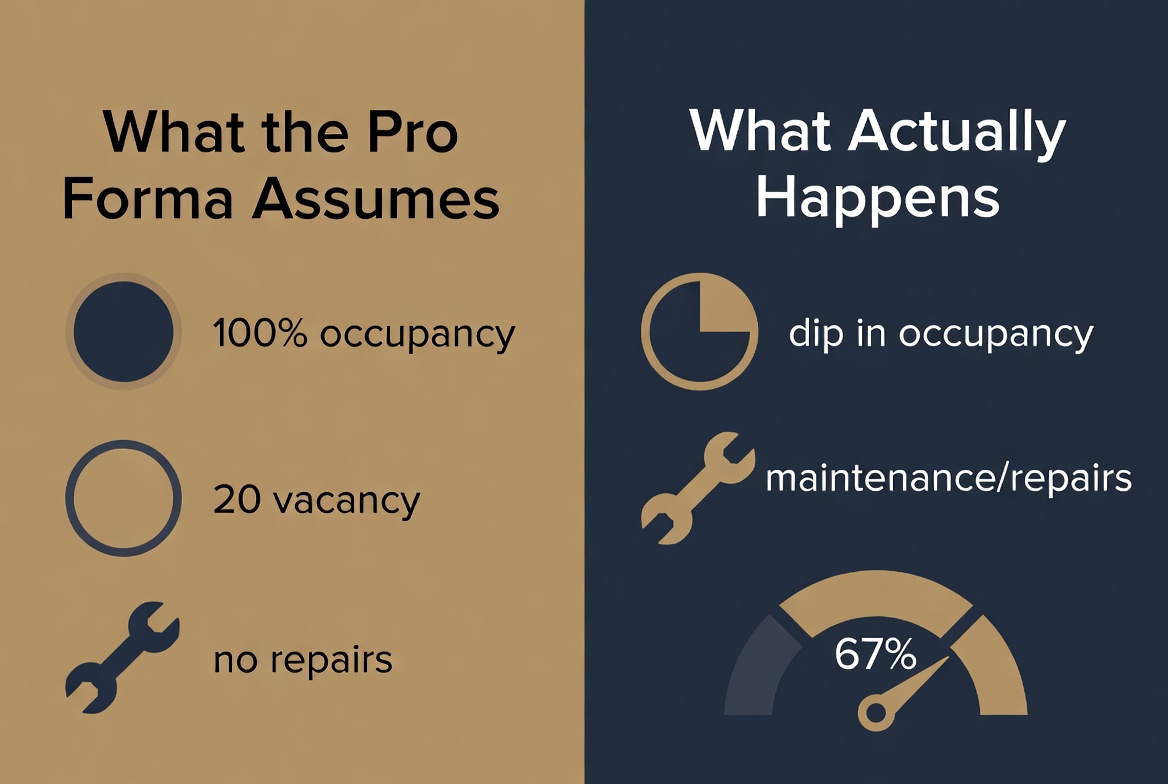
Because they are not lending to your plan, they are lending to what actually happens. Tenants move out. A furnace quits in January. A roof turns out to have opinions. On the day the mortgage funds, the payment is due whether or not the building is behaving.
Cash left after closing is the lender’s proof that one bad month does not become a missed payment. Rates and the market matter here too. CREA’s October numbers show sales down 10.6% from a year ago, and on October 28 the Bank of Canada raised its rate a quarter point to 2.50%. When selling slows and borrowing costs creep up, a cushion is worth more, not less. I wrote about that move in what the rate hike means for your mortgage.
What are reserves actually supposed to cover?
Three things, and they usually arrive together.
- Vacancy. Income pauses, the payment does not.
- Repairs. The ones you budgeted for and the ones you did not.
- Surprises. A tax bill, a slow-paying tenant, a rate reset or a delay on the next draw.
Here is a simple example. Say a six-unit building brings in $9,600 a month in rent and costs $7,200 a month to carry, including the mortgage, taxes, insurance and utilities. Two tenants move out and the units sit empty for three months. Income drops to $6,400, which leaves you $800 short each month, or $2,400 over the three months. Then the furnace dies and the replacement is $6,500. That is $8,900 that has to come from somewhere, and it has to come from your reserves, not from the rent.
That is only an example, and your numbers will differ. It is exactly the arithmetic a lender runs in its head.
How much cash reserves do lenders want after closing?
It depends on the lender, the property and the deal, so I will not pretend there is one rule. A common way to think about it is several months of carrying costs: the mortgage payment, property taxes, insurance and utilities. Bigger, older or more vacancy-prone buildings tend to get a closer look. A strong file with solid income and a comfortable LTV may need less. A thin file or a stretched purchase may need more.
Whatever the number, lenders generally want to see reserves that are yours and easy to reach, such as cash, savings or investments you could sell. Money you borrowed to look like a cushion usually does not count. Policies vary, which is one more reason to ask before you commit to a purchase price, not after.
Can my down payment count as my reserves?
No. Once the down payment goes into the purchase, it is spent. Reserves are what is left over after the down payment, the closing costs and any repairs you have already planned. If every dollar goes into the deal, the lender sees a purchase with no margin for error, and that can stall an approval that otherwise looks fine.
How can a mortgage broker help with reserves?
I plan this with you before the offer, not after. One application, one credit pull, then I compare 45 lenders and place the file where the reading is friendliest. That includes working out how much cushion a deal really needs, so we do not discover the answer at the worst possible moment. If the honest answer is to put in a little less or wait a few months, I will tell you that. My commercial lending partner and I look at these files together when the building warrants it, and you can see how I approach them on my commercial financing page.

Frequently Asked Questions
How much cash reserves do lenders want after closing?
It varies by lender, property and deal. A common way to think about it is several months of carrying costs, which means the mortgage payment, property taxes, insurance and utilities. Larger, older or more vacancy-prone buildings tend to be looked at more closely.
Do reserves count as part of my down payment?
No. Your down payment goes into the purchase, so it is spent. Reserves are the cash that remains after the down payment, closing costs and planned repairs.
What counts as reserves for a mortgage?
Lenders generally want to see funds that are yours and easy to reach, such as cash, savings or investments you could sell. Borrowed money used to look like a cushion usually does not count, though policies vary by lender.
Can a deal stall if I use every dollar on the purchase?
Yes. A deal can look fine on paper and still stall if a lender sees no margin for vacancies, repairs or surprises. Planning your reserves before you make an offer helps avoid that.
This post is general information, not financial advice. Lender policies and approvals vary, and all financing is subject to lender approval.
Planning a purchase and want to know how much to keep in reserve? Send me your application and I will lay out your options.
I look forward to hearing from you in regard to your mortgage needs.
902-465-5533. I answer.
Patrick
p.s. Ready to start? Apply here: https://craigburn-capital.mtg-app.com
p.s. Prefer to talk it through first? Book a time with me here: Schedule a call
p.s. FSRA Principal Broker License #M23006699, Craigburn Capital. NS Brokerage 2026-3000179, NS Broker 2026-3000180.
p.s. Get the Craigburn mortgage app: https://craigburn-capital.mtg-app.com
Patrick Sawler is a mortgage broker and owner of Craigburn Capital, licensed in Nova Scotia and Ontario, with private financing available in New Brunswick and PEI. He answers his phone. Service aussi disponible en français.
Call 902-465-5533 or start your application today.