
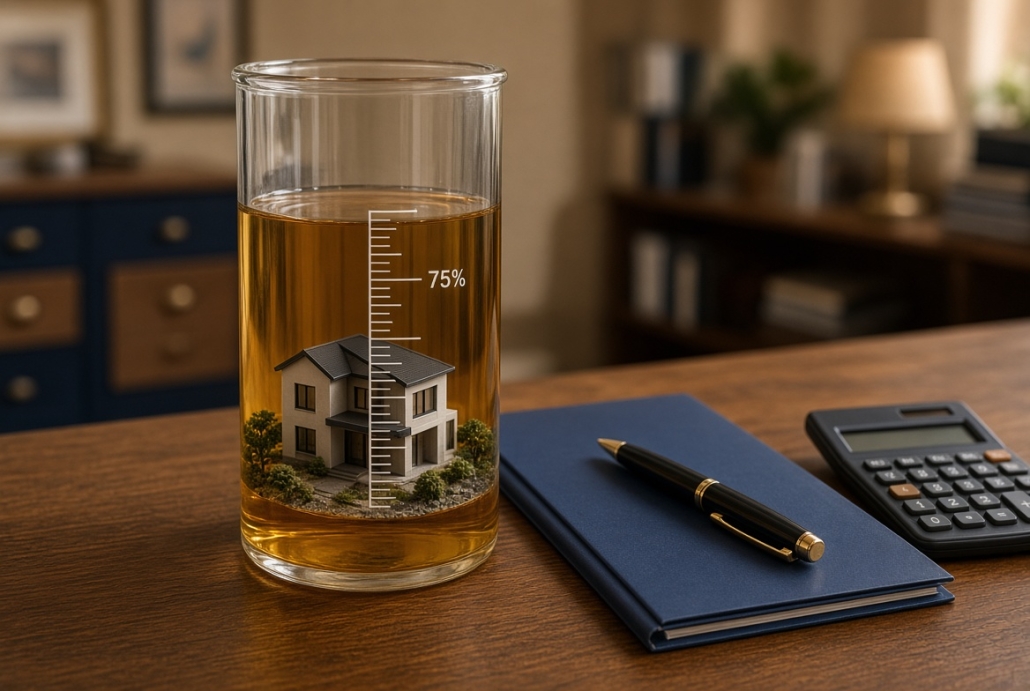
How much equity do you need for a private mortgage in Canada
Most private lenders in Canada want you to keep at least 25% to 35% equity in the property after the new mortgage. They typically lend up to about 65% to 75% of the appraised value, and every mortgage already on the property counts toward that limit.
That is the whole game with private financing. The lender is looking at the property first, so the question is not “what is my credit score?” It is “how much room is there between what I owe and what the property is worth?”
How much equity do you need for a private mortgage in Canada?
It depends on the property, but the limit is set as a percentage of appraised value. For a typical residential property in a decent market, many private lenders will go up to roughly 75% in first position. For rural properties, unusual properties or second mortgages, the limit is often lower.
For comparison, the Financial Consumer Agency of Canada notes that regular lenders generally allow borrowing up to 80% of appraised value, minus what you owe. Private lenders are usually more cautious, because they are lending on the property alone.
How does the equity math work?
Take the appraised value, multiply it by the lender’s limit, then subtract every mortgage already on the property. What is left is the most you can borrow. Here is an example on a home appraised at $600,000 with an existing mortgage of $300,000:
- At a 75% limit: $600,000 x 75% = $450,000, minus the $300,000 you owe, leaves up to $150,000.
- At a 65% limit: $600,000 x 65% = $390,000, minus the $300,000 you owe, leaves up to $90,000.
Same property, same balance, and a ten-point difference in the limit changes the answer by $60,000. This is only an example, since real limits depend on the lender and the file. Also remember that fees and prepaid interest generally come out of the advance, so the cash you receive is less than the mortgage amount. I break that down in how much a private mortgage costs in Canada.
Does a second mortgage change how much equity you need?
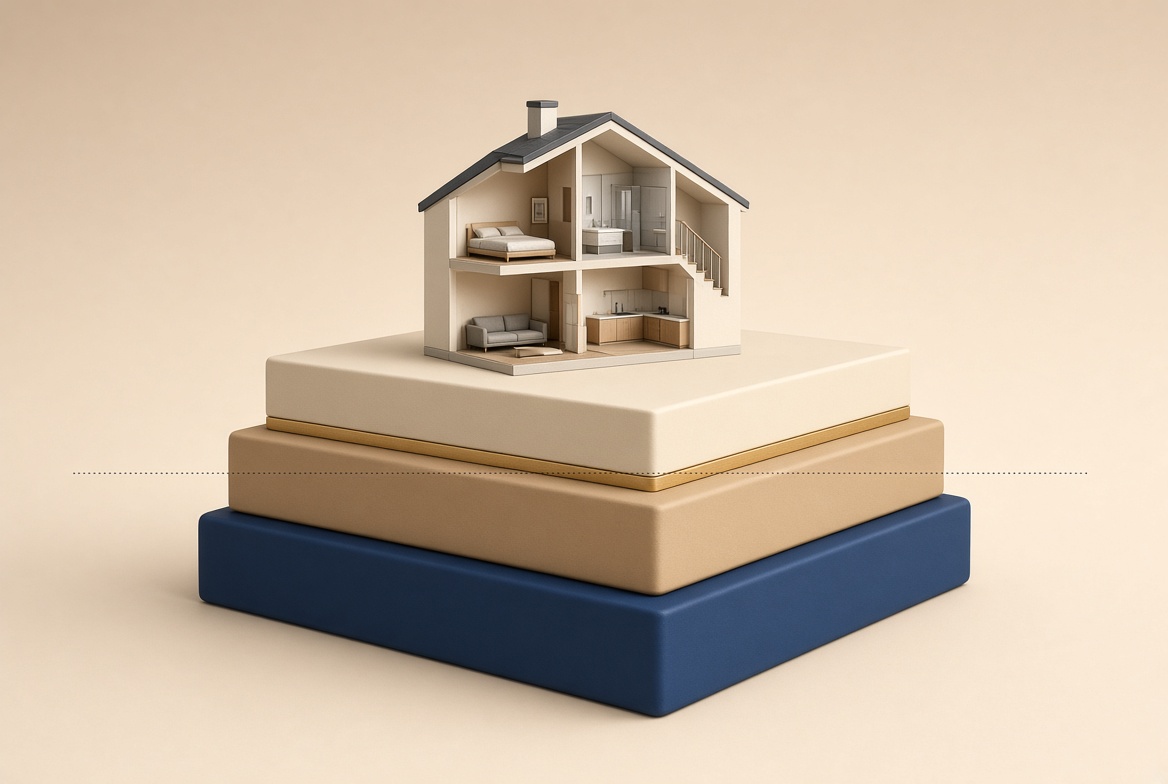
Yes, because the lender in second position sits behind the first mortgage and gets paid after it. So the combined limit is usually the same or lower than it would be in first position, and the lender counts both mortgages together. The math above is exactly how a second mortgage is sized: the combined limit, minus the first mortgage balance.
What else moves the equity requirement up or down?
- Property type. A standard house or condo in a busy market usually gets a higher limit than a rural property, a vacant lot, or something with unusual use.
- Location. The harder it would be to sell the property quickly, the more cushion the lender wants.
- Condition. A property that needs work can be valued, and lent against, more conservatively.
- The appraisal. Lenders go by the current market value, usually confirmed by an appraisal, not the municipal assessment. If you are not sure how the two differ, I explain it in this post on assessment versus market value.
Does credit or income matter if you have the equity?
Less than at a bank, but not never. With enough equity, a bruised credit history or non-traditional income is often workable, which is why self-employed owners and people between banks use private mortgages. The lender will still want a believable exit, meaning how the mortgage gets repaid or refinanced when the term ends.
Who works out the equity number for me?
I do. You send me one application, and I run the numbers on your property before anything goes to a lender: the likely value, the limit that fits, what is left after your existing mortgage, and what you would actually receive after fees. Then I take the file to the private lenders whose limits fit it, so you are not asking each one the same questions and guessing at the answers.
If you want to know how private lending works from start to finish, start with my private lending page.

Frequently Asked Questions
How much equity do you need for a private mortgage in Canada?
Most private lenders want you to keep at least 25% to 35% equity after the new mortgage. They typically lend up to about 65% to 75% of the appraised value, counting every mortgage already on the property. The exact limit depends on the property, the location and whether the new mortgage is in first or second position.
Does a private lender use the property assessment or an appraisal?
Lenders base the limit on the property’s current market value, usually confirmed by an appraisal, not on the municipal assessment. The two numbers can be quite different, so ask for the appraised value before you do the math.
Do I need good credit if I have a lot of equity?
Credit and income matter less to a private lender than they do to a bank, because the property is the main security. The lender will still want to see a clear plan to repay or refinance at the end of the term.
Can I get a private mortgage if I already have a mortgage on the property?
Often yes, as a second mortgage behind the existing one. The lender counts both mortgages against the same limit, so the amount you can borrow is the limit minus what you already owe.
This post is general information, not legal or financial advice. Lending limits, fees and requirements vary by lender, property and province, and all financing is subject to lender approval.
Wondering how much equity you could tap? Send me your application and I will run the numbers.
I look forward to hearing from you in regard to your mortgage needs.
902-465-5533. I answer.
Patrick
p.s. Ready to start? Apply here: https://craigburn-capital.mtg-app.com
p.s. Prefer to talk it through first? Book a time with me here: Schedule a call
p.s. FSRA Principal Broker License #M23006699, Craigburn Capital. NS Brokerage 2026-3000179, NS Broker 2026-3000180.
p.s. Get the Craigburn mortgage app: https://craigburn-capital.mtg-app.com
Patrick Sawler is a mortgage broker and owner of Craigburn Capital, licensed in Nova Scotia and Ontario, with private financing available in New Brunswick and PEI. He answers his phone. Service aussi disponible en français.
Call 902-465-5533 or start your application today.


