

Complete Guide to the Role of Mortgage Broker
Nearly 60 percent of american homebuyers consult a mortgage broker at some point during their search for the right loan. With so many options and financial jargon in play, finding the best fit can be confusing for anyone, especially first-timers. Understanding the role of a mortgage broker is the first step to making confident choices, saving money, and avoiding costly missteps along the home financing journey.
Table of Contents
- What Is A Mortgage Broker Role?
- Types Of Mortgage Brokers Explained
- How Mortgage Brokers Work With Clients
- Key Benefits Of Using A Mortgage Broker
- Risks, Costs, And Common Pitfalls
Key Takeaways
| Point | Details |
|---|---|
| Role of Mortgage Brokers | They act as intermediaries between borrowers and lenders, providing expert guidance in navigating mortgage options. |
| Types of Mortgage Brokers | Brokers specialize in various categories, including retail, commercial, wholesale, independent, and niche markets to serve diverse client needs. |
| Benefits of Using Brokers | Working with brokers can provide access to multiple lending options, save time, and help secure better loan terms. |
| Risks and Considerations | Borrowers should be aware of potential conflicts of interest, hidden fees, and varying compliance interpretations among brokers. |
What Is a Mortgage Broker Role?
A mortgage broker serves as a critical intermediary between borrowers and potential lenders, providing professional guidance and connecting individuals with suitable mortgage products tailored to their unique financial circumstances. According to research from Stanford Graduate School of Business, these professionals play a significant role in navigating the complex landscape of home financing by acting as expert advisors who receive commission payments from lenders.
The primary responsibilities of a mortgage broker extend far beyond simple matchmaking. They conduct comprehensive financial assessments, analyze borrowers’ credit profiles, income stability, and long-term financial goals to recommend mortgage solutions that align with individual needs. As highlighted by National Bureau of Economic Research, mortgage brokers have substantial influence in mortgage origination, particularly during complex economic periods like the subprime crisis.
Key functions of a mortgage broker include:
- Evaluating multiple lending options from different financial institutions
- Negotiating competitive interest rates on behalf of clients
- Explaining complex mortgage terms and conditions
- Streamlining the application and approval process
- Providing personalized financial advice and recommendations
While mortgage brokers earn commissions from lenders, their primary value proposition lies in simplifying an otherwise overwhelming financial process. They offer expertise that can save borrowers significant time, reduce paperwork complexity, and potentially secure more favorable lending terms than individuals might obtain independently. A skilled mortgage broker essentially acts as a financial translator, converting complex lending language into understandable strategies that empower borrowers to make informed home financing decisions.
Types of Mortgage Brokers Explained
Mortgage brokers are not a monolithic group but rather a diverse professional category with specialized roles and expertise. According to research from Oxford Academic, significant distinctions exist between different types of mortgage brokers based on their client interactions and specific market segments.
The primary categories of mortgage brokers include:
- Retail Mortgage Brokers: Work directly with individual consumers, helping them secure residential mortgages
- Commercial Mortgage Brokers: Specialize in lending solutions for business properties and commercial real estate investments
- Wholesale Mortgage Brokers: Partner with banks and financial institutions to facilitate mortgage transactions
- Independent Mortgage Brokers: Operate autonomously, representing multiple lenders and offering diverse product options
- Specialized Niche Brokers: Focus on specific market segments like self-employed professionals or high-risk borrowers
Research from the National Bureau of Economic Research highlights how these different types of brokers play crucial roles in mortgage lending, each bringing unique perspectives and expertise to help borrowers navigate complex financial landscapes. For instance, commercial mortgage brokers understand intricate business financing requirements, while retail brokers excel at personal home lending strategies.
Each broker type brings specialized knowledge that can significantly impact a borrower’s financing journey.
 Learn more in our comprehensive guide to commercial mortgages, which provides deeper insights into the nuanced world of mortgage brokerage and the critical role these professionals play in connecting borrowers with optimal financial solutions.
How Mortgage Brokers Work With Clients
Mortgage brokers engage with clients through a comprehensive, strategic process designed to match borrowers with optimal financing solutions. According to research from Science Direct, these professionals play a critical role in mitigating borrower confusion by providing thorough education about complex mortgage features and guiding clients through intricate financial decisions.
The client engagement process typically follows these key stages:
- Initial Consultation: Comprehensive financial assessment and goal identification
- Product Research: Analyzing multiple lending options across different institutions
- Recommendation Development: Crafting personalized mortgage strategies
- Application Preparation: Assisting with documentation and paperwork
- Lender Negotiation: Advocating for most favorable terms on client’s behalf
- Closing Support: Guiding clients through final mortgage approval process
Research from the National Bureau of Economic Research reveals that mortgage broker interactions are significantly influenced by regulatory environments, which impact how brokers can serve their clients. These professionals must navigate complex legal frameworks while maintaining a commitment to transparent, client-focused financial guidance. Learn more about qualifying for a mortgage with our step-by-step guide, which provides additional insights into the intricate mortgage application process.
Key Benefits of Using a Mortgage Broker
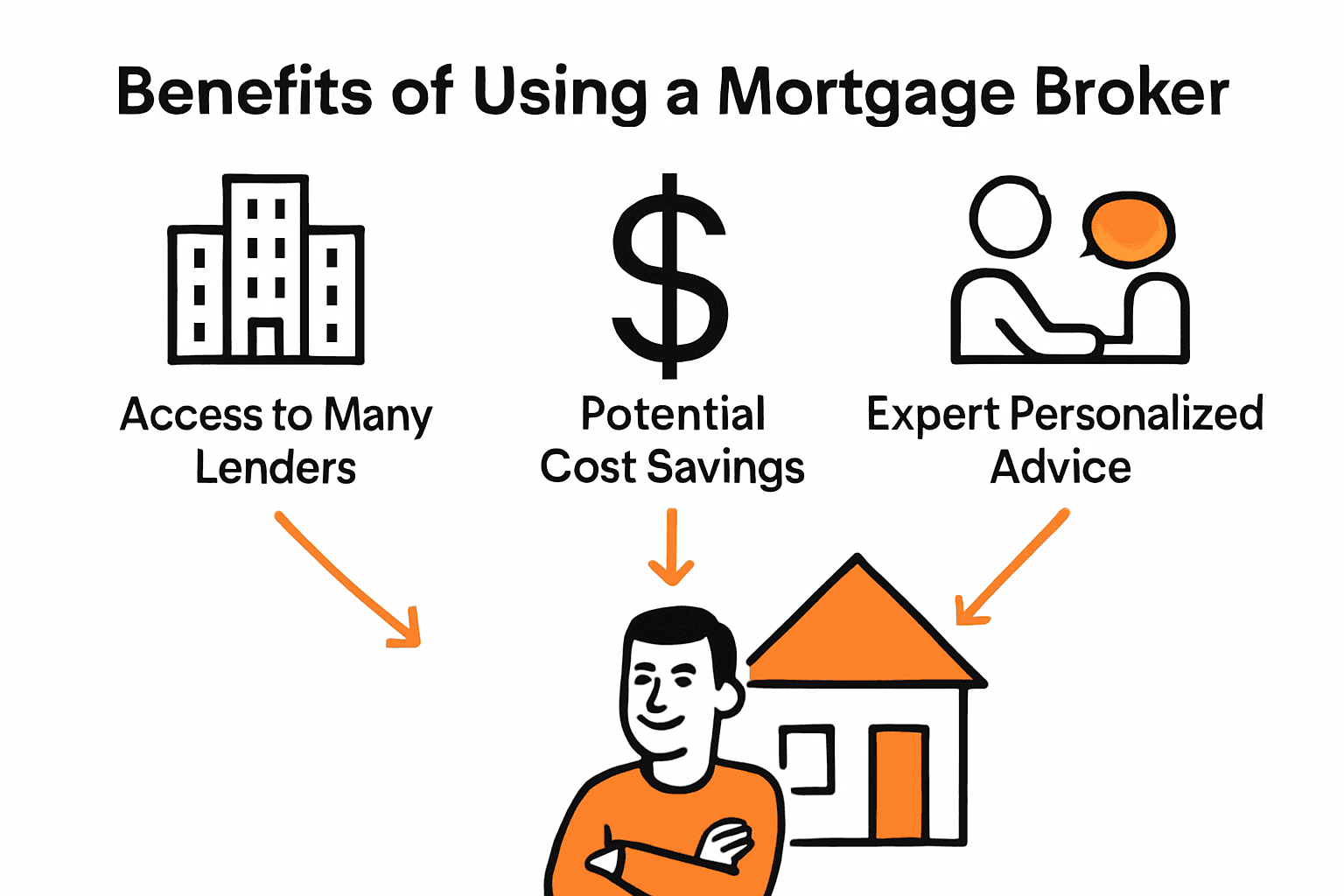
Mortgage brokers offer significant advantages that can transform the home financing experience for borrowers. According to research from Stanford Graduate School of Business, these professionals can increase market competition by introducing borrowers to lower-cost lending options that might otherwise remain undiscovered.
The key benefits of working with a mortgage broker include:
- Access to Diverse Lending Options: Connections with multiple financial institutions
- Time Savings: Streamlined application and research processes
- Potential Cost Reduction: Negotiating competitive interest rates
- Expert Financial Guidance: Personalized advice tailored to individual financial situations
- Simplified Complex Processes: Navigating intricate mortgage documentation
- Credit Score Protection: Minimizing multiple hard credit inquiries
Research from Oxford Academic reveals that broker-assisted clients often secure more advantageous loan terms, including larger loan amounts and longer amortization periods. These professionals essentially act as financial navigators, helping borrowers access opportunities they might not discover independently.
 There is indeed a better way to approach mortgage financing, and mortgage brokers represent a strategic approach to achieving more favorable lending outcomes.
Risks, Costs, and Common Pitfalls
Mortgage brokers can provide invaluable assistance, but potential borrowers must also understand the inherent risks associated with their services. According to research from the National Bureau of Economic Research, mortgage brokers historically have earned substantial profits on loans that ultimately proved riskier than initially presented, highlighting the critical need for borrowers to exercise due diligence.
Potential risks and pitfalls when working with mortgage brokers include:
- Potential Conflict of Interest: Brokers might prioritize loans with higher commissions
- Hidden Fees: Additional charges not immediately transparent
- Complex Fee Structures: Complicated compensation models that can obscure true costs
- Limited Lender Transparency: Not all lending options may be equally represented
- Potential Bias in Product Recommendations: Brokers might steer clients toward less optimal products
- Regulatory Compliance Variations: Different brokers may interpret regulations differently
Research from Science Direct demonstrates that borrowers using mortgage brokers can experience increased confusion about mortgage features, underscoring the importance of asking direct questions and maintaining clear communication throughout the lending process. Save interest by understanding these potential pitfalls and approach mortgage brokerage with an informed, strategic mindset.
Unlock the Full Potential of Working with a Mortgage Broker
Navigating the complex world of mortgage lending can feel overwhelming because of confusing terms and tricky fee structures. The article reveals key challenges borrowers face such as negotiating competitive interest rates and avoiding hidden costs. If you want to avoid costly mistakes and gain expert guidance tailored to your unique financial situation it is essential to work with a professional mortgage broker who understands how to simplify these complexities.
At Craigburn Capital, we specialize in delivering personalized mortgage solutions that take the stress out of home financing. Our team is committed to helping you find competitive interest rates and exclusive lending options that others might miss. We make sure you understand every step so you can confidently make decisions that save you time and money.

Experience peace of mind and expert support by exploring our comprehensive resources and mortgage services today. Visit Craigburn Capital to learn how our mortgage brokerage can help you avoid common pitfalls and secure the best terms. For first-time buyers or those with less-than-perfect credit, start your journey now with specialized mortgage assistance. Don’t wait until confusion and hidden fees cost you more—get the guidance you deserve at Craigburn Capital.
Frequently Asked Questions
What does a mortgage broker do?
A mortgage broker acts as an intermediary between borrowers and lenders, helping clients find suitable mortgage products tailored to their financial needs. They conduct financial assessments, evaluate multiple lending options, and negotiate terms on behalf of clients.
What types of mortgage brokers are there?
There are several types of mortgage brokers, including retail mortgage brokers who work directly with consumers, commercial mortgage brokers who specialize in business properties, wholesale mortgage brokers who partner with banks, independent mortgage brokers representing multiple lenders, and specialized niche brokers catering to specific borrower needs.
What are the benefits of using a mortgage broker?
Using a mortgage broker provides several advantages,包括 access to diverse lending options, time savings in the application process, potential cost reductions through negotiated rates, expert financial guidance, and simplified navigation of complex documentation.
What risks should borrowers consider when working with a mortgage broker?
Borrowers should be aware of potential risks including conflicts of interest, hidden fees, complex fee structures, limited lender transparency, and the possibility of biased product recommendations. It’s crucial to ask direct questions and maintain clear communication throughout the process.

