

Private Lending Explained: Benefits, Types, and Risks
Private lending has surged to nearly $2 trillion worldwide, providing american businesses and individuals with real alternatives to traditional bank loans. As more people seek flexible and fast ways to secure capital, understanding private lending becomes essential for making smart financing choices. This guide breaks down the main types, key concepts, and critical factors that set private lending apart, helping you grasp the important advantages and risks involved.
Table of Contents
- Defining Private Lending And Core Concepts
- Types Of Private Lending Arrangements
- How Private Lending Works For Borrowers
- Legal Protections And Regulatory Factors
- Common Risks And Costs Involved
- Private Lending Vs. Traditional Financing
Key Takeaways
| Point | Details |
|---|---|
| Growth of Private Lending | Private lending has rapidly increased, reaching nearly $2 trillion globally by the end of 2023, indicating a significant shift in capital access for businesses. |
| Flexible Financing Solutions | Private lenders offer customized terms and faster funding processes, catering to the unique financial needs of borrowers compared to traditional banks. |
| Diverse Lending Options | Private lending encompasses various arrangements, such as direct lending, mezzanine financing, and real estate loans, providing multiple strategies for different sectors. |
| Regulatory Considerations | The expansion of private credit prompts regulatory scrutiny to ensure financial stability and adequate protection for both investors and borrowers in the lending market. |
Defining Private Lending and Core Concepts
Private lending represents a dynamic alternative financing method where non-bank entities provide direct loans to businesses and individuals outside traditional banking systems. Private credit has expanded rapidly, reaching nearly $2 trillion globally by the end of 2023, reflecting a significant shift in how businesses and entrepreneurs access capital.
Private lending fundamentally involves private investors or investment groups extending loans directly to borrowers, bypassing conventional financial institutions. These lenders can include wealthy individuals, private investment funds, hedge funds, and specialized lending platforms. Unlike traditional bank loans, private lending offers more flexible terms, faster approval processes, and customized financing solutions tailored to specific borrower needs.
The landscape of private lending encompasses several core types of financial arrangements. Non-bank lending entities provide financing through various channels:
- Direct Lending: Loans made directly to mid-market businesses without intermediary banks
- Mezzanine Financing: Hybrid debt and equity investments often used in business expansions
- Bridge Loans: Short-term financing used to cover immediate capital needs
- Real Estate Private Lending: Specialized loans for property investments and development projects
Understanding these nuanced lending approaches helps borrowers recognize the potential advantages and strategic opportunities private lending presents beyond conventional banking frameworks.
Types of Private Lending Arrangements
Private lending offers diverse financing strategies designed to meet unique borrower requirements across different economic sectors. Private credit encompasses multiple sophisticated investment approaches, ranging from specialized financing solutions to targeted investment models that address specific market needs.

Direct Lending represents the most prominent private credit strategy, where non-bank financial institutions provide loans directly to businesses without traditional banking intermediaries. This segment has experienced substantial growth, with market projections indicating the private credit market could reach $2.8 trillion by 2028. These loans typically target mid-market companies seeking flexible, customized financing solutions.
The primary types of private lending arrangements include:
- Asset-Based Lending: Loans secured by specific company assets such as inventory, equipment, or accounts receivable
- Mezzanine Financing: Hybrid debt instruments combining elements of debt and equity financing
- Specialized Industry Lending: Targeted financing for specific sectors like real estate, technology, or healthcare
- Distressed Debt Financing: Investments in underperforming or troubled company debt with potential turnaround opportunities
Commercial lending strategies continue to evolve, with private lenders offering increasingly sophisticated and adaptable financial products that address complex market demands. These alternative financing methods provide critical capital access for businesses unable to secure traditional bank loans, filling an essential gap in the financial ecosystem.
How Private Lending Works for Borrowers
Private credit offers a transformative approach to financing that empowers borrowers with more flexible and customized funding solutions. Unlike traditional banking models, private lending provides businesses and individuals with alternative pathways to secure capital that align more closely with their specific financial needs and strategic objectives.
Borrower Qualification in private lending differs significantly from conventional bank requirements. Non-bank entities evaluate lending opportunities through more nuanced criteria, focusing on the borrower’s overall financial potential rather than strictly adhering to rigid credit score thresholds. This approach enables mid-market businesses and entrepreneurs with unique financial profiles to access critical funding that might be unavailable through traditional banking channels.
The private lending process typically involves several key steps:
- Initial Assessment: Comprehensive review of borrower’s financial health and project viability
- Customized Proposal: Tailored financing structure matching specific borrower requirements
- Negotiation: Flexible terms including interest rates, repayment schedules, and collateral options
- Funding: Direct capital deployment with potentially faster execution compared to traditional loans
Real estate development financing exemplifies how private lending can provide targeted solutions, offering investors and developers specialized funding mechanisms that traditional banks often cannot match. These alternative lending models create opportunities for borrowers by bridging critical financial gaps and supporting innovative business strategies.
Legal Protections and Regulatory Factors
The rapid expansion of private credit has prompted increased regulatory scrutiny to ensure financial stability and protect both investors and borrowers in this evolving lending landscape. As alternative lending models continue to grow, government regulators are developing sophisticated frameworks to manage potential risks and maintain market integrity.
Regulatory oversight in private lending focuses on several critical dimensions. Financial stability monitoring has become increasingly important as non-bank lending practices expand beyond traditional banking regulations. This requires comprehensive assessment of lending practices, risk management protocols, and transparency requirements to protect all stakeholders in the financial ecosystem.
Key legal protections for private lending include:
- Disclosure Requirements: Mandatory comprehensive information sharing about loan terms
- Risk Assessment Protocols: Standardized evaluation methods for lending opportunities
- Investor Protection Mechanisms: Rules governing fund management and investor rights
- Compliance Standards: Regulatory frameworks ensuring ethical lending practices
Securitizing financial instruments plays a crucial role in maintaining legal integrity, providing additional layers of protection and standardization for both lenders and borrowers in the private credit market. These mechanisms help create transparent, accountable lending environments that balance innovation with robust financial safeguards.
Common Risks and Costs Involved
Private credit involves complex financial risks that demand careful evaluation and strategic management. Unlike traditional banking models, private lending exposes both borrowers and investors to unique financial challenges that require sophisticated risk mitigation strategies and comprehensive financial planning.
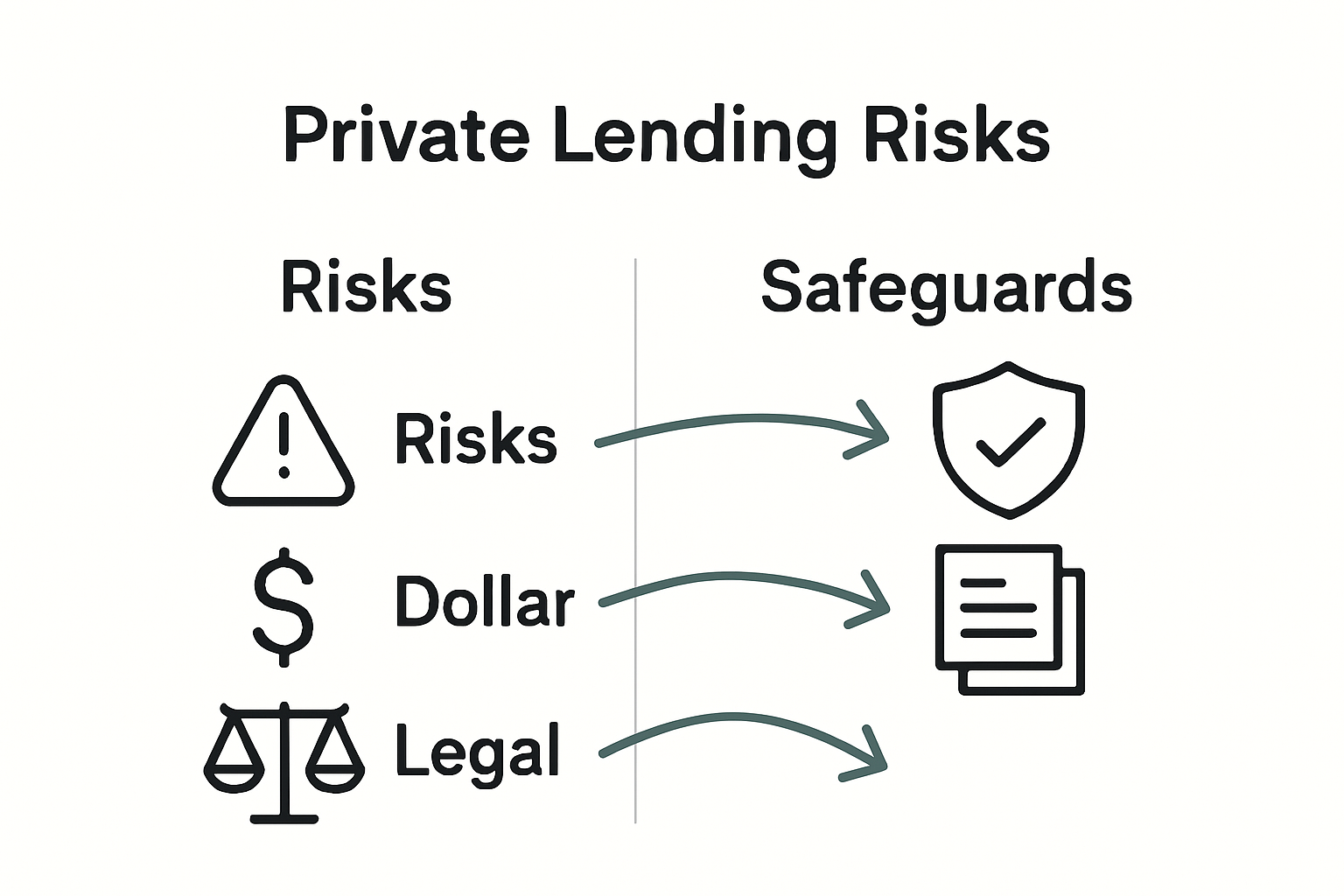
Default Risk represents the most significant potential financial exposure in private lending. Lenders must conduct thorough risk assessments to minimize potential losses, carefully analyzing borrower financial health, project viability, and repayment capabilities. These assessments help determine appropriate interest rates and lending terms that balance potential returns with inherent financial risks.
Key financial risks in private lending include:
- Default Probability: Potential failure of borrowers to repay loans
- Liquidity Constraints: Challenges in converting investments back to cash
- Interest Rate Fluctuations: Market changes affecting loan profitability
- Collateral Valuation Risks: Potential depreciation of secured assets
Saving interest through strategic financial planning becomes crucial in managing the complex cost structures associated with private lending. Sophisticated borrowers and investors must develop comprehensive approaches to minimize financial exposure and optimize potential returns in this dynamic lending environment.
Private Lending vs. Traditional Financing
Private credit offers a transformative approach to financing that fundamentally challenges traditional banking models. While conventional lending relies on standardized evaluation processes, private lending provides more dynamic and personalized financial solutions that adapt to unique borrower circumstances.
Financing Flexibility represents the most significant differentiator between private and traditional lending approaches. Unlike conventional bank loans, private credit solutions can be precisely tailored to meet specific borrower requirements, offering unprecedented customization in loan size, structure, and repayment terms. Traditional banks typically enforce rigid criteria, whereas private lenders evaluate opportunities through a more holistic and nuanced lens.
Key distinctions between private lending and traditional financing include:
- Approval Speed: Private lending often provides faster decision-making processes
- Qualification Criteria: More flexible assessment of borrower potential
- Loan Customization: Tailored financial solutions beyond standardized products
- Risk Assessment: Comprehensive evaluation beyond credit score metrics
Support for small business operators demonstrates how alternative lending models can provide critical financial access for entrepreneurs who might struggle with conventional banking requirements. These innovative approaches represent a fundamental shift in how capital is accessed and deployed across various economic sectors.
Unlock the Benefits of Private Lending with Expert Guidance
Navigating the world of private lending can feel overwhelming, especially with so many options like direct lending, mezzanine financing, and asset-based loans. You might be facing challenges such as tight qualification criteria or needing faster approvals with flexible terms that traditional banks struggle to offer. Whether you are a mid-market business owner or a real estate investor, understanding these financing choices and managing risks like default or liquidity constraints is crucial to your success.
At Craigburn Capital, we specialize in personalized mortgage and private lending solutions designed to match your unique financial situation. We offer competitive interest rates and exclusive programs for self-employed individuals or those with less-than-perfect credit – helping you access capital when you need it most. Our team can guide you through customized loan structures, ensuring you avoid costly mistakes while making the most of private credit opportunities.
Discover how we transform the complexities of private lending into clear, actionable steps.

Ready to explore private lending options tailored for your goals? Visit Craigburn Capital now to get expert advice and unlock financing solutions that traditional banks cannot provide. Don’t wait until opportunity slips away. Contact us today and gain confidence in every financial decision.
Learn more about real estate development financing and saving interest with specialized private lending strategies designed for your success.
Frequently Asked Questions
What is private lending?
Private lending is an alternative financing method where non-bank entities provide direct loans to businesses and individuals outside the traditional banking system. It often offers more flexible terms and faster approval processes.
What are the main types of private lending arrangements?
The main types of private lending arrangements include direct lending, mezzanine financing, asset-based lending, specialized industry lending, and distressed debt financing, each catering to different borrower needs.
How does the private lending process work for borrowers?
The private lending process involves an initial assessment of the borrower’s financial health, a customized financing proposal, negotiation of loan terms, and direct funding. This process is typically quicker than traditional bank loans.
What are the risks associated with private lending?
Key risks in private lending include default risk, liquidity constraints, interest rate fluctuations, and collateral valuation risks. Borrowers and investors must conduct thorough risk assessments to mitigate potential losses.

