

Master the Commercial Financing Workflow for Success
Most American business owners underestimate the complexity behind securing commercial financing. With more than 60 percent of American small businesses relying on financing to drive growth, understanding each crucial step is essential. Navigating the process means staying organized, making smart decisions, and avoiding costly mistakes. This guide breaks down the path from assessing financial objectives to completing funding, giving you practical steps to strengthen your financial position and reach your business goals.
Table of Contents
- Step 1: Assess Financial Needs and Objectives
- Step 2: Gather Essential Documentation
- Step 3: Submit Loan Application to Lenders
- Step 4: Review Offers and Negotiate Terms
- Step 5: Complete Closing and Funding Process
Quick Summary
| Key Takeaway | Explanation |
|---|---|
| 1. Conduct a Comprehensive Financial Assessment | Create a detailed financial inventory to understand your current situation and future goals. |
| 2. Organize Essential Documentation | Compile tax returns, bank statements, and business plans to demonstrate financial credibility to lenders. |
| 3. Submit a Compelling Loan Application | Include a clear narrative and adhere to each lender’s application requirements for optimal chances of approval. |
| 4. Analyze and Negotiate Loan Offers | Evaluate proposals on interest rates and hidden costs to secure favorable terms aligned with your strategy. |
| 5. Prepare for a Thorough Closing Process | Review all legal documents carefully to ensure clarity on terms and conditions before finalizing your loan. |
Step 1: Assess Financial Needs and Objectives
Successfully navigating commercial financing requires a strategic approach to understanding your financial landscape. This step will help you create a comprehensive assessment of your current financial situation and future goals.
Begin by conducting a thorough financial inventory that goes beyond simple number crunching. You’ll want to examine multiple dimensions of your financial profile, including current income streams, existing debt obligations, cash reserves, and projected investment returns. Comprehensive financial assessments demand a holistic view that connects your immediate needs with long term strategic objectives. Consider creating a detailed spreadsheet that captures your current financial metrics such as monthly income, recurring expenses, potential investment capital, and risk tolerance levels.
Next, translate these raw financial data points into actionable objectives. What specific financial milestones are you aiming to achieve within the next 12 to 36 months? Are you looking to expand business operations, purchase commercial real estate, or restructure existing debt? Each objective requires a nuanced understanding of how financing can serve your broader strategic goals. Map out potential scenarios that demonstrate how different financing approaches might accelerate or support your desired outcomes.
Pro tip: Schedule a comprehensive financial review every six months to ensure your objectives remain aligned with changing market conditions and personal circumstances.
Step 2: Gather Essential Documentation
Documentation preparation is a critical step in your commercial financing workflow that can make or break your loan application. Your goal is to compile a comprehensive and organized set of financial records that demonstrate your credibility and financial stability to potential lenders.
Start by creating a dedicated digital and physical file system for your documentation. Comprehensive loan preparation requires gathering multiple types of financial records. You will need personal and business tax returns for the past three years, recent bank statements, profit and loss statements, balance sheets, business licenses, articles of incorporation, detailed business plans, and current credit reports. Pro tip: Scan and create digital backups of all physical documents to ensure you have redundant copies in case of loss or damage.
Each document serves a specific purpose in demonstrating your financial health and loan worthiness. Tax returns reveal your income consistency, bank statements show cash flow patterns, and business plans outline your strategic vision. Organize these documents chronologically and create a master index to help lenders quickly review your financial profile. Be prepared to provide additional supplemental documentation if requested.
Pro tip: Create a dedicated email folder and cloud storage location for your loan documentation to maintain a secure and easily accessible financial portfolio.
Here is a summary of key documents and their roles in commercial loan applications:
| Document Type | Purpose | Example Detail |
|---|---|---|
| Business Plan | Explains business vision and strategy | Expansion timeline |
| Tax Returns | Proves income consistency | Three years of federal returns |
| Profit & Loss Statement | Shows profitability and cash flow | Quarterly summary included |
| Credit Reports | Assesses creditworthiness | FICO score and report |
| Bank Statements | Highlights cash reserves and activity | Past six months of statements |
| Articles of Incorporation | Confirms business legitimacy | State-filed entity paperwork |
Step 3: Submit Loan Application to Lenders
Submitting your loan application marks a critical transition from preparation to potential financing. Your objective is to present a compelling financial narrative that convinces lenders of your creditworthiness and business potential.

Loan application checklists provide a strategic framework for navigating the submission process effectively. Begin by carefully reviewing each lender’s specific application requirements. Some may prefer online submissions while others require physical documentation. Prepare multiple copies of your application package and ensure every form is completed with precision. Double check that all financial statements align perfectly across documents and that you have signed all necessary forms. Pay special attention to sections requesting detailed business projections and explanations of how you intend to use the borrowed funds.
When submitting your application, consider creating a comprehensive cover letter that summarizes your business goals and financial strategy. This narrative supplement can help differentiate your application by providing context beyond raw numbers. Be prepared for potential follow up questions or requests for additional documentation. Some lenders might schedule interviews or require more detailed explanations about your business model and financial projections. Maintain a professional and responsive communication style throughout the application process.
Pro tip: Create a dedicated email address and phone line specifically for loan communication to ensure prompt and organized responses to lender inquiries.
Step 4: Review Offers and Negotiate Terms
Reviewing and negotiating loan offers represents a critical moment in your commercial financing journey where strategic decision making can dramatically impact your financial future. Your objective is to carefully evaluate multiple proposals and secure terms that align with your business goals and financial capacity.
Commercial viability assessments require a comprehensive analysis of each lender’s proposal beyond just interest rates. Examine the entire financial package including loan duration, repayment schedules, prepayment penalties, collateral requirements, and any additional fees. Create a detailed comparison spreadsheet that allows you to objectively analyze each offer’s strengths and potential drawbacks. Pay close attention to hidden costs and restrictive covenants that might limit your business flexibility. Look beyond the headline numbers to understand how each loan’s structure could impact your cash flow and long term financial strategy.
When entering negotiations, approach the process as a collaborative dialogue rather than an adversarial interaction. Prepare a clear rationale for your desired terms based on your financial projections and business model. Be ready to provide additional context about your revenue streams, growth potential, and risk mitigation strategies. Demonstrate your financial literacy and professionalism by showing you have thoroughly researched market rates and understand the nuanced elements of commercial lending. Remember that everything is potentially negotiable sometimes even aspects of the loan beyond the interest rate.
Pro tip: Create a prioritized list of must have versus nice to have loan terms before negotiations begin to maintain clear boundaries and strategic focus.
Compare critical loan terms to evaluate proposals effectively:
| Term | What to Check For | Possible Impact |
|---|---|---|
| Interest Rate | Fixed or variable, percentage | Affects total repayment amount |
| Loan Duration | Number of years/months | Influences monthly payments |
| Prepayment Penalty | Fees for early payoff | Limits refinancing flexibility |
| Collateral Requirements | Type and value of security | Puts business assets at risk |
| Additional Fees | Origination, servicing, etc. | Raises total borrowing costs |
Step 5: Complete Closing and Funding Process
The closing and funding process represents the final critical phase of your commercial financing journey where all your meticulous preparation transforms into tangible financial resources. Your objective is to navigate the legal and financial formalities with precision and confidence.
Commercial loan document understanding requires careful attention to every detail during the closing process. Prepare for a comprehensive review that involves multiple legal and financial documents including promissory notes, security agreements, and funding agreements. Expect to spend several hours carefully reviewing each document, asking clarifying questions, and ensuring you fully comprehend the terms. During the closing meeting, remain patient and methodical. Each document represents a binding commitment that will shape your financial future. Verify that all terms match the negotiated agreement and that there are no unexpected conditions or clauses.
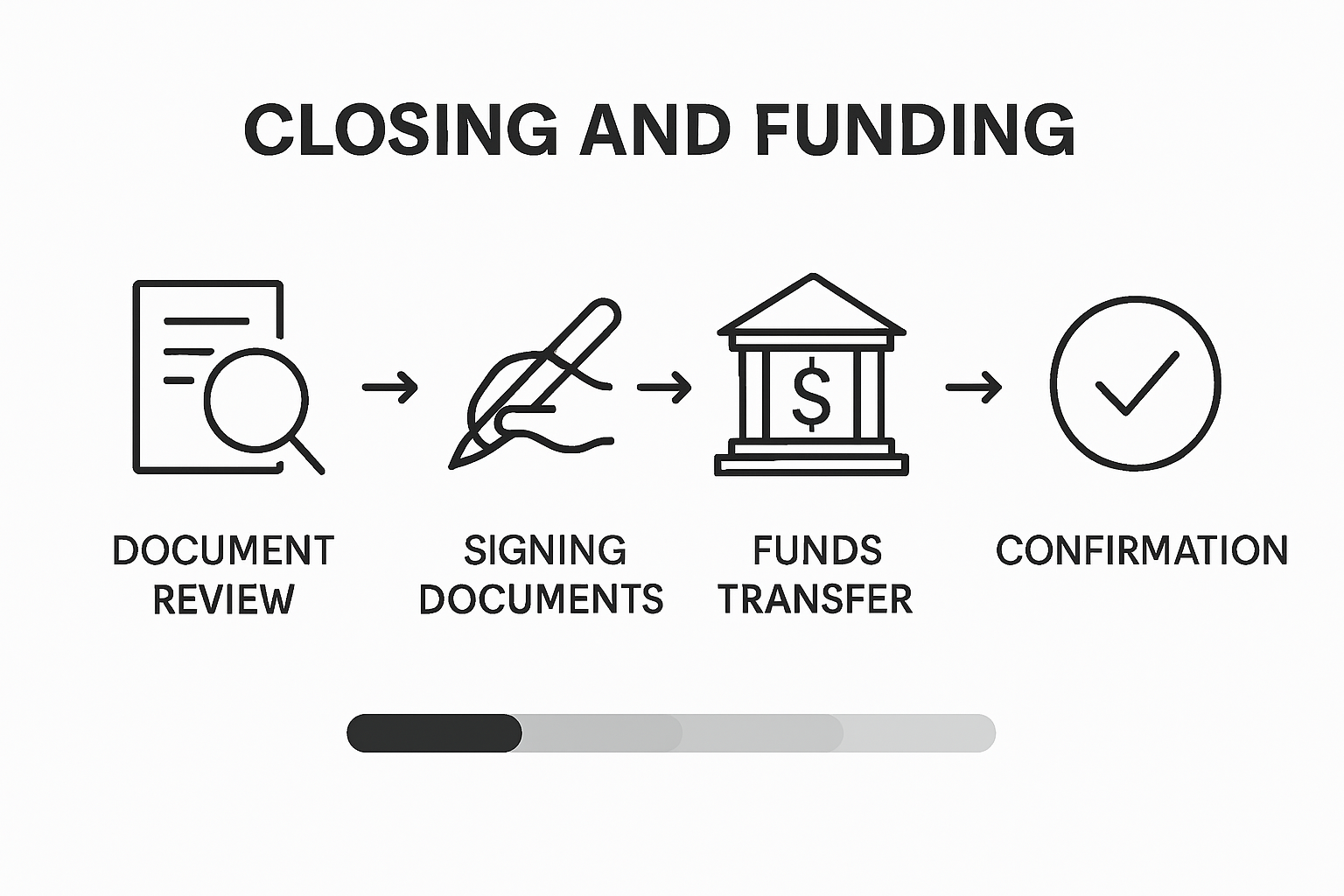
Be prepared to provide additional documentation or clarifications during the closing process. Some lenders might request last minute verifications of your financial statements or business projections. Maintain a professional and responsive approach. Have digital and physical copies of all relevant financial documents readily available. Your goal is to demonstrate organizational preparedness and financial reliability. After signing, confirm the exact timeline for fund disbursement and establish clear communication channels with your lending contact for any post closing questions.
Pro tip: Create a dedicated digital folder with high quality scans of all signed closing documents and store physical copies in a secure fireproof location for future reference.
Take Control of Your Commercial Financing Journey Today
Mastering the commercial financing workflow means overcoming challenges like organizing essential documentation, crafting compelling loan applications, and negotiating favorable terms. If you feel overwhelmed by financial assessments, loan complexities, or closing procedures, you are not alone. Many businesses struggle with aligning their financing options to strategic goals while managing lender demands and paperwork.
Craigburn Capital understands these pain points. We specialize in personalized commercial financing solutions designed to simplify each step from thorough financial review to closing. With access to exclusive competitive rates and tailored advice for diverse financial situations including private lending options, our experts empower you to confidently navigate financing hurdles. Visit Craigburn Capital for detailed resources and one-on-one guidance that can transform your loan application into a success story.
Ready to move from confusion to clarity and secure funding that fits your business goals? Explore how our commercial financing services can make the process seamless. Don’t wait until financing roadblocks slow your growth. Contact Craigburn Capital now and turn your commercial ambitions into reality.
Frequently Asked Questions
How do I assess my financial needs before applying for commercial financing?
To assess your financial needs, conduct a thorough financial inventory that includes evaluating your income streams, existing debt, cash reserves, and investment returns. Create a detailed spreadsheet that captures your current financial metrics and then translate these into specific financial milestones you aim to achieve within the next 12 to 36 months.
What essential documents do I need to prepare for a commercial loan application?
Gather a comprehensive set of documents, including personal and business tax returns for the past three years, profit and loss statements, balance sheets, and business licenses. Create a dedicated digital file system to organize these records, ensuring they are readily accessible and clearly indexed for lenders.
How do I submit my loan application effectively?
Submit your loan application by carefully reviewing each lender’s specific application requirements and preparing a complete application package. Include a cover letter that summarizes your business goals and financial strategy to provide additional context for your application.
What should I look for when reviewing loan offers?
When reviewing loan offers, examine critical terms such as interest rate, loan duration, and prepayment penalties to understand how each could impact your cash flow. Create a comparison spreadsheet to analyze the strengths and drawbacks of each proposal objectively.
How can I prepare for the closing and funding process?
Prepare for the closing process by reviewing all legal and financial documents carefully, like promissory notes and funding agreements. Ensure you have both digital and physical copies of all relevant documents easily accessible to demonstrate your organizational preparedness and professionalism during the closing meeting.
How often should I review my financial situation?
Schedule a comprehensive financial review every six months to ensure your financial objectives align with changing market conditions and personal circumstances. This regular assessment helps you adapt and stay on track towards achieving your commercial financing goals.
Recommended
- Commercial Mortgage Explained: Complete Guide for 2025 – Craigburn Capital
- Commercial Mortgage Application Guide: Secure Approval Fast – Craigburn Capital
- How to Qualify for a Mortgage: Step-by-Step Guide for Buyers – Craigburn Capital
- Private Lending Explained: Benefits, Types, and Risks – Craigburn Capital
- How to Improve Workshop Efficiency for Diesel Injection Pros 2025 – My WordPress

