

Role of Broker in Self-Employed Lending Success
Securing a mortgage as an American entrepreneur is rarely straightforward. With nearly 30 million self-employed individuals in the United States, many face unique hurdles when traditional lending does not fit their financial reality. Strict income verification rules and fluctuating earnings can complicate the approval process, yet understanding self-employed lending options makes homeownership more accessible. This guide unpacks what sets self-employed lending apart and offers actionable steps for smoother mortgage approval.
Table of Contents
- What Is Self-Employed Lending?
- Key Challenges for Self-Employed Borrowers
- How Brokers Evaluate Self-Employed Applicants
- Broker Access to Specialized Lenders
- Risks, Mistakes, and Success Factors
Key Takeaways
| Point | Details |
|---|---|
| Self-Employed Income Verification is Unique | Self-employed mortgage applicants need to provide extensive documentation, including multiple years of tax returns and financial statements, unlike traditionally employed applicants who only need recent pay stubs. |
| Navigating Approval Challenges | Self-employed individuals often face stricter requirements and higher scrutiny, necessitating meticulous financial record-keeping to demonstrate stability and income potential. |
| Significance of Specialized Brokers | Working with brokers who specialize in self-employed lending can significantly improve approval chances by connecting applicants with lenders who understand entrepreneurial financial profiles. |
| Financial Preparedness is Crucial | Maintaining organized, comprehensive financial records and developing a clear financial narrative are essential for self-employed borrowers to enhance their loan prospects. |
What Is Self-Employed Lending?
Self-employed lending represents a specialized mortgage approach designed specifically for individuals who generate income through independent business operations, freelance work, or entrepreneurial ventures. Unlike traditional employment where income is predictable and documented through consistent pay stubs, self-employed professionals face unique challenges in securing financing due to variable income streams and complex financial documentation.
Mortgage brokers play a critical role in navigating these challenges by understanding the nuanced financial landscape of self-employment. Research indicates that home equity can serve as valuable collateral, enabling self-employed professionals to leverage their assets for business and personal financing needs. The process typically involves comprehensive income verification, including tax returns, profit and loss statements, and bank records to demonstrate financial stability and repayment capacity.
Key characteristics of self-employed lending include flexible documentation requirements, specialized income assessment methods, and tailored lending criteria that recognize the dynamic nature of entrepreneurial income. Non-traditional income verification becomes paramount, with brokers analyzing multiple years of financial records to establish consistent earning potential. Microcredit principles have further influenced this lending segment, emphasizing support for independent professionals who might not qualify through conventional banking standards.
Pro Tip for Self-Employed Borrowers: Maintain meticulous financial records and work with a mortgage broker who specializes in self-employed lending to maximize your approval chances and secure the most competitive rates.
Here is a summary of how self-employed and traditionally employed mortgage applicants differ:
| Criteria | Self-Employed Applicants | Traditionally Employed Applicants |
|---|---|---|
| Income Verification | Multiple years of tax returns, business records required | Recent pay stubs and employer verification |
| Income Consistency | Variable and may fluctuate year to year | Generally steady and predictable |
| Lender Scrutiny | Higher, with detailed review of finances | Lower, standardized checks |
| Approval Challenges | More documentation, stricter requirements | Faster processing, fewer hurdles |
Key Challenges for Self-Employed Borrowers
Self-employed professionals encounter significant obstacles when seeking mortgage financing, primarily stemming from the unpredictable nature of their income streams. Mortgage access remains challenging for independent workers, with lenders often perceiving their financial profiles as higher risk compared to traditional salaried employees.
The primary challenges include complex income documentation, inconsistent earnings, and heightened scrutiny of financial records. Lenders typically require extensive proof of income, including multiple years of tax returns, profit and loss statements, and bank statements to validate earning potential. Entrepreneurial financial knowledge plays a crucial role in navigating these complex lending requirements, as borrowers must demonstrate financial stability despite fluctuating income.

Additional hurdles for self-employed borrowers include higher documentation requirements, stricter credit score expectations, and the need to provide more comprehensive financial evidence. Income verification becomes a critical challenge, with lenders often requiring three to five years of consistent income documentation. This means freelancers, contractors, and business owners must maintain meticulous financial records and be prepared to present a comprehensive financial narrative that demonstrates their economic reliability.
Pro Tip for Mortgage Success: Develop a robust financial portfolio by maintaining organized, detailed financial records, separating personal and business expenses, and working with a mortgage broker who specializes in self-employed lending strategies.
How Brokers Evaluate Self-Employed Applicants
Mortgage brokers employ sophisticated evaluation methods to assess self-employed applicants, recognizing the unique financial complexities of entrepreneurial income. Multicriteria credit rating models have revolutionized the way lenders analyze the financial profiles of independent professionals, moving beyond traditional income verification approaches.
The evaluation process typically involves a comprehensive analysis of multiple financial documents and performance indicators. Brokers scrutinize tax returns from the past two to three years, examining not just total income but also income stability, business health, and potential future earning capacity. Income consistency becomes a critical factor, with lenders looking for steady or growing income trends that demonstrate financial reliability. Optimal information acquisition strategies now allow brokers to balance detailed financial investigation with efficient assessment techniques.
Key evaluation criteria include detailed business financial statements, personal and business credit scores, debt-to-income ratios, and the overall financial narrative of the applicant’s business. Brokers often look beyond raw numbers, considering factors such as business longevity, industry stability, client base diversity, and potential for future income growth. This holistic approach helps self-employed individuals overcome the traditional barriers associated with non-traditional income streams.
Pro Tip for Self-Employed Mortgage Applicants: Prepare a comprehensive financial portfolio before applying, including organized tax returns, profit and loss statements, and a clear explanation of your income structure to demonstrate financial stability to potential lenders.
Below is a quick reference for key factors brokers assess in self-employed mortgage applicants:
| Factor | What Brokers Review | Impact on Loan Decision |
|---|---|---|
| Business Longevity | Years in business, stability | Longer history increases approval odds |
| Credit Score | Personal and business scores | Higher scores secure better rates |
| Debt-to-Income Ratio | All debts vs. income | Lower ratios show manageable risk |
| Income Growth Potential | Future earnings outlook | Positive trend boosts lender confidence |
Broker Access to Specialized Lenders
Mortgage brokers possess a unique advantage in navigating the complex landscape of lending by maintaining extensive networks with specialized lenders who cater specifically to self-employed professionals. Lending technologies across different financial institutions reveal that direct lenders often focus on niche market segments, creating tailored solutions for entrepreneurs and independent workers that traditional banks might overlook.
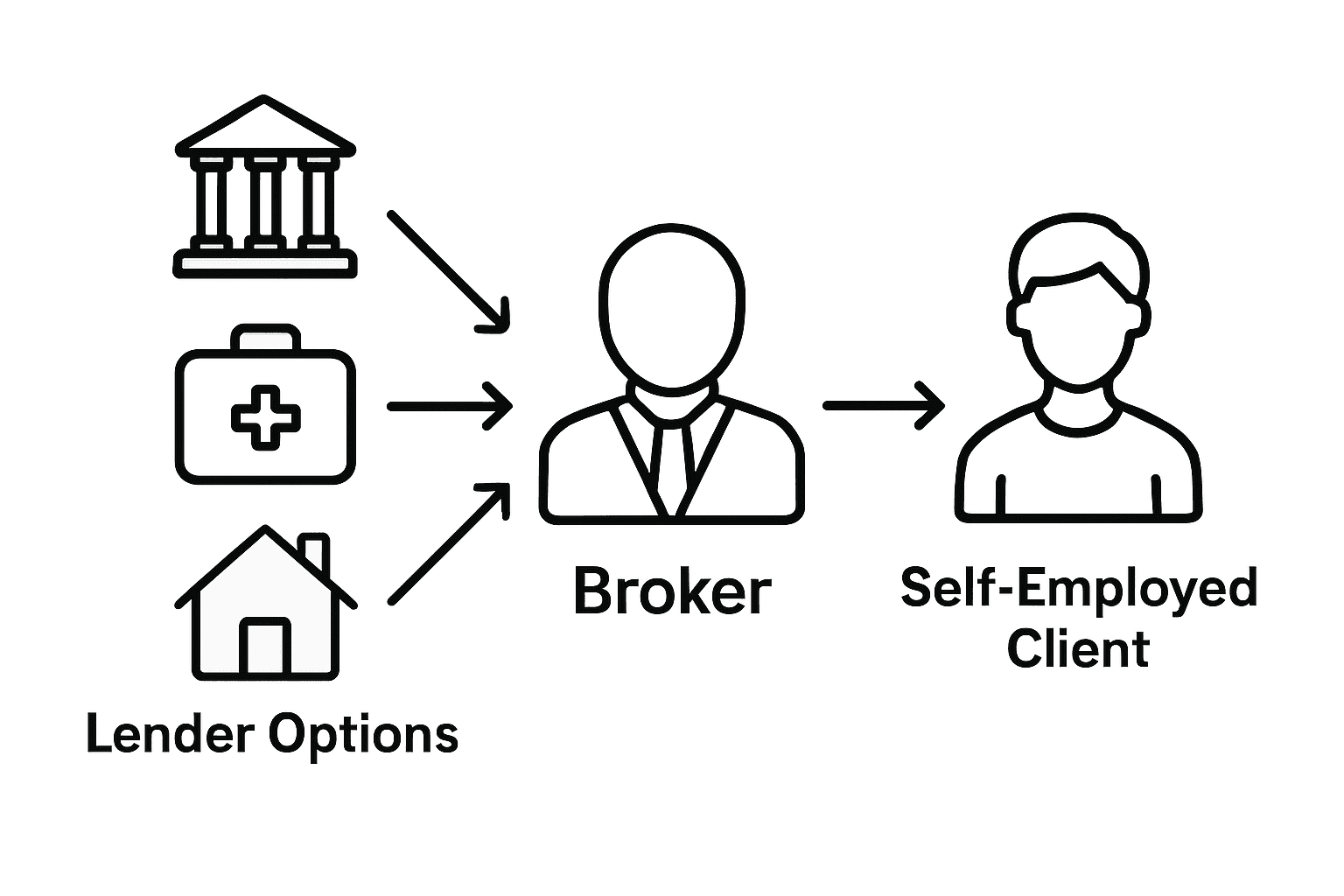
Specialized lending networks provide critical alternatives for self-employed borrowers who struggle with conventional mortgage qualification processes. These lenders understand the nuanced financial profiles of entrepreneurs, offering more flexible underwriting standards that consider the dynamic nature of self-employment income. Projected growth in self-employed lending indicates an increasing recognition of the unique financial needs of independent professionals, with some specialist lenders anticipating a 67% expansion in targeted mortgage products.
Brokers leverage their professional relationships to match self-employed applicants with lenders who have specific expertise in alternative income verification. These specialized lenders typically offer more comprehensive evaluation methods, considering factors beyond standard income documentation such as business performance, industry stability, and future earning potential. Their approach allows for a more holistic assessment of an applicant’s financial health, creating opportunities for entrepreneurs who might be overlooked by traditional lending institutions.
Pro Tip for Maximizing Broker Connections: Develop a comprehensive financial narrative that highlights your business stability, consistent income, and future growth potential to help brokers effectively match you with the most suitable specialized lenders.
Risks, Mistakes, and Success Factors
Self-employed professionals seeking mortgage financing must navigate a complex landscape of potential risks and strategic opportunities. Consumer credit access significantly influences entrepreneurial success, revealing that while increased credit availability can support business growth, it simultaneously introduces critical financial challenges for independent workers.
Common mistakes in self-employed lending include inadequate financial documentation, inconsistent income reporting, and failing to understand the nuanced evaluation criteria used by specialized lenders. Financial preparedness becomes paramount, with brokers emphasizing the importance of maintaining comprehensive, organized financial records that demonstrate income stability and business health. Student loan debt and financial hardships underscore the broader economic challenges that can impact mortgage qualification, highlighting the need for strategic financial management.
Success factors for self-employed mortgage applicants involve proactive financial planning, maintaining strong credit scores, and developing a clear, compelling narrative about business performance. Brokers recommend developing multiple years of consistent income documentation, separating personal and business expenses, and working with financial professionals who understand the unique challenges of entrepreneurial income. By anticipating potential lending obstacles and preparing comprehensive financial portfolios, self-employed professionals can significantly improve their mortgage approval chances.
Pro Tip for Financial Resilience: Create a dedicated financial management system that tracks income, expenses, and business performance meticulously, providing a clear and transparent financial story that lenders can easily understand and evaluate.
Navigate Self-Employed Lending with Expert Broker Support
Securing a mortgage as a self-employed professional comes with unique challenges such as complex income verification and higher lender scrutiny. The article highlights how specialized brokers evaluate detailed financial documents and tap into networks of specialized lenders to unlock financing opportunities. If you are feeling overwhelmed by fluctuating income or extensive documentation requirements, you are not alone. Understanding business stability, credit health, and income trends can make all the difference to lending success.

Take control of your mortgage journey today with Craigburn Capital. Our team specializes in helping self-employed individuals like you navigate these complexities by offering tailored mortgage solutions and exclusive lender access. Visit Craigburn Capital to explore our personalized services, get competitive rates, and start building a compelling financial story that lenders trust. Don’t wait—empower yourself with expert guidance now and turn your self-employment into a homeownership advantage.
Frequently Asked Questions
What is the role of a mortgage broker in self-employed lending?
Mortgage brokers assist self-employed individuals in navigating the mortgage process by connecting them with specialized lenders who understand unique income verification needs and offering personalized guidance through documentation requirements.
How do brokers evaluate self-employed applicants differently from traditionally employed applicants?
Brokers evaluate self-employed applicants by reviewing multiple years of tax returns, business performance, and income stability, rather than relying solely on recent pay stubs and employer verification utilized for traditionally employed applicants.
What types of documentation do self-employed borrowers typically need to provide?
Self-employed borrowers usually need to provide multiple years of tax returns, profit and loss statements, and bank statements to validate their income and demonstrate financial stability to lenders.
How can self-employed individuals improve their chances of mortgage approval through a broker?
Self-employed individuals can improve their approval chances by maintaining organized financial records, demonstrating consistent income over several years, and developing a clear financial narrative for their mortgage broker to present to lenders.
Recommended
- Why Work With Mortgage Brokers: Smarter Home Financing – Craigburn Capital
- Complete Guide to the Role of Mortgage Broker – Craigburn Capital
- 7 Essential Questions to Ask Mortgage Brokers Before You Apply – Craigburn Capital
- B-Lender Mortgages: Solutions for Imperfect Credit – Craigburn Capital
- Understanding the Role of a Customs Import Broker – Worldwide Express, Inc.

