

Why Work With Mortgage Brokers: Smarter Home Financing
Over half of all American homebuyers rely on mortgage brokers to sort through the maze of loan products and lenders. Choosing the right financing partner is a decision that can shape your financial future, especially with so many options vying for your attention. Discover why understanding the real role of mortgage brokers could mean better rates, fewer headaches, and a smoother home buying experience in the often complicated American real estate market.
Table of Contents
- What Mortgage Brokers Really Do
- Types of Mortgage Brokers and Services
- How Brokers Secure Better Loan Options
- Comparing Brokers With Direct Lenders
- Costs, Risks, and Avoidable Mistakes
Key Takeaways
| Point | Details |
|---|---|
| Role of Mortgage Brokers | Brokers act as intermediaries between borrowers and lenders, offering access to multiple loan options tailored to individual financial needs. |
| Benefits of Using Brokers | They help facilitate competition among lenders, potentially leading to lower interest rates and better loan terms for borrowers. |
| Types of Brokers | Brokers can specialize in residential or commercial loans, catering to different borrower needs based on their financial situations. |
| Navigating Costs and Risks | Borrowers should be aware of potential conflicts of interest due to commission-based compensation and should seek detailed fee information before proceeding. |
What Mortgage Brokers Really Do
Mortgage brokers are financial professionals who act as critical intermediaries between borrowers and lenders, simplifying what can often be a complex home financing journey. Unlike bank loan officers who represent a single institution, brokers work independently to connect you with multiple lending options tailored to your specific financial situation.
These professionals do much more than just matchmaking. Mortgage brokers facilitate competition among lenders, which can potentially help borrowers secure more advantageous loan terms. By leveraging their extensive network of lending relationships, they can quickly identify and present loan products that align with your unique credit profile, income level, and homeownership goals.
The core responsibilities of mortgage brokers include:
- Analyzing your financial background and credit history
- Comparing loan options from multiple lenders
- Negotiating interest rates and loan terms
- Guiding you through complex application paperwork
- Providing personalized financial advice
While brokers typically earn commissions from lenders, reputable professionals prioritize finding the best solution for their clients. Research indicates that brokers act as intermediaries who assist in loan selection processes, helping borrowers navigate a landscape that can often feel overwhelming and opaque. Their expertise can be particularly valuable for first-time homebuyers, self-employed individuals, or those with complex financial situations who might struggle to secure traditional financing.
Types of Mortgage Brokers and Services
Mortgage brokers are diverse professionals who specialize in serving different segments of the borrowing market. Mortgage brokers can be categorized based on the clientele they serve, ranging from residential homebuyers to complex commercial real estate investors, each with unique financing needs and strategic approaches.

In the residential sector, mortgage brokers work closely with individual homebuyers, helping them navigate the intricate landscape of home financing. These brokers assess personal financial situations, recommend appropriate loan products, and guide clients through the entire application process. They’re particularly valuable for first-time homebuyers, individuals with non-traditional income streams, or those with complex credit histories.
Commercial mortgage brokers represent a specialized segment of the industry. They specialize in securing loans for business properties, acting as critical intermediaries between commercial borrowers and financial institutions. Their expertise is crucial for businesses seeking financing for:
- Office building acquisitions
- Retail space developments
- Warehouse and industrial property investments
- Multi-unit residential complexes
- Mixed-use real estate projects
Beyond these primary categories, mortgage brokers can further specialize by focusing on specific niches such as refinancing, construction loans, investment property financing, or working with clients who have unique credit challenges. Their primary value lies in providing personalized guidance, accessing a wide network of lenders, and helping borrowers find financing solutions that align with their specific financial goals and constraints.
How Brokers Secure Better Loan Options
Mortgage brokers employ sophisticated strategies to secure more advantageous loan options for their clients. Brokers leverage their relationships with multiple lenders to present borrowers with a comprehensive range of loan products that might otherwise remain hidden from individual consumers. This network approach allows them to match clients with lenders whose specific requirements align perfectly with the borrower’s unique financial profile.
The power of broker networks lies in their ability to create competitive lending environments. By facilitating access to a diverse set of lenders, brokers essentially create a marketplace where financial institutions compete for your business. This competition can translate into tangible benefits for borrowers, including:
- Lower interest rates
- More flexible lending criteria
- Reduced origination fees
- Customized loan structures
- Faster application processing
Brokers excel at navigating complex lending landscapes by understanding nuanced criteria that different lenders employ. They can strategically position a borrower’s application to highlight strengths and mitigate potential weaknesses, increasing the likelihood of loan approval. Their expertise is particularly valuable for borrowers with non-traditional income sources, complex financial histories, or unique property investment scenarios that might challenge standard lending protocols.
Comparing Brokers With Direct Lenders
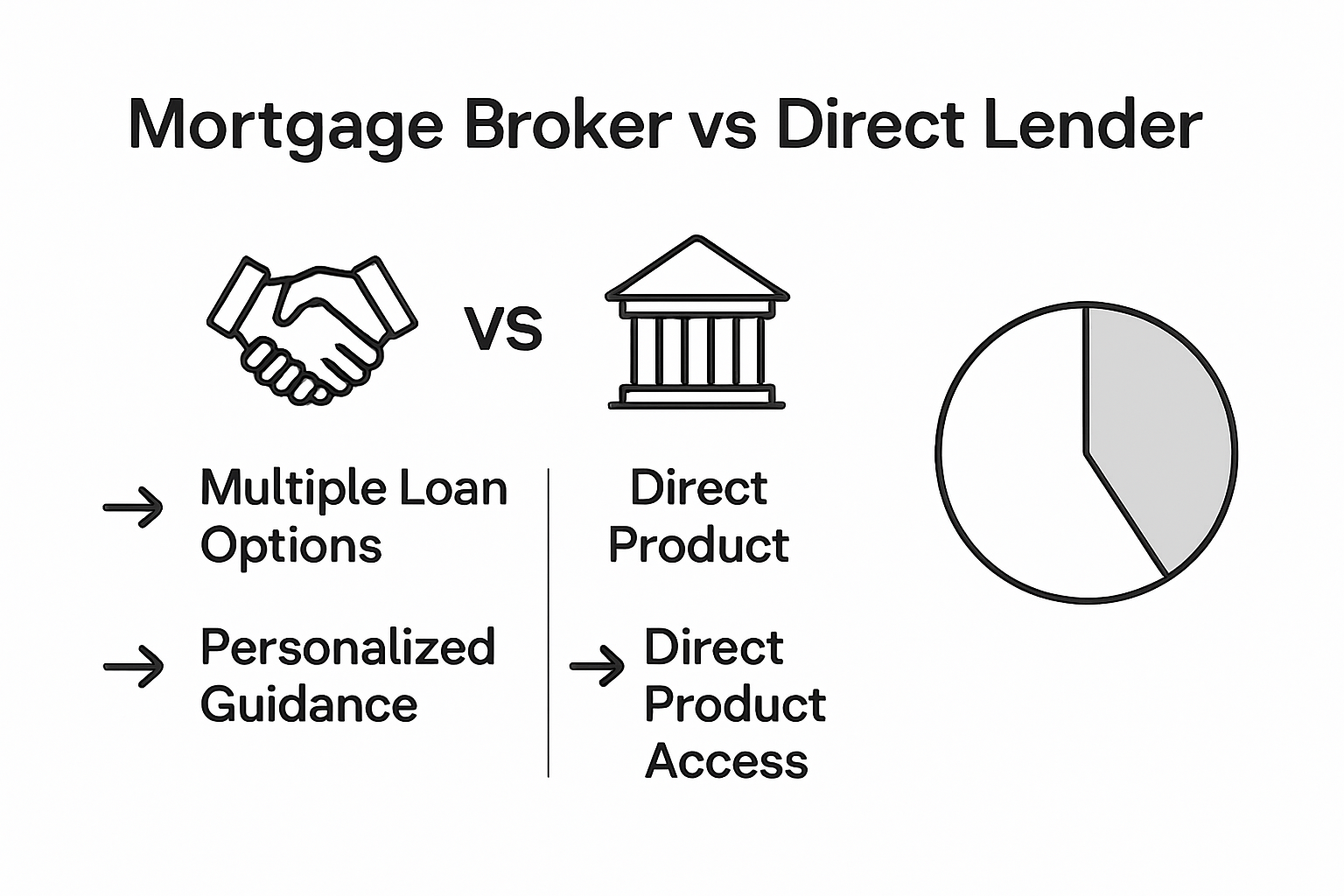
Mortgage brokers act as intermediaries, offering a fundamentally different approach to lending compared to direct lenders. While direct lenders provide loans using their own financial resources, brokers serve as sophisticated navigators in the complex world of home financing, connecting borrowers with multiple potential lending sources.
Key differences emerge in their operational models. Brokers can offer a variety of loan options from different lenders, potentially leading to more flexible and competitive terms. In contrast, direct lenders are constrained by their own product portfolios, which can limit borrower choices. The comparative landscape reveals several critical distinctions:
-
Direct Lenders
- Offer only their own loan products
- Typically have more standardized application processes
- Faster initial loan approvals
- Limited product flexibility
-
Mortgage Brokers
- Access multiple lender networks
- Provide customized loan matching
- More comprehensive financial advice
- Broader range of loan products
- Personalized application support
Ultimately, the choice between a broker and a direct lender depends on individual financial circumstances. Borrowers with straightforward financial profiles might find direct lenders more efficient, while those with complex income structures or unique financing needs will likely benefit from a broker’s extensive network and personalized guidance.
Costs, Risks, and Avoidable Mistakes
Mortgage brokers offer significant advantages, but potential borrowers must carefully navigate potential pitfalls. Broker commissions can lead to higher costs for borrowers, creating a complex landscape where financial incentives might not always align perfectly with client interests. Understanding these nuanced dynamics is crucial for making informed financing decisions.
Commission-based compensation can create conflicts of interest, potentially compromising the objectivity of broker recommendations. Smart borrowers should approach these relationships with strategic awareness. Key risks to anticipate include:
- Potentially higher upfront fees
- Commissions that might influence loan recommendations
- Less transparency in loan product selection
- Potential bias toward lenders offering higher broker compensation
- Complex fee structures that can be difficult to understand
To mitigate these risks, borrowers should adopt a proactive approach. Request detailed fee breakdowns, ask direct questions about compensation structures, and compare multiple broker recommendations. Always verify the credentials of your mortgage broker, request references, and don’t hesitate to seek a second opinion. The goal is not to avoid brokers entirely, but to work with them strategically and maintain a critical, informed perspective throughout the lending process.
Unlock Smarter Home Financing With Expert Mortgage Brokers
Navigating the complex world of home loans can feel overwhelming, especially when facing unclear fees and competing lender offers. If you have a non-traditional income, credit challenges, or simply want to ensure you get the best possible terms, understanding how mortgage brokers create competition among lenders is key. This article highlights how brokers not only provide access to a wide range of loan options but also negotiate on your behalf to secure lower rates and more flexible terms.

Take control of your home financing journey today with personalized support from Craigburn Capital. Visit Craigburn Capital to discover tailored mortgage solutions, including private lending and options for first-time homebuyers. Don’t miss out on exclusive unadvertised rates available through expert brokers who care about aligning loan options to your unique financial goals. Reach out now and experience the confident guidance that turns complicated mortgages into clear opportunities.
Frequently Asked Questions
What are the primary benefits of working with a mortgage broker?
Mortgage brokers provide access to multiple lenders, helping borrowers secure more competitive loan terms and lower interest rates. They also offer personalized advice, simplify the application process, and can navigate complex financial situations, making them especially helpful for first-time homebuyers and those with non-traditional income.
How do mortgage brokers differ from direct lenders?
Mortgage brokers act as intermediaries who connect borrowers with multiple lenders and loan options, while direct lenders provide loans using their own funds and products. This means brokers can often offer more flexibility and a broader range of choices, while direct lenders may offer quicker approvals but limited options.
Are there any risks associated with using a mortgage broker?
Yes, some potential risks include higher upfront fees and potential conflicts of interest due to commission-based compensation. It’s essential for borrowers to ask for detailed fee breakdowns and understand the broker’s compensation structure to make informed decisions.
How can I ensure I choose a reputable mortgage broker?
To find a reputable mortgage broker, verify their credentials, request references, and read reviews. Additionally, ask about their experience, compensation structure, and approach to finding loan products, ensuring alignment with your financial goals.
Recommended
- Complete Guide to the Role of Mortgage Broker – Craigburn Capital
- 7 Essential Questions to Ask Mortgage Brokers Before You Apply – Craigburn Capital
- 7 Essential First-Time Homebuyer Tips for Smart Financing – Craigburn Capital
- Complete Guide to Guidelines for First-Time Buyers – Craigburn Capital
- 5 Facts About Working With a Mortgage Broker

