Complete Guide to Credit Scores in Mortgages

More than 80 percent of american home buyers find their credit score shapes not just their mortgage approval, but also how much they pay each month. Choosing the right path in the home loan process can be confusing when every lender seems to focus on a different number. Understanding how your credit score works in mortgages turns confusion into confidence and can help you secure better rates that save real money over time.

Table of Contents

Key Takeaways

Point Details
Understanding Credit Scores A credit score reflects your financial trustworthiness and affects mortgage qualification and interest rates. Scores range from 300 to 850, with higher scores leading to better loan terms.
Lender Evaluation Lenders assess credit scores from major agencies to determine loan approval, interest rates, and payment requirements. A strong score is essential for favorable mortgage terms.
Impact on Approval and Rates Higher credit scores improve the likelihood of loan approval and access to competitive interest rates, potentially saving thousands over the mortgage term.
Avoiding Credit Pitfalls Common mistakes include missing payments and opening multiple credit accounts before applying for a mortgage. Proactive credit management is crucial for mortgage success.

What Is a Credit Score in Mortgages?

A credit score is a powerful numerical snapshot that reveals your financial trustworthiness to mortgage lenders. According to Consumer Finance, this score serves as a predictive tool that estimates how likely you are to repay debts on time, directly impacting your mortgage qualification and potential interest rates.

Typically ranging from 300 to 850, credit scores represent a complex calculation of your financial history and behaviors. FINRA explains that lenders use these scores to evaluate the risk of lending money, with higher scores signaling lower perceived risk and potentially unlocking more favorable loan terms.

Key Components of a Credit Score Include:

  • Payment history
  • Total debt levels
  • Length of credit history
  • Types of credit accounts
  • Recent credit inquiries

Understanding your credit score isn’t just about numbers—it’s about positioning yourself strategically in the mortgage marketplace. A strong score can translate into significant savings, potentially reducing your long-term borrowing costs by securing more competitive interest rates. For those looking to maximize their mortgage potential, your credit score Archives can provide additional insights into improving your financial profile.

How Lenders Use Credit Scores

Credit scores serve as the primary financial fingerprint that mortgage lenders use to assess borrower reliability. Consumer Finance reveals that lenders meticulously examine scores from all three major credit reporting agencies—Equifax, Experian, and TransUnion—typically using the middle score to make critical lending decisions.

Federal Housing Finance Agency (FHFA) explains that credit scores are integral throughout the mortgage process, influencing everything from initial loan underwriting to final pricing strategies. Lenders strategically use these scores to evaluate risk, determine loan eligibility, and customize interest rates that reflect a borrower’s financial credibility.

lenders reviewing report

Key Ways Lenders Analyze Credit Scores:

  • Determining loan approval probability
  • Setting personalized interest rates
  • Assessing down payment requirements
  • Evaluating overall financial risk
  • Calculating potential mortgage terms

To maximize your mortgage potential, understanding how lenders interpret credit scores is crucial. A strong score can unlock more favorable lending terms, potentially saving thousands over your loan’s lifetime. For those interested in exploring unique financing options, Transunion Archives can provide additional insights into credit score intricacies and their impact on mortgage opportunities.

Impact of Credit Score on Approval and Rates

Consumer Finance reveals a critical truth about mortgages: your credit score directly impacts both your loan approval chances and the interest rates you’ll be offered. A higher score doesn’t just open doors—it can potentially save you thousands of dollars over the life of your mortgage by securing more favorable lending terms.

According to the Government Accountability Office (GAO), mortgage institutions establish clear credit score thresholds that dramatically influence loan accessibility. Borrowers with scores above 660 are typically viewed as low-risk, while those below 620 may encounter significant challenges in loan approval, potentially facing higher interest rates or requiring additional documentation.

Credit Score Impact Breakdown:

  • Scores 760-850: Excellent (Prime rates)
  • Scores 700-759: Very Good (Competitive rates)
  • Scores 660-699: Good (Standard rates)
  • Scores 620-659: Fair (Higher interest rates)
  • Scores below 620: Poor (Potential loan denial)

Understanding these nuances can transform your mortgage strategy.

A strategic approach to improving your credit score can mean the difference between an affordable loan and a financially challenging mortgage. For those exploring specialized financing options, 100% financing Archives can provide additional insights into navigating complex lending landscapes.

Improving Credit Score for Mortgage Success

Improving your credit score is a strategic process that can dramatically enhance your mortgage opportunities. Consumer Finance recommends a proactive approach, starting with a comprehensive review of your credit reports to identify and dispute any potential errors that might be dragging down your score.

InCharge highlights several key strategies for boosting your credit profile before applying for a mortgage. These include maintaining consistent on-time payments, strategically reducing credit card balances, and carefully managing your credit mix to demonstrate financial responsibility to potential lenders.

Top Strategies for Credit Score Improvement:

  • Pay all bills consistently and on time
  • Keep credit card balances below 30% of your limit
  • Avoid opening new credit accounts before mortgage application
  • Maintain a diverse credit history
  • Regularly monitor your credit report for accuracy

For those seeking a comprehensive roadmap to mortgage readiness, How to Qualify for a Mortgage: Step-by-Step Guide for Buyers can provide additional insights into transforming your financial profile and positioning yourself as an ideal mortgage candidate.

Common Credit Score Mistakes to Avoid

Consumer Finance reveals several critical credit mistakes that can devastate your mortgage prospects. Applying for multiple new credit accounts in quick succession, missing payment deadlines, and maintaining high credit card balances are red flags that can dramatically lower your credit score and potentially derail your home buying dreams.

FINRA emphasizes the importance of proactive credit management. Neglecting to regularly check your credit reports for inaccuracies, allowing late payments to accumulate, and consistently maxing out credit limits can create long-lasting damage to your financial reputation that extends far beyond a simple numerical score.

Top Credit Score Pitfalls to Dodge:

  • Opening multiple credit lines before mortgage application
  • Missing payment due dates
  • Maxing out credit card limits
  • Ignoring credit report errors
  • Closing old credit accounts unexpectedly
  • Cosigning loans without careful consideration

Navigating the complex world of credit requires strategic thinking and careful planning. For those seeking deeper insights into credit management, 5 c’s of credit Archives can provide additional strategies to strengthen your financial profile and improve your mortgage readiness.

Take Control of Your Mortgage Journey with Expert Guidance

Navigating the complex world of credit scores can feel overwhelming, especially when your mortgage approval and interest rates hang in the balance. This article has shown how crucial your credit score is in securing the best loan terms and avoiding costly mistakes. If you are aiming to improve your credit profile or understand how lenders assess your financial trustworthiness, you need personalized solutions tailored to your unique situation.

https://craigburn.com

At Craigburn Capital, we specialize in turning credit challenges into home buying opportunities. Whether you are a first-time buyer, self-employed, or working to rebuild a less-than-perfect credit history, our expert team offers exclusive mortgage programs and competitive interest rates designed just for you. Don’t let credit score concerns hold you back any longer. Visit Craigburn Capital now to explore how our customized lending solutions can make mortgage success possible. Start taking the right steps today by reading How to Qualify for a Mortgage: Step-by-Step Guide for Buyers and deepen your understanding with insights from 100% financing Archives.

Empower yourself with the knowledge and support you deserve. Contact Craigburn Capital and unlock mortgage options that fit your financial goals.

Frequently Asked Questions

What is a credit score and how does it affect my mortgage eligibility?

A credit score is a numerical representation of your financial trustworthiness, ranging from 300 to 850. It affects your mortgage eligibility as lenders use it to assess risk, determining your loan approval and interest rates based on your score.

How can I improve my credit score before applying for a mortgage?

To improve your credit score, consistently pay all bills on time, keep credit card balances below 30% of your limit, avoid opening new credit accounts just before your mortgage application, and regularly monitor your credit report for errors.

What are the typical credit score ranges and their impact on mortgage rates?

Credit scores typically fall into ranges: 760-850 (Excellent), 700-759 (Very Good), 660-699 (Good), 620-659 (Fair), and below 620 (Poor). Higher scores correspond to lower perceived risk and can lead to more favorable interest rates and loan terms.
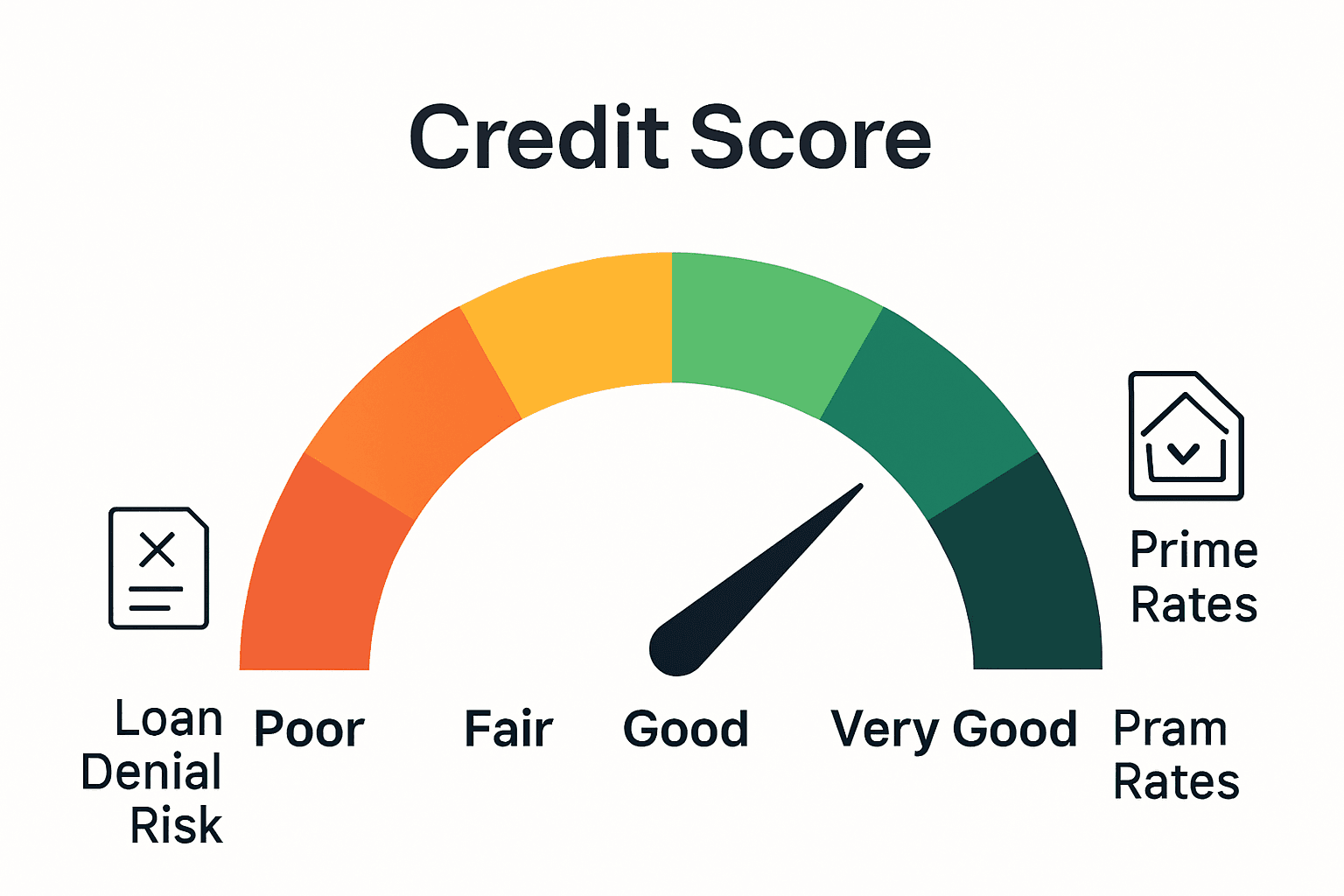
Infographic showing credit score ranges and mortgage impact

What common mistakes should I avoid to maintain a good credit score for my mortgage application?

Common mistakes include opening multiple new credit lines before applying, missing payment due dates, maxing out credit card limits, ignoring credit report errors, and unexpectedly closing old credit accounts, which can negatively affect your score.

Complete Guide to the Role of Mortgage Broker

Nearly 60 percent of american homebuyers consult a mortgage broker at some point during their search for the right loan. With so many options and financial jargon in play, finding the best fit can be confusing for anyone, especially first-timers. Understanding the role of a mortgage broker is the first step to making confident choices, saving money, and avoiding costly missteps along the home financing journey.

Table of Contents

Key Takeaways

Point Details
Role of Mortgage Brokers They act as intermediaries between borrowers and lenders, providing expert guidance in navigating mortgage options.
Types of Mortgage Brokers Brokers specialize in various categories, including retail, commercial, wholesale, independent, and niche markets to serve diverse client needs.
Benefits of Using Brokers Working with brokers can provide access to multiple lending options, save time, and help secure better loan terms.
Risks and Considerations Borrowers should be aware of potential conflicts of interest, hidden fees, and varying compliance interpretations among brokers.

What Is a Mortgage Broker Role?

A mortgage broker serves as a critical intermediary between borrowers and potential lenders, providing professional guidance and connecting individuals with suitable mortgage products tailored to their unique financial circumstances. According to research from Stanford Graduate School of Business, these professionals play a significant role in navigating the complex landscape of home financing by acting as expert advisors who receive commission payments from lenders.

The primary responsibilities of a mortgage broker extend far beyond simple matchmaking. They conduct comprehensive financial assessments, analyze borrowers’ credit profiles, income stability, and long-term financial goals to recommend mortgage solutions that align with individual needs. As highlighted by National Bureau of Economic Research, mortgage brokers have substantial influence in mortgage origination, particularly during complex economic periods like the subprime crisis.

Key functions of a mortgage broker include:

  • Evaluating multiple lending options from different financial institutions
  • Negotiating competitive interest rates on behalf of clients
  • Explaining complex mortgage terms and conditions
  • Streamlining the application and approval process
  • Providing personalized financial advice and recommendations

While mortgage brokers earn commissions from lenders, their primary value proposition lies in simplifying an otherwise overwhelming financial process. They offer expertise that can save borrowers significant time, reduce paperwork complexity, and potentially secure more favorable lending terms than individuals might obtain independently. A skilled mortgage broker essentially acts as a financial translator, converting complex lending language into understandable strategies that empower borrowers to make informed home financing decisions.

Types of Mortgage Brokers Explained

Mortgage brokers are not a monolithic group but rather a diverse professional category with specialized roles and expertise. According to research from Oxford Academic, significant distinctions exist between different types of mortgage brokers based on their client interactions and specific market segments.

The primary categories of mortgage brokers include:

  • Retail Mortgage Brokers: Work directly with individual consumers, helping them secure residential mortgages
  • Commercial Mortgage Brokers: Specialize in lending solutions for business properties and commercial real estate investments
  • Wholesale Mortgage Brokers: Partner with banks and financial institutions to facilitate mortgage transactions
  • Independent Mortgage Brokers: Operate autonomously, representing multiple lenders and offering diverse product options
  • Specialized Niche Brokers: Focus on specific market segments like self-employed professionals or high-risk borrowers

Research from the National Bureau of Economic Research highlights how these different types of brokers play crucial roles in mortgage lending, each bringing unique perspectives and expertise to help borrowers navigate complex financial landscapes. For instance, commercial mortgage brokers understand intricate business financing requirements, while retail brokers excel at personal home lending strategies.

Each broker type brings specialized knowledge that can significantly impact a borrower’s financing journey.

broker role diversity Learn more in our comprehensive guide to commercial mortgages, which provides deeper insights into the nuanced world of mortgage brokerage and the critical role these professionals play in connecting borrowers with optimal financial solutions.

How Mortgage Brokers Work With Clients

Mortgage brokers engage with clients through a comprehensive, strategic process designed to match borrowers with optimal financing solutions. According to research from Science Direct, these professionals play a critical role in mitigating borrower confusion by providing thorough education about complex mortgage features and guiding clients through intricate financial decisions.

The client engagement process typically follows these key stages:

  • Initial Consultation: Comprehensive financial assessment and goal identification
  • Product Research: Analyzing multiple lending options across different institutions
  • Recommendation Development: Crafting personalized mortgage strategies
  • Application Preparation: Assisting with documentation and paperwork
  • Lender Negotiation: Advocating for most favorable terms on client’s behalf
  • Closing Support: Guiding clients through final mortgage approval process

Research from the National Bureau of Economic Research reveals that mortgage broker interactions are significantly influenced by regulatory environments, which impact how brokers can serve their clients. These professionals must navigate complex legal frameworks while maintaining a commitment to transparent, client-focused financial guidance. Learn more about qualifying for a mortgage with our step-by-step guide, which provides additional insights into the intricate mortgage application process.

Key Benefits of Using a Mortgage Broker

Mortgage brokers offer significant advantages that can transform the home financing experience for borrowers. According to research from Stanford Graduate School of Business, these professionals can increase market competition by introducing borrowers to lower-cost lending options that might otherwise remain undiscovered.

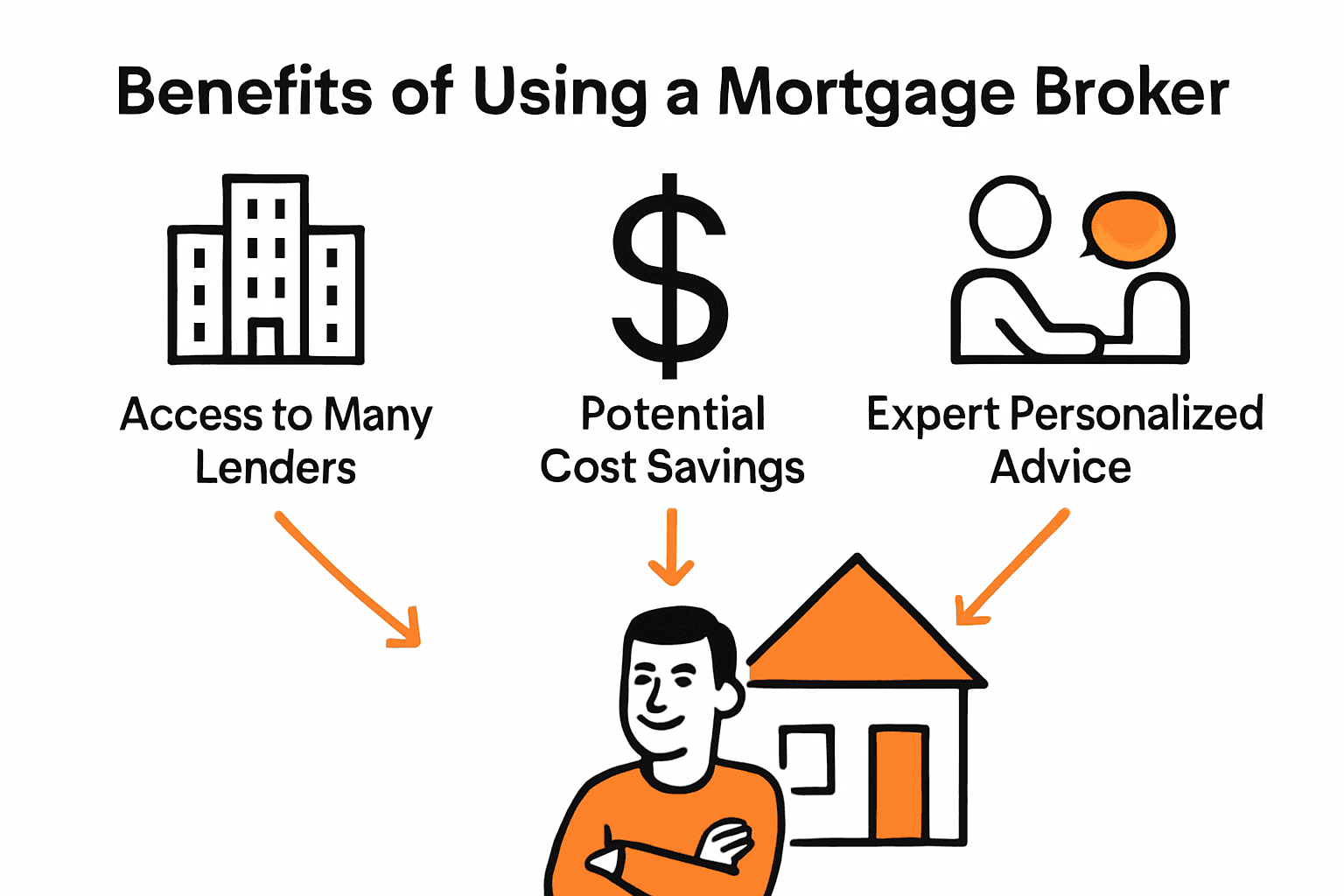
The key benefits of working with a mortgage broker include:

  • Access to Diverse Lending Options: Connections with multiple financial institutions
  • Time Savings: Streamlined application and research processes
  • Potential Cost Reduction: Negotiating competitive interest rates
  • Expert Financial Guidance: Personalized advice tailored to individual financial situations
  • Simplified Complex Processes: Navigating intricate mortgage documentation
  • Credit Score Protection: Minimizing multiple hard credit inquiries

Research from Oxford Academic reveals that broker-assisted clients often secure more advantageous loan terms, including larger loan amounts and longer amortization periods. These professionals essentially act as financial navigators, helping borrowers access opportunities they might not discover independently.

Infographic comparing benefits of using a mortgage broker: access, savings, advice. There is indeed a better way to approach mortgage financing, and mortgage brokers represent a strategic approach to achieving more favorable lending outcomes.

Risks, Costs, and Common Pitfalls

Mortgage brokers can provide invaluable assistance, but potential borrowers must also understand the inherent risks associated with their services. According to research from the National Bureau of Economic Research, mortgage brokers historically have earned substantial profits on loans that ultimately proved riskier than initially presented, highlighting the critical need for borrowers to exercise due diligence.

Potential risks and pitfalls when working with mortgage brokers include:

  • Potential Conflict of Interest: Brokers might prioritize loans with higher commissions
  • Hidden Fees: Additional charges not immediately transparent
  • Complex Fee Structures: Complicated compensation models that can obscure true costs
  • Limited Lender Transparency: Not all lending options may be equally represented
  • Potential Bias in Product Recommendations: Brokers might steer clients toward less optimal products
  • Regulatory Compliance Variations: Different brokers may interpret regulations differently

Research from Science Direct demonstrates that borrowers using mortgage brokers can experience increased confusion about mortgage features, underscoring the importance of asking direct questions and maintaining clear communication throughout the lending process. Save interest by understanding these potential pitfalls and approach mortgage brokerage with an informed, strategic mindset.

Unlock the Full Potential of Working with a Mortgage Broker

Navigating the complex world of mortgage lending can feel overwhelming because of confusing terms and tricky fee structures. The article reveals key challenges borrowers face such as negotiating competitive interest rates and avoiding hidden costs. If you want to avoid costly mistakes and gain expert guidance tailored to your unique financial situation it is essential to work with a professional mortgage broker who understands how to simplify these complexities.

At Craigburn Capital, we specialize in delivering personalized mortgage solutions that take the stress out of home financing. Our team is committed to helping you find competitive interest rates and exclusive lending options that others might miss. We make sure you understand every step so you can confidently make decisions that save you time and money.

https://craigburn.com

Experience peace of mind and expert support by exploring our comprehensive resources and mortgage services today. Visit Craigburn Capital to learn how our mortgage brokerage can help you avoid common pitfalls and secure the best terms. For first-time buyers or those with less-than-perfect credit, start your journey now with specialized mortgage assistance. Don’t wait until confusion and hidden fees cost you more—get the guidance you deserve at Craigburn Capital.

Frequently Asked Questions

What does a mortgage broker do?

A mortgage broker acts as an intermediary between borrowers and lenders, helping clients find suitable mortgage products tailored to their financial needs. They conduct financial assessments, evaluate multiple lending options, and negotiate terms on behalf of clients.

What types of mortgage brokers are there?

There are several types of mortgage brokers, including retail mortgage brokers who work directly with consumers, commercial mortgage brokers who specialize in business properties, wholesale mortgage brokers who partner with banks, independent mortgage brokers representing multiple lenders, and specialized niche brokers catering to specific borrower needs.

What are the benefits of using a mortgage broker?

Using a mortgage broker provides several advantages,包括 access to diverse lending options, time savings in the application process, potential cost reductions through negotiated rates, expert financial guidance, and simplified navigation of complex documentation.

What risks should borrowers consider when working with a mortgage broker?

Borrowers should be aware of potential risks including conflicts of interest, hidden fees, complex fee structures, limited lender transparency, and the possibility of biased product recommendations. It’s crucial to ask direct questions and maintain clear communication throughout the process.

How to Qualify for a Mortgage: Step-by-Step Guide for Buyers

Almost half of all homebuyers admit that qualifying for a mortgage is more stressful than saving for a down payment. Understanding the steps to secure a mortgage can feel confusing, especially with strict income and debt guidelines in place. By breaking down each stage of the process, this guide gives you a clear roadmap to assess your readiness, organize your documents, and improve your approval chances with confidence.

Table of Contents

Quick Summary

Key Point Explanation
1. Assess Financial Readiness Review your finances to determine mortgage eligibility and comfort in managing payments.
2. Organize Key Documentation Gather and systematically arrange financial documents for a clear application narrative, ensuring accuracy and completeness.
3. Strengthen Your Credit Profile Pay bills on time and reduce debt to enhance your credit score, which is vital for favorable mortgage terms.
4. Choose the Right Mortgage Evaluate various mortgage types to identify the best fit for your financial situation and future goals.
5. Submit Application and Follow Up Prepare a comprehensive application and maintain good communication with lenders to address any additional requests promptly.

Step 1: Assess Your Financial Readiness

Qualifying for a mortgage starts with a comprehensive review of your financial health. This critical first step determines your borrowing potential and sets the foundation for a successful home purchase.

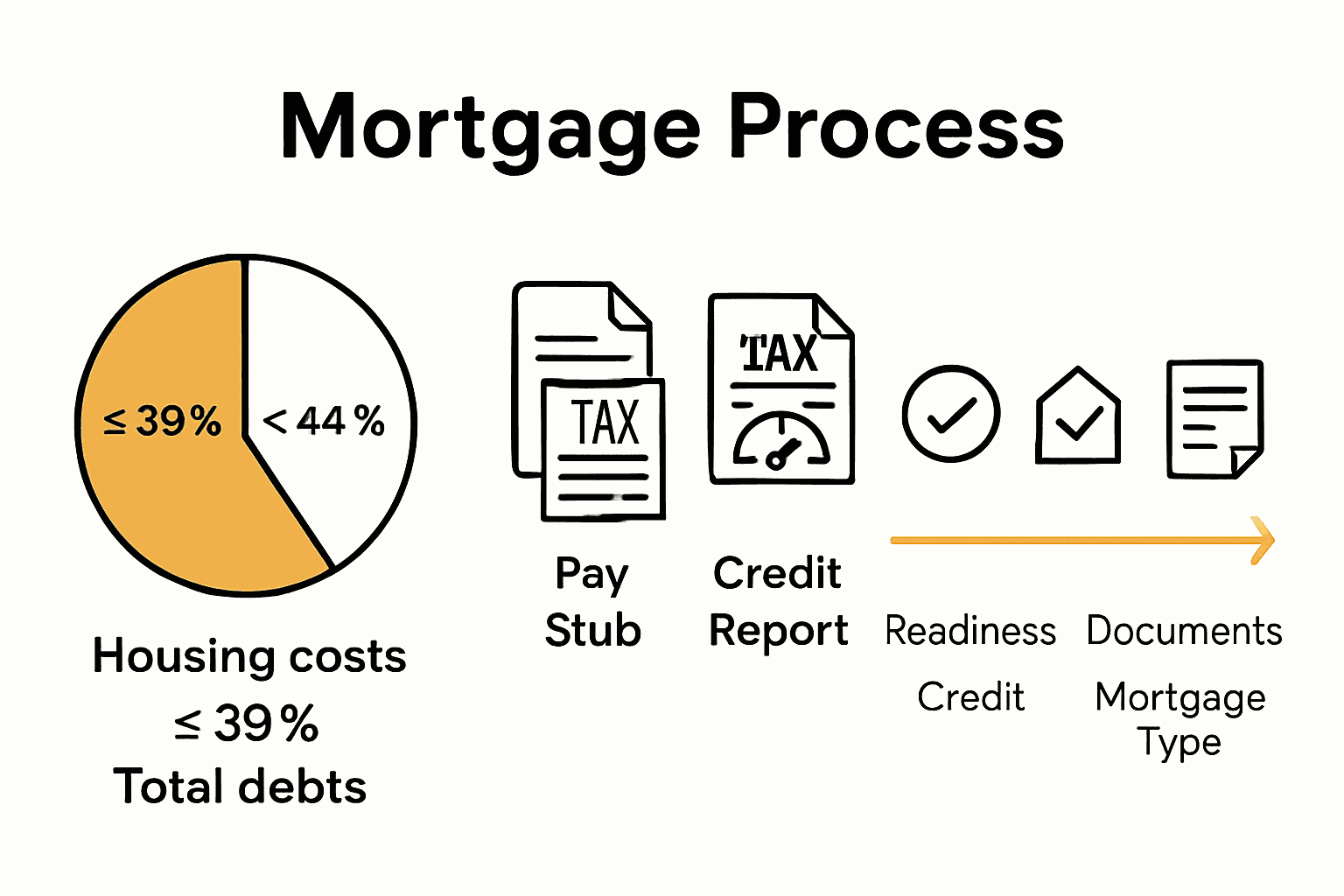
According to Canada.ca, prospective homebuyers need to carefully evaluate several key financial factors before applying for a mortgage. Your total monthly housing costs should not exceed 39% of your gross household income, and your overall debt load must remain under 44% of your gross income. These guidelines help ensure you can comfortably manage mortgage payments without financial strain.

To assess your financial readiness, start by gathering critical financial documents. This includes recent pay stubs, tax returns, bank statements, and a detailed record of your monthly expenses. Check your credit report for accuracy and review your credit score. According to Consumer Financial Protection Bureau, lenders typically look for consistent income over at least two years and a good credit history.

Pro Tip: Create a comprehensive budget that accounts for not just your potential mortgage payment, but also property taxes, homeowners insurance, potential maintenance costs, and utilities. This holistic approach will give you a realistic picture of your true housing expenses.

As you move forward, remember that financial readiness is about more than just meeting minimum requirements. It is about feeling confident and prepared to take on the responsibility of homeownership. The next step will involve calculating your exact borrowing capacity and understanding how lenders will evaluate your financial profile.

Infographic showing mortgage qualification steps and key document ratios.

Step 2: Organize and Verify Documentation

Preparing a comprehensive and well-organized set of financial documents is crucial to streamlining your mortgage application process. This step transforms your financial story into a clear narrative that lenders will review and evaluate.

Consumer Financial Protection Bureau recommends gathering critical documentation that provides a complete picture of your financial health. Start by collecting the following key documents: recent pay stubs from the past two months, W2 forms or tax returns from the past two years, bank statements showing all account balances, documentation of additional income sources like bonuses or freelance work, and a detailed list of your current debts and monthly obligations.

Organize these documents systematically in a dedicated file or digital folder. Make sure all documents are current clean copies with no smudges or partial information. For digital files scan documents at high resolution and save them as PDFs to ensure clarity. Double check that your name social security number and other identifying information match exactly across all documents to prevent any potential verification issues.

organize mortgage documents

Pro Tip: Create a checklist and verify each document against lender requirements. Some mortgage professionals recommend keeping digital and physical copies as a backup strategy in case of unexpected loss or technical issues.

Remember that thorough documentation demonstrates financial responsibility and can significantly speed up your mortgage approval process. The next step will involve understanding how lenders will scrutinize these documents and what specific details they will be analyzing.

Step 3: Strengthen Your Credit Profile

Strengthening your credit profile is a strategic process that can significantly improve your mortgage approval chances and potentially secure more favorable lending terms. This critical step involves carefully managing and improving your financial reputation.

According to CNBC Select, improving your credit score requires consistent financial discipline. Begin by ensuring all bill payments are made on time every single month. Late payments can dramatically reduce your credit score and signal potential risk to lenders. Focus on reducing existing debt, particularly credit card balances. Aim to keep your credit utilization below 30% of your total available credit limit.

Review your credit report meticulously for any potential errors or inaccuracies. Independent recommends obtaining a comprehensive credit report and carefully examining your financial history for the past five years. If you discover any discrepancies, contact the credit reporting agencies immediately to dispute and correct them. Adding a brief explanatory statement can provide context for any historical financial challenges.

Pro Tip: Avoid opening new credit accounts or making large purchases during the months leading up to your mortgage application. Each new credit inquiry can temporarily lower your credit score and potentially raise red flags for lenders.

Remember that building a strong credit profile takes time and consistent effort. Your goal is to demonstrate financial reliability and responsible credit management.

The next step will involve understanding how lenders specifically evaluate your credit worthiness and translate your credit score into lending terms.

Step 4: Choose Suitable Mortgage Solutions

Selecting the right mortgage solution is a critical decision that can impact your financial future for decades. This step involves carefully evaluating various mortgage types to find the perfect match for your unique financial situation and long-term goals.

Consumer Financial Protection Bureau advises prospective homebuyers to thoroughly assess how much they want to spend on a home and determine the most appropriate mortgage type. Consider fixed-rate mortgages for predictable monthly payments and stability, or adjustable-rate mortgages if you anticipate shorter-term ownership or expect potential income increases. Each mortgage type comes with unique advantages some offer lower initial rates while others provide long-term payment consistency.

Canada.ca emphasizes the importance of understanding how the mortgage stress test impacts your qualification. This means evaluating your ability to make payments at a higher interest rate than the current market rate. Compare different lenders mortgage offerings carefully look beyond just the interest rate and consider factors like prepayment options, penalty clauses, and overall loan flexibility.

Pro Tip: When exploring tailored financial solutions, request detailed loan estimates from multiple lenders. This allows you to compare true costs beyond just the advertised interest rates and understand the complete financial picture of each mortgage option.

Remember that the right mortgage solution is not just about finding the lowest rate but discovering a financial product that aligns with your personal financial strategy and future goals. The next step will involve getting pre-approved and solidifying your mortgage application.

Step 5: Submit and Track Your Application

Submitting your mortgage application marks a critical milestone in your home buying journey. This step transforms all your careful preparation into a tangible path toward homeownership.

Consumer Financial Protection Bureau recommends creating a comprehensive loan application packet that includes all essential documentation. Compile your documents meticulously ensuring each item is current and clearly legible. This includes recent pay stubs, tax returns from the past two years, comprehensive bank statements, proof of additional income sources, and detailed records of your existing debts.

When submitting your application, be prepared for potential additional requests from lenders. They might require supplemental documentation or clarification on specific financial details. Maintain open communication channels with your loan officer and respond promptly to any inquiries. Some lenders offer online portals where you can track your application status in real time allowing you to monitor progress and quickly address any potential issues.

Pro Tip: Consider using smart advice resources to understand the typical timeline and potential checkpoints in the mortgage approval process. This can help you set realistic expectations and stay proactively informed throughout the application review.

Remember that patience and persistence are key during the mortgage application process. Your thorough preparation has positioned you strongly for success. The next step involves preparing for the final stages of mortgage approval and potential home appraisal.

Take Control of Your Mortgage Journey with Expert Guidance

Qualifying for a mortgage can feel overwhelming with all the financial checks, credit reviews, and paperwork involved. You want to be ready and confident every step of the way. This guide highlights the key challenges buyers face like organizing documentation, improving credit scores, and choosing the right mortgage type. If you are ready to turn these challenges into opportunities, you need a partner who understands your unique situation and can offer tailored financial solutions.

https://craigburn.com

At Craigburn Capital, we specialize in helping buyers like you navigate the complex mortgage process. Whether you are a first-time homebuyer, self-employed, or have less-than-perfect credit, we provide access to competitive rates and exclusive lending options designed for your needs. Don’t wait until paperwork stacks up or your credit concerns grow. Visit Craigburn Capital now to get personalized advice and step confidently toward your homeownership goals. Start your mortgage application with clarity and support today.

Frequently Asked Questions

What financial documents do I need to gather to qualify for a mortgage?

To qualify for a mortgage, you will need to gather recent pay stubs, tax returns from the past two years, current bank statements, and documentation of any additional income sources. Organize these documents neatly to present a clear financial picture to lenders.

How can I assess my financial readiness before applying for a mortgage?

Assess your financial readiness by calculating your total monthly housing costs and ensuring they do not exceed 39% of your gross household income. Create a detailed budget that includes all potential housing expenses to understand your financial capacity better.

What credit score do I need to qualify for a mortgage?

While specific score requirements can vary, aim for a minimum credit score of 620 to increase your chances of qualifying for a mortgage with favorable terms. Check your credit report for any inaccuracies and take steps to improve your credit profile by paying bills on time and reducing existing debts.

How do I choose the right mortgage type for my needs?

To choose the right mortgage type, evaluate whether a fixed-rate mortgage or an adjustable-rate mortgage best suits your financial situation and future plans. Consider factors like potential interest rate fluctuations and your intended length of homeownership to make an informed decision.

What steps should I take after submitting my mortgage application?

After submitting your mortgage application, maintain open communication with your loan officer and be prepared to provide any additional documentation if requested. Use online tracking tools offered by lenders to monitor your application’s progress and respond promptly to any inquiries.

How long does the mortgage approval process typically take?

The mortgage approval process typically takes between 30 to 60 days, depending on the lender and the complexity of your application. Stay proactive by regularly checking in with your loan officer to anticipate any potential delays and prepare accordingly.

Article generated by BabyLoveGrowth

Commercial Mortgage Explained: Complete Guide for 2025

More than $2 trillion in commercial mortgage debt is held by businesses across North America. Securing the right financing for your real estate project can shape the success or failure of your company’s growth plans. Understanding how commercial mortgage loans work, who qualifies, and what risks to watch for gives you an edge before you sign on the dotted line.

Table of Contents

Key Takeaways

Point Details
Commercial Mortgages Defined A commercial mortgage is a loan secured by income-generating properties, distinguishing it from residential mortgages in terms of purpose and requirements.
Types of Commercial Mortgages Major types include traditional, conduit, and government agency-backed loans, each catering to different borrower needs and risk profiles.
Eligibility and Application Borrowers must meet specific financial health criteria and property specifications, with a thorough application process critical for approval.
Risks and Financial Considerations Key risks involve market fluctuations and financial miscalculations, making careful planning and professional guidance essential to investment success.

What Is a Commercial Mortgage Loan?

A commercial mortgage is a specialized lending instrument designed to help businesses acquire, develop, or refinance income-generating real estate properties. According to Wikipedia, these loans are “secured by commercial property, such as an office building, shopping center, or industrial warehouse.”

Unlike residential mortgages, commercial mortgages serve a broader strategic purpose for businesses. National Association of Insurance Commissioners describes these loans as “essentially a private bond transaction between an insurance company and a borrower, secured by a direct claim on a commercial real estate asset.”

Commercial mortgages typically involve several unique characteristics that distinguish them from standard property loans:

  • Loan terms ranging from 5-25 years
  • Interest rates often higher than residential mortgages
  • Require comprehensive property and business financial documentation
  • Loan amounts frequently between $200,000 and several million dollars
  • Based on the property’s potential income generation, not just borrower’s credit

Businesses use commercial mortgages for diverse objectives, including purchasing new facilities, refinancing existing properties, funding expansions, or leveraging real estate assets for working capital. Whether you’re a small business owner looking to own your first commercial space or an established corporation seeking strategic property investment, understanding these loans is crucial for smart financial planning.

When exploring alternative commercial financing options, it’s essential to consider how a commercial mortgage might align with your specific business goals and financial strategy.

Major Types of Commercial Mortgages

Commercial mortgages are diverse financial instruments designed to meet various business real estate needs. RBC Global Asset Management identifies several primary categories, including CMHC-insured, conventional, conventional plus, and high yield mortgages, each offering distinct leverage and risk profiles.

Wikipedia further categorizes these loans into three primary types: traditional commercial mortgages, conduit loans, and government agency-backed loans. Each type serves different borrower requirements and property classifications.

property financing inspection

Here’s a detailed breakdown of commercial mortgage types:

  1. Traditional Commercial Mortgages
  • Directly provided by banks and financial institutions
  • Fixed or variable interest rates
  • Typical loan terms between 5-25 years
  • Require substantial documentation and property evaluation
  1. Conduit Loans
  • Securitized mortgages sold to investors
  • Often have standardized underwriting criteria
  • Generally lower interest rates
  • Less flexible terms compared to traditional loans
  1. Government Agency-Backed Loans
  • Supported by entities like SBA or CMHC
  • Lower down payment requirements
  • More lenient qualification standards
  • Designed to support small business growth

For small business operators, understanding these mortgage types is crucial for making informed financing decisions that align with specific business objectives and financial capabilities. Each loan type offers unique advantages, and selecting the right commercial mortgage depends on your property type, business stage, and long-term financial strategy.

Key Features and How They Work

Commercial mortgages are complex financial products with nuanced structural elements. According to Wikipedia, they encompass critical features including loan amount, interest rate, term length, amortization schedule, and prepayment flexibility. These loans are distinguished by extensive underwriting and thorough due diligence processes that protect both lender and borrower.

National Association of Insurance Commissioners highlights that commercial mortgages involve intricate financial analysis focusing on key performance metrics such as debt service coverage ratio (DSCR), loan-to-value ratio (LTV), and property-generated cash flow.

Key features of commercial mortgages include:

  • Loan Amount: Typically ranges from $200,000 to several million dollars
  • Interest Rates: Often higher than residential mortgages
  • Term Length: Usually between 5-25 years
  • Amortization: Frequently longer than the actual loan term
  • Qualification Criteria: Based on property income potential, not just borrower credit

The mechanics of a commercial mortgage work differently from residential loans. Lenders evaluate the property’s potential income, market value, and the borrower’s business financials. This means your commercial property must demonstrate strong revenue-generating capacity to qualify.

For tailored financial solutions that match your specific business needs, understanding these intricate features is crucial. Each commercial mortgage is essentially a custom-designed financial instrument tailored to your unique real estate investment strategy.

Eligibility Criteria and Application Process

Commercial mortgage eligibility requires a comprehensive evaluation of both the borrower and the property. Federal Reserve emphasizes that lenders must maintain a clearly articulated credit policy with sound loan administration and prudent credit underwriting standards.

Wikipedia highlights that the underwriting process involves an extensive financial review, including third-party assessments such as property appraisals and environmental evaluations. This thorough examination ensures the property represents a viable and low-risk investment for the lender.

Key eligibility requirements typically include:

  • Business Financial Health

    • Minimum 2-3 years of operational history
    • Strong credit score (usually 680 or higher)
    • Positive cash flow and profitability
    • Debt service coverage ratio (DSCR) of 1.25 or better
  • Property Specifications

    • Minimum property value threshold
    • Demonstrated income-generating potential
    • Good physical condition and marketability
    • Located in economically stable area

The application process involves multiple critical steps:

  1. Initial financial document preparation
  2. Property valuation and assessment
  3. Comprehensive business plan submission
  4. Detailed credit and background checks
  5. Final underwriting and approval

For self-employed professionals navigating this complex process, understanding these criteria can significantly improve your chances of securing a commercial mortgage. Preparation, thorough documentation, and a strong financial profile are your best allies in this journey.

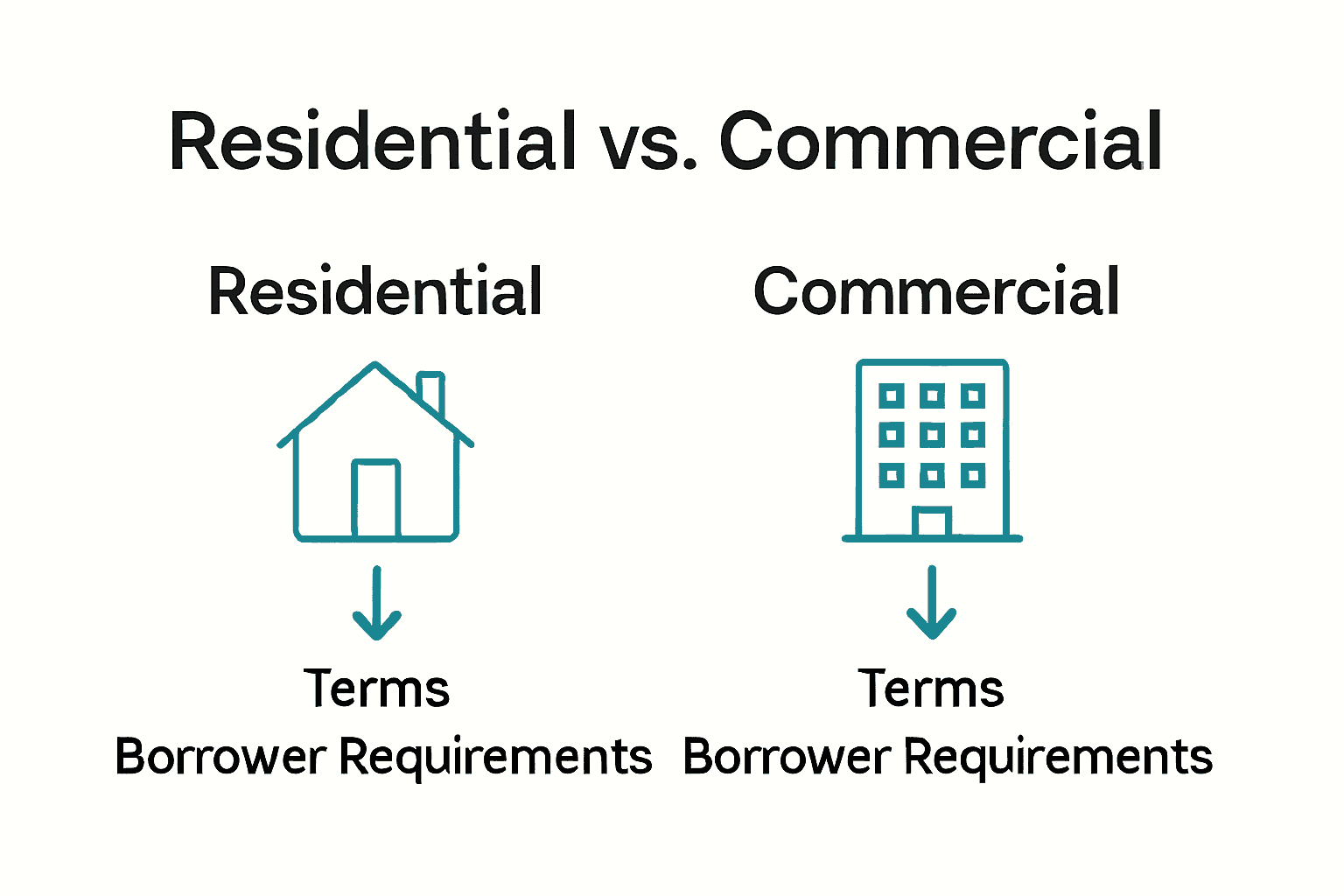
Infographic comparing residential and commercial mortgages

Risks, Costs, and Common Pitfalls

Commercial mortgages come with a complex landscape of potential challenges that borrowers must carefully navigate. Wikipedia outlines significant risks including property devaluation, borrower default, and unpredictable market fluctuations that can dramatically impact investment stability.

National Association of Insurance Commissioners warns that common pitfalls frequently stem from inadequate due diligence, overestimating property values, and insufficient assessment of borrower creditworthiness. These critical missteps can transform a promising investment into a financial liability.

Key risks and potential cost factors include:

  • Financial Risks

    • Market value depreciation
    • Interest rate volatility
    • Unexpected property maintenance expenses
    • Economic downturns affecting property income
  • Cost Considerations

    • Higher interest rates (typically 1-3% above residential rates)
    • Substantial closing costs
    • Appraisal and environmental assessment fees
    • Potential prepayment penalties

Most common pitfalls emerge from:

  1. Inadequate financial planning
  2. Overestimating property income potential
  3. Underestimating ongoing operational expenses
  4. Failing to maintain sufficient cash reserves
  5. Neglecting comprehensive market research

For tailored financial solutions that mitigate these risks, professional guidance becomes crucial. Understanding these potential challenges allows investors to develop robust strategies that protect their commercial real estate investments.

Simplify Your Commercial Mortgage Journey with Expert Support

Navigating the complex world of commercial mortgages can feel overwhelming. The detailed terms like loan-to-value ratio, debt service coverage, and the extensive qualification process highlighted in the Commercial Mortgage Explained guide often leave business owners uncertain and concerned about making the right financial choice. At Craigburn Capital, we understand how stressful it is to face high interest rates, rigorous underwriting, and the fear of costly pitfalls.

https://craigburn.com

Take control of your commercial financing today with trusted guidance from our experienced mortgage brokers. Whether you are a small business operator or self-employed professional, discover tailored financial solutions that fit your unique goals and property needs. Visit our website at Craigburn Capital now and connect directly with experts who can help you unlock exclusive rates and craft a mortgage plan designed to protect your investment and future. Don’t wait until challenges arise. Start your application process with confidence and clarity today.

Frequently Asked Questions

What is a commercial mortgage?

A commercial mortgage is a loan specifically designed for businesses to acquire, develop, or refinance income-generating real estate properties, such as office buildings or shopping centers.

What are the main types of commercial mortgages?

The main types of commercial mortgages include traditional commercial mortgages, conduit loans, and government agency-backed loans, each with distinct features and eligibility criteria.

What are the key eligibility requirements for a commercial mortgage?

Eligibility typically requires a minimum operational history of 2-3 years, a strong credit score (usually 680 or higher), positive cash flow, and a debt service coverage ratio (DSCR) of 1.25 or better.

What risks should borrowers be aware of when considering a commercial mortgage?

Borrowers should be mindful of financial risks such as market value depreciation, interest rate volatility, and unexpected property maintenance expenses, along with costs like higher interest rates and substantial closing costs.

Article generated by BabyLoveGrowth

Yard Work

One of the most satisfying things about being a homeowner is yard work on a beautiful summer day. There are also quite a few benefits of having a well manicured lawn & garden.

  • Great curb appeal improves the value of your property.
  • An assortment of flowering plants and shrubs provides plenty of pollen for bee’s.
  • Gardening is great exercise
  • We have all spent way too long inside during the pandemic and gardening on a nice day is a great source of vitamin D
  • Gardening is also great stress relief

Today I am thankful for such a beautiful day to get yard work done, my daughter back home after a weekend camping with friends and a good book on a nice summer day.

I look forward to hearing from you in regard to your mortgage needs.

Patrick

p.s- You can click on this link to start the process whenever you are ready. Schedule your meeting with me here.

p.s.s- I should tell you that I am licensed in Nova Scotia Brokerage (2021-3000179) Broker (2021-3000180), Ontario(M18001555) & in British Columbia(BCFSA #504098).

p.s.s.s You can download my new mortgage app here

YOLO

Let’s face it we all want the latest and greatest. It doesn’t matter if it’s a new car, new phone or new computer. If it is new and better than what we have now then we want it. We are very much a high consumption society. Our economy runs on it. However with the onset of inflation this year, and prices of fuel, housing and food going through the roof, that new TV or phone does not seem so important.

What used to be a no brainer ( getting that new phone), now you must think of your priorities, which are paying for your every day living expenses. Then and only then if there is money left over can one consider getting the latest and greatest gadget. The shift hasn’t happened yet as we are only a few months into this but it is coming.

So when people drastically cut back on their spending on the luxuries of life, companies sales decline, they make less money and start the trim their workforces. That YOLO attitude may not get you far as you can’t eat your phone. Start putting priorities in place and thinking long term about how budget for the important things in life. Check out YNAB as it will help you with that.

I look forward to hearing from you in regard to your mortgage needs.

Patrick

p.s- You can click on this link to start the process whenever you are ready. Schedule your meeting with me here.

p.s.s- I should tell you that I am licensed in Nova Scotia Brokerage (2021-3000179) Broker (2021-3000180), Ontario(M18001555) & in British Columbia(BCFSA #504098).

p.s.s.s You can download my new mortgage app here

Cost of living

I drive a mid sized SUV, a Nissan Pathfinder to be exact. As I have 3 kids and a large dog, we needed the room. However this past weekend I filed it up and for the first time ever it cost me $117 to go from low fuel light to full. While not that long ago in the heigh of the pandemic it cost less than $50 to fill it.

It’s not just gas that is going up, food, new and used vehicles, clothes and what in all the headlines is the cost of real estate. While the April CPI index has not been released yet, I think it may be safe to say that we may be in for another month of high inflation. As a result the bank of Canada has been increasing the overnight lending rate which then increases the prime rate. The next meeting scheduled for June 1st will most likely bring another 50 basis points increase.

All these rate increases are supposed to curb spending, therefor reducing demand which brings down inflation. However a lot of the recent prices increases have been due to the pandemic which is still going strong and the war in Ukraine that shows no sign of stopping. So there is no guarantee that these measures will have their desired effect.

The first time in 10 years we have 5 year fixed mortgage rates above 4%. So if you like the stability that the fixed rate will provide then it will be perfect for you. For me I like the flexibility of the variable. Know your risks, and choose a product that will help you sleep easy at night.

I look forward to hearing from you in regard to your mortgage needs.

Patrick

p.s- You can click on this link to start the process whenever you are ready. Schedule your meeting with me here.

p.s.s- I should tell you that I am licensed in Nova Scotia Brokerage (2021-3000179) Broker (2021-3000180), Ontario(M18001555) & in British Columbia(BCFSA #504098).

p.s.s.s You can download my new mortgage app here

Ho Ho Ho Homeowner

We are in the final few days of the ho ho ho season and it’s still time for you to become a ho ho ho homeowner. Quite a few of the buyers have put pause on their home hunting expeditions so it has increased the chances for people looking to become the successful bidder on that next or new home.

In fact I am finding that some of my clients who have been unsuccessful in the past are now coming out on top for these exact reasons. However this is not true in all cases as the stream of new listings has pretty much dried up as people now wait for after the holiday season. So if you are brave enough you might just find your next home while everyone else is enjoying thier eggnog.

Today I am thankful for a quick and painless appointment to get my new winter tires installed, the recent rise on online and curbside shopping so I don’t have the brave the crowds and all the holiday baking!

“Maybe Christmas, he thought, doesn’t come from a store. Maybe Christmas… perhaps… means a little bit more!” -Dr. Seuss, How the Grinch Stole Christmas

I look forward to hearing from you in regard to your mortgage needs.

Patrick

p.s- You can click on this link to start the process whenever you are ready. Schedule your meeting with me here.

p.s.s- I should tell you that I am licensed in Nova Scotia, Ontario(M18001555) & in British Columbia(BCFSA #504098).

p.s.s.s You can download my new mortgage app here

Happy Medium

Just like the story of Goldilocks and the three bears, we are always at our best with the happy medium. Nobody wants the steaming hot porridge or the stone cold porridge, the not too hot or not too cold one is perfect. The best athletes are the ones who are stoic meaning their outlook does not change whether they are winning or loosing. This helps them stay composed and focus on what they need to do in order to succeed.

It was this attitude and consistent performance that just led to Damian Warner to take the gold for Canada in the Decathlon. It’s naive to think that one must with all 10 events to capture the gold. You just need to be consistently toward the top of the field in each event to capture the gold, the same with the recent CrossFit Games where the new winner didn’t win any of the events but was consistently near the top to enable him to win.

Be consistent and persistent and almost any goal becomes manageable. For example, yes this is a very hot real estate market and to be able to enter it you need good credit and a down payment. Both of which can be achieved with time and a plan. Don’t sell yourself short as this is possible as I see it almost every day.

Today I am thankful for the sound of the rain in the early morning, clients and vendors who realize that good things take time specially in this market and learning more about my lending partners with each conversation as at the end of the day we are just people looking to help each other.

“Be a yardstick of quality. Some people aren’t used to an environment where excellence is expected.” Steve Jobs

I look forward to hearing from you in regard to your mortgage needs.

Patrick

p.s- You can click on this link to start the process whenever you are ready. Schedule your meeting with me here.

p.s.s- I should tell you that I am licensed in Nova Scotia, Ontario(M18001555) & in British Columbia(BCFSA #504098).

p.s.s.s You can download my new mortgage app here

Perspective

Let’s face it some days are less ideal than others. However in the grand scheme of things over the 30 some odd thousand days we are expected to live it’s probably really nothing to worry about. Don’t let one thing that didn’t go your way snowball into something much much worse. If you have to take a few deep breaths and put everything into perspective and change your state and get on with your day and your life then do it.

Today I am thankful for being told “when in a funk, get funky” and the smile it brought to my face, a cooler night and a better sleep and a great run to clear the head.

“Everything we hear is an opinion, not a fact. Everything we see is perspective, not the truth.” Marcus Aurelius

I look forward to hearing from you in regard to your mortgage needs.

Patrick

p.s- You can click on this link to start the process whenever you are ready. Schedule your meeting with me here.

p.s.s- I should tell you that I am licensed in Nova Scotia, Ontario(M18001555) & in British Columbia(BCFSA #504098).

p.s.s.s You can download my new mortgage app here