7 Types of Commercial Loans Every Borrower Should Know

Nearly every American business owner faces the challenge of choosing the right type of financing to fuel growth or bridge financial gaps. With so many loan options available, understanding the differences can shape a company’s future. From traditional term loans to innovative cash advances, this guide breaks down the essential features and benefits of each lending option, helping American entrepreneurs make smart, informed decisions that support long-term success. Over half of business owners report loan terms as their top concern.

Table of Contents

Quick Summary

Key Insight Explanation
1. Understand Term Loans for Growth Traditional term loans offer businesses access to significant funds with predictable repayment schedules for strategic investments.
2. Leverage SBA Loans for Flexibility SBA loans come with favorable terms, lower down payments, and longer repayment periods compared to traditional loans, aiding small business financing.
3. Utilize Lines of Credit for Cash Flow Business lines of credit provide flexible funding, allowing companies to draw funds as needed while only paying interest on borrowed amounts.
4. Explore Equipment Loans for Upgrades Equipment loans help businesses acquire necessary machinery using the equipment as collateral, preserving cash flow while enhancing productivity.
5. Assess Merchant Cash Advances Carefully Merchant cash advances offer fast funding with repayment linked to sales, but be aware of their higher costs compared to traditional loans.

1. Understanding Traditional Term Loans for Businesses

Traditional term loans represent a fundamental financing tool for businesses seeking strategic capital investment. When a company needs substantial funds to fuel growth, these structured lending arrangements provide a predictable financial pathway.

A traditional term loan works by providing businesses with a lump sum of cash upfront, which gets repaid through consistent periodic payments over a predetermined timeframe. Typically, these loans range from short term (12 months) to long term (up to 10 years), giving businesses flexibility in managing their financial strategy.

Key Components of Term Loans

  • Fixed loan amount determined at origination
  • Predetermined repayment schedule
  • Set interest rate (fixed or variable)
  • Specific loan term length

Businesses commonly use term loans for significant investments like purchasing equipment, expanding physical locations, launching new product lines, or bridging working capital gaps. The structured nature of these loans allows companies to plan their financial commitments with precision.

When evaluating a term loan, lenders assess several critical factors including the business’s credit history, revenue consistency, cash flow stability, and overall financial health. Strong financial documentation can help secure more favorable loan terms and interest rates.

Pro tip: Before applying for a term loan, thoroughly review your business’s financial statements and prepare a comprehensive business plan that demonstrates your ability to repay the borrowed funds.

2. Exploring SBA Loans and Their Unique Advantages

Small businesses seeking flexible financing options often turn to SBA loans, a powerful lending program designed to support entrepreneurial growth. These government-backed loans provide unique advantages that traditional lending sources cannot match.

SBA loans are specialized financing instruments supported by the United States Small Business Administration, which helps reduce lender risk and enables small businesses to access capital more easily. The most popular programs include the 7(a) loan for general business purposes and the 504 loan for purchasing fixed assets like real estate or equipment.

Key Advantages of SBA Loans

  • Lower down payment requirements
  • More extended repayment periods
  • Competitive interest rates
  • Flexible qualification standards
  • Substantial loan amounts

When a business qualifies for an SBA loan, they typically enjoy more favorable terms compared to conventional bank loans. These loans can provide funding ranging from small amounts like $500 to substantial investments of $5 million, making them versatile for various business needs.

Businesses must meet specific eligibility criteria, including being a for profit enterprise located in the United States, having reasonable owner equity to invest, and demonstrating the ability to repay the loan. Lenders will carefully review your business plan, financial statements, and credit history during the application process.

Pro tip: Prepare comprehensive financial documentation and a robust business plan before applying for an SBA loan to increase your chances of approval and secure the most favorable lending terms.

3. How Commercial Real Estate Loans Work

Commercial real estate loans represent a critical financial tool for businesses looking to acquire, develop, or expand their physical property assets. These specialized lending instruments provide companies with the necessary capital to invest in commercial properties that can drive long term growth.

Unlike residential mortgages, commercial real estate loans are structured specifically for business property acquisitions, including office buildings, retail spaces, warehouses, and industrial complexes. The loan amount typically depends on the property’s potential income generation and the borrower’s financial strength.

Key Characteristics of Commercial Real Estate Loans

  • Loan terms ranging from 5 to 20 years
  • Property serves as primary collateral
  • Down payment requirements often between 20 to 35 percent
  • Interest rates generally higher than residential mortgages
  • Qualification based on property income potential

Lenders evaluate multiple factors when considering a commercial real estate loan, including the property’s location, current market conditions, potential rental income, and the borrower’s financial history. Most lenders require a comprehensive business plan and detailed financial documentation to assess the loan’s risk profile.

Businesses can use these loans for various purposes such as purchasing new facilities, renovating existing properties, or refinancing current real estate investments. The flexibility of commercial real estate loans makes them an attractive option for companies looking to expand their physical footprint or optimize their real estate portfolio.

Pro tip: Before applying for a commercial real estate loan, conduct a thorough property valuation and prepare a robust financial projection to demonstrate the investment’s potential income generating capacity.

4. Lines of Credit for Flexible Business Financing

Business lines of credit represent a dynamic financial solution for companies seeking adaptable funding strategies. These flexible lending instruments offer businesses unprecedented financial agility by providing access to funds precisely when they need them.

Unlike traditional term loans with fixed disbursement amounts, a business line of credit functions similar to a credit card but with significantly higher borrowing limits and more favorable interest rates. Companies can draw funds up to a predetermined credit limit and only pay interest on the amount actually borrowed.

Key Features of Business Lines of Credit

  • Revolving credit structure
  • Interest charged only on used funds
  • Flexible drawdown options
  • Quick access to capital
  • No collateral required for unsecured lines

Businesses commonly use lines of credit to manage cash flow fluctuations, cover unexpected expenses, purchase inventory, or bridge temporary revenue gaps. The credit limit is typically determined by the company’s revenue, credit history, and financial stability.

Most financial institutions offer two primary types of lines of credit: secured and unsecured. Secured lines require collateral and generally provide lower interest rates, while unsecured lines depend more heavily on the business’s creditworthiness and may carry slightly higher rates.

Pro tip: Maintain a strong credit profile and consistent revenue stream to maximize your chances of securing a higher credit limit with more favorable terms.

5. Equipment Loans for Business Growth

Equipment loans offer businesses a strategic pathway to acquire critical machinery and technology without depleting cash reserves. These specialized financing solutions enable companies to upgrade infrastructure and expand operational capabilities through structured lending.

Unlike traditional loans, equipment financing uses the purchased equipment itself as collateral, which significantly reduces the lender’s risk and often results in more favorable lending terms. This unique approach allows businesses to spread the cost of expensive machinery over time while immediately benefiting from enhanced productivity.

Key Characteristics of Equipment Loans

  • Equipment serves as direct collateral
  • Loan terms match equipment expected lifespan
  • Typically faster approval process
  • Potential tax benefits for business
  • Preserves working capital

Manufacturing, construction, technology, and healthcare industries particularly benefit from equipment loans. The financing can cover everything from industrial machinery and vehicles to specialized medical equipment and computer systems. Lenders typically finance between 80 to 100 percent of the equipment’s value, depending on the business’s financial health and credit profile.

The loan structure often includes fixed monthly payments and predetermined repayment schedules aligned with the equipment’s anticipated depreciation. This predictability helps businesses budget more effectively and plan for future technological investments.

Pro tip: Before applying for an equipment loan, obtain multiple quotes for the equipment and prepare a detailed business plan demonstrating how the new machinery will generate additional revenue or improve operational efficiency.

6. Bridge Loans for Fast, Short-Term Funding

Bridge loans serve as a critical financial lifeline for businesses navigating complex transitional periods. These strategic short-term financing solutions provide companies with immediate capital while awaiting more permanent funding sources.

Unlike traditional long-term loans, bridge loans are designed to provide rapid financial support lasting typically between six and 12 months. They offer businesses the flexibility to seize time sensitive opportunities or manage unexpected financial gaps without disrupting their overall strategic momentum.

Key Characteristics of Bridge Loans

  • Ultra short term financing
  • Rapid approval process
  • Higher interest rates
  • Flexible repayment structures
  • Collateral often required

Businesses frequently utilize bridge loans in scenarios such as real estate transactions, pending property sales, waiting for long-term financing approval, or funding urgent expansion projects. The loan amount is typically determined by the borrower’s existing assets, credit history, and anticipated future revenue streams.

Lenders evaluate bridge loan applications by assessing the borrower’s exit strategy. This means demonstrating a clear plan for repaying the loan, whether through selling an asset, securing permanent financing, or generating substantial revenue from a specific project.

Pro tip: Always develop a comprehensive repayment strategy before securing a bridge loan and ensure you have a concrete timeline for transitioning to more permanent financing.

7. Merchant Cash Advances and Quick Access to Cash

Merchant cash advances represent a unique financing option for businesses seeking immediate capital with minimal bureaucratic hurdles. These innovative financial tools provide companies with rapid funding by leveraging future sales as collateral.

Unlike traditional loans, merchant cash advances offer businesses a lump sum payment in exchange for a predetermined percentage of future credit card or daily sales revenue. This financing method provides extraordinary flexibility for companies with fluctuating income streams, particularly in retail, restaurant, and service industries.

Key Characteristics of Merchant Cash Advances

  • Ultra fast funding process
  • No traditional credit requirements
  • Repayment tied to daily sales volume
  • Higher cost compared to traditional loans
  • No fixed monthly payments

The advance amount typically ranges from $5,000 to $500,000, with repayment terms structured around the business’s daily or weekly credit card transaction volumes. Repayment happens automatically, with a fixed percentage withdrawn directly from sales receipts, reducing the administrative burden on business owners.

While merchant cash advances provide quick access to capital, they come with higher fees compared to conventional financing. Businesses should carefully evaluate the total cost of funding and ensure the advance supports strategic growth objectives.

Pro tip: Calculate the total repayment cost and compare the effective annual percentage rate against alternative financing options before committing to a merchant cash advance.

Below is a comprehensive table summarizing the various business loan options discussed in the article, including their characteristics, advantages, and typical uses.

Loan Type Key Features Typical Uses
Traditional Term Loans Fixed amount, predetermined schedule, fixed/variable rates, specific term length Equipment purchase, expansion, working capital
SBA Loans Lower down payments, extended repayment, competitive rates, flexible qualifications General business, real estate or equipment purchase
Commercial Real Estate Loans Loan terms 5-20 years, property as collateral, down payments 20-35% Property acquisition, development, expansion
Business Lines of Credit Revolving credit, interest on used funds, flexible drawdowns, unsecured options available Cash flow management, inventory purchase
Equipment Loans Equipment as collateral, terms match lifespan, possible tax benefits Machinery and technology upgrades
Bridge Loans Short term, rapid approval, higher interest, flexibility in repayment Real estate transactions, urgent projects
Merchant Cash Advances Fast funding, no credit needs, repayment tied to sales, higher cost Retail and service industry funding

Discover the Right Commercial Loan Solutions for Your Business Growth

Navigating the world of commercial loans can feel overwhelming with so many options like term loans, SBA loans, and lines of credit. You may be facing challenges such as managing cash flow, funding real estate purchases, or acquiring essential equipment. Understanding terms like repayment schedules, collateral requirements, and loan eligibility is vital. At Craigburn Capital, we specialize in providing tailored commercial financing strategies designed to meet your specific business needs while simplifying the loan process.
https://craigburn.com

Take control of your business financing today by consulting with experts who know how to secure competitive interest rates and exclusive lending options. Visit Craigburn Capital to explore personalized mortgage and commercial loan solutions. Whether you need help with private lending or navigating complex commercial loans, we are here to guide you every step of the way. Don’t wait until opportunities slip away—contact us now to get custom advice and fast access to the capital your business deserves.

Frequently Asked Questions

What are traditional term loans and how do they work?

Traditional term loans provide a lump sum of money upfront that businesses repay in fixed installments over a set period. To apply, assess your business’s financial documents and clearly outline how the funds will be used.

How can I qualify for an SBA loan?

To qualify for an SBA loan, your business must be a for-profit entity located in the United States, demonstrate the ability to repay, and show reasonable owner equity. Prepare a detailed business plan and gather your financial records to streamline the application process.

What distinguishes commercial real estate loans from other types of loans?

Commercial real estate loans are specifically designed for purchasing business properties, with loan amounts based on the property’s income potential. To get started, gather property valuation reports and your financial history to present to potential lenders.

What should I know about business lines of credit?

Business lines of credit provide flexible funding, allowing you to borrow up to a set limit and only pay interest on the amount you use. Before applying, evaluate your cash flow needs and establish a strong credit profile to increase your chances of approval.

How do equipment loans benefit businesses?

Equipment loans allow businesses to purchase assets while using the equipment itself as collateral, which often leads to better loan terms. Collect multiple quotes for the equipment you need and prepare a business plan demonstrating how the equipment will enhance your operations.

When should I consider a bridge loan?

Consider a bridge loan when you need immediate funding during transitional periods, such as waiting for long-term financing approval. Develop a clear repayment strategy before application and outline your plan for securing permanent financing.

Home Financing Process Explained for First-Time Buyers

Over 60 percent of American home buyers report feeling unprepared for their first mortgage meeting. For anyone dreaming of owning a home, this uncertainty can lead to financial stress or costly setbacks. Learning how to assess your finances, explore the right mortgage options, and navigate the approval process gives you the control and clarity needed for a successful purchase. This guide breaks down each step so you can make informed choices and approach home buying with confidence.

Table of Contents

Quick Summary

Key Takeaway Explanation
1. Assess Financial Readiness Evaluate your income, credit, and debts to gauge mortgage eligibility and potential borrowing capacity before buying a home.
2. Research Mortgage Options Explore different mortgage types, their requirements, and costs to determine the best fit for your financial profile and long-term goals.
3. Gather Necessary Documentation Compile essential financial documents like tax returns and pay stubs to streamline your mortgage application and avoid delays.
4. Obtain Pre-Approval from Lender Seek pre-approval to clarify your budget and show sellers you are a serious buyer, making your home search more competitive.
5. Understand Closing Costs Prepare for closing expenses, typically 2% to 5% of the purchase price, to ensure no surprises at the finalization of your mortgage.

Step 1: Assess Your Financial Readiness

Before embarking on your home buying journey, understanding your financial landscape is critical. This step involves taking a comprehensive look at your current financial health to determine your mortgage readiness and potential borrowing capacity.

Start by thoroughly evaluating your income stability, credit profile, and existing financial obligations. Key financial qualifications include analyzing your debt to income ratio, employment history, and consistent income streams. Mortgage lenders will scrutinize these factors to assess your ability to manage monthly mortgage payments. Calculate your current monthly income after taxes and subtract all existing debt payments including credit cards, student loans, car payments, and other recurring expenses.

A strong financial foundation requires strategic preparation. Review your credit report, ensuring all information is accurate and your credit score meets minimum lending requirements. Most lenders prefer credit scores above 620, with the most competitive rates available to borrowers scoring 740 or higher. Save aggressively for your down payment, aiming for at least 3.5% to 20% of the home’s purchase price to avoid additional private mortgage insurance costs.

Pro tip: Create a dedicated savings account specifically for your home purchase and automate monthly transfers to build your down payment fund systematically and consistently.

Step 2: Research Mortgage Options and Rates

Navigating the complex world of mortgage options requires strategic research and a clear understanding of how different loan types can impact your financial future. This step involves exploring various mortgage products to find the most suitable financing solution for your specific needs and financial circumstances.

Begin by examining multiple mortgage types including conventional, FHA, VA, and adjustable rate mortgages. Each option carries unique advantages and potential drawbacks. Pay close attention to comprehensive comparison rates that reveal the true cost of borrowing beyond simple interest rates. These rates encompass additional fees and charges, providing a more transparent view of your potential financial commitment. Contact multiple lenders to request detailed loan estimates, comparing interest rates, closing costs, and potential prepayment penalties.

Dig deeper by analyzing how different mortgage terms align with your long term financial goals. Fixed rate mortgages offer stability with consistent monthly payments, while adjustable rate mortgages might provide lower initial rates but carry potential future payment fluctuations. Consider factors like how long you plan to stay in the home, your income stability, and overall risk tolerance when selecting your mortgage product.

Here’s a comparison of common mortgage types to help you identify which may fit your needs:

Mortgage Type Down Payment Requirement Key Benefit Typical Borrower Profile
Conventional 5%–20%, varies by lender Flexible terms, competitive rates Strong credit and savings habits
FHA Minimum 3.5% Easier credit qualification First-time or lower-credit buyers
VA 0% for eligible veterans No down payment, lower costs U.S. veterans and service members
Adjustable Rate (ARM) 3%–10%, lender dependent Low initial rates, variable later Short-term owners or rate risk-takers

Pro tip: Create a comprehensive spreadsheet comparing mortgage offers from at least three different lenders, tracking interest rates, closing costs, and total loan expenses to make an informed decision.

Step 3: Gather and Submit Required Documentation

Prepping your mortgage application requires meticulous document collection and organization. This critical step involves assembling a comprehensive financial portfolio that lenders will scrutinize to evaluate your loan eligibility.

Mother organizes mortgage papers at kitchen table

Systematic document preparation is essential for a smooth mortgage approval process. Compile a comprehensive file that typically includes proof of income tax returns from the past two years, recent pay stubs covering 30 days, W2 forms, bank statements showing checking and savings account balances, documentation of additional income sources like alimony or rental income, and detailed records of your current assets and liabilities. For self employed applicants this means providing additional documentation such as profit and loss statements and business tax returns.

Each financial document plays a crucial role in demonstrating your fiscal stability and borrowing potential. Mortgage lenders will carefully examine your employment history, verifying consistent income and job stability. Be prepared to provide contact information for your current employer and potentially previous employers to facilitate verification. Include detailed information about any investment accounts retirement savings and additional financial resources that showcase your overall financial strength.

Below is a summary of required documentation you should prepare before applying for a mortgage:

Document Type Purpose Common Examples
Proof of Income Verifies ability to repay loan Pay stubs, tax returns, W-2 forms
Asset Statements Confirms available funds Bank, retirement, investment accounts
Debt Documentation Assesses monthly obligations Loan statements, credit card bills
Employment History Validates job stability Employer contact info, past records

Pro tip: Create a dedicated digital folder with high resolution scans of all required documents organized chronologically to streamline the application process and quickly respond to any lender requests.

Step 4: Obtain Pre-Approval from a Lender

Securing a mortgage pre-approval is a pivotal milestone in your home buying journey that transforms your home ownership dreams from theoretical to practical. This critical step provides a clear financial roadmap and signals to sellers that you are a serious and qualified buyer.

Strategic pre-approval preparation involves working closely with a lender to thoroughly evaluate your financial standing. During this process, lenders will conduct a comprehensive review of your credit history, income, employment stability, and overall financial health. They will issue a pre-approval letter specifying the maximum loan amount you qualify for based on their detailed assessment. This document not only helps you understand your precise home buying budget but also demonstrates to real estate agents and sellers that you have been financially vetted by a professional lending institution.

When pursuing pre-approval, expect to provide extensive documentation including proof of income, tax returns, bank statements, and detailed information about your assets and liabilities. Some lenders may require additional documentation depending on your specific financial situation. The pre-approval process typically involves a hard credit inquiry, which might temporarily impact your credit score, so timing and preparation are crucial. Remember that pre-approval is different from pre-qualification pre-approval carries more weight and provides a more accurate representation of your borrowing potential.

Pro tip: Request pre-approval letters from multiple lenders within a 14 day window to minimize the impact on your credit score and compare potential loan terms effectively.

Step 5: Finalize Your Home Loan and Complete Closing

The closing stage represents the culmination of your home buying journey where ownership officially transfers and your mortgage becomes a reality. This critical phase demands meticulous attention to detail and comprehensive understanding of the legal and financial processes involved.

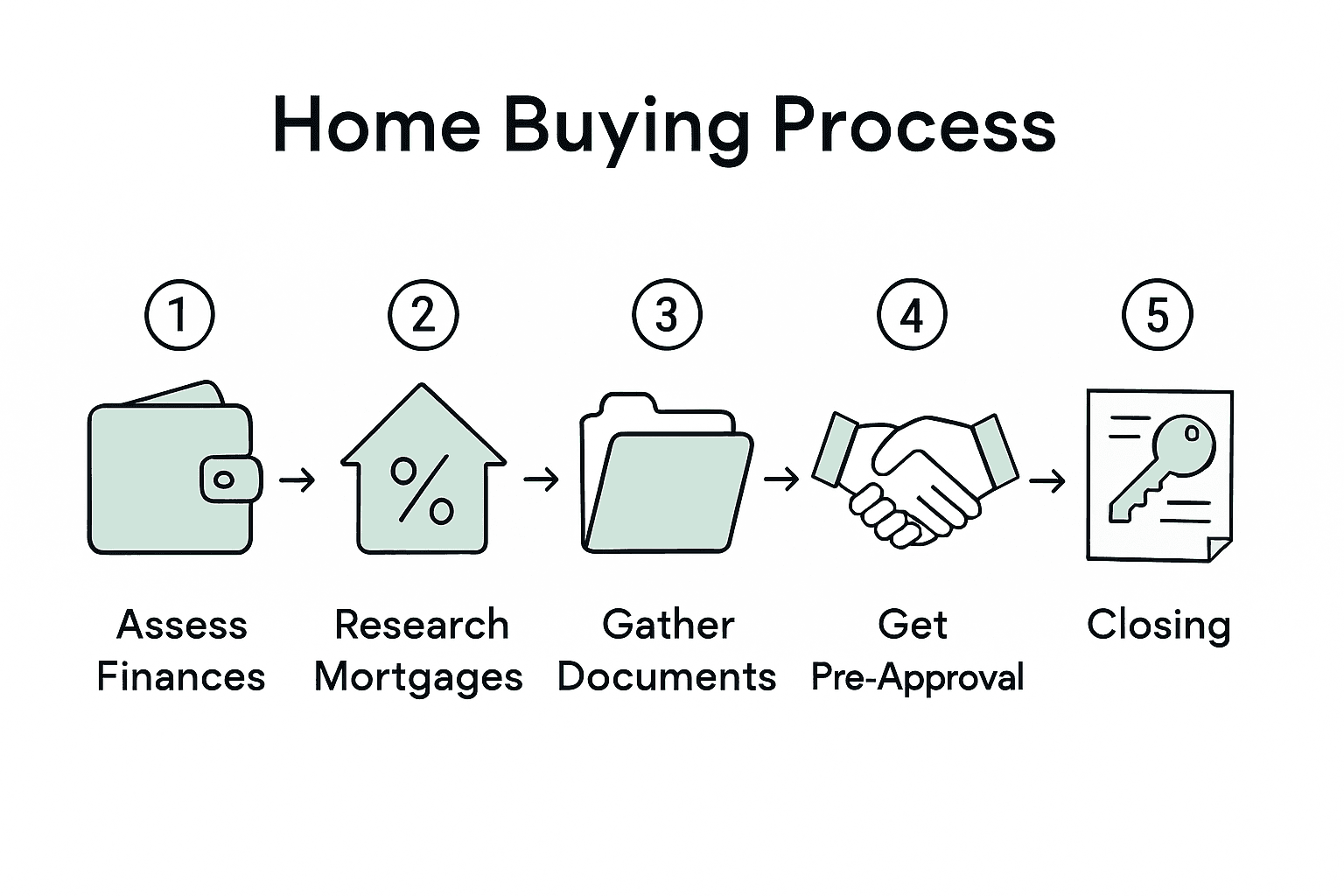
Infographic of five home financing steps

Comprehensive closing documentation requires careful review and verification of multiple critical financial documents. During the closing meeting you will sign numerous legal papers including the promissory note affirming your commitment to repay the mortgage loan, the mortgage or deed of trust that secures the loan against the property, and the closing statement detailing all financial transactions. Your lender will have a closing agent or attorney present to guide you through each document ensuring you understand the terms and obligations associated with your home financing.

Expect to pay closing costs which typically range between 2% to 5% of the total home purchase price. These expenses include loan origination fees, appraisal costs, title insurance, property taxes, and other administrative expenses. Bring a certified or cashiers check to cover these costs or arrange for a wire transfer in advance. Prior to closing you will conduct a final walkthrough of the property to confirm its condition matches the initial agreement and no unexpected damages have occurred. Once all documents are signed and funds are transferred you will receive the keys to your new home marking the official completion of your home buying process.

Pro tip: Request a detailed closing cost breakdown at least three days before your closing date to review all expenses and ensure there are no unexpected charges or discrepancies.

Empower Your First-Time Home Buying Journey with Expert Mortgage Solutions

Navigating each step of the home financing process can feel overwhelming, especially when assessing your financial readiness, comparing mortgage options, organizing documentation, or securing pre-approval. If you are a first-time buyer striving to overcome credit challenges, self-employment income complexities, or simply seeking competitive rates, tailored guidance is essential. The article highlights common pain points such as understanding down payment requirements, coordinating paperwork, and finding the right loan type that fits your unique financial profile.

https://craigburn.com

Discover how Craigburn Capital specializes in turning these challenges into opportunities with personalized mortgage solutions designed for first-time buyers. Benefit from access to exclusive unadvertised rates, specialized programs for less-than-perfect credit, and expert support throughout your financing journey. Don’t let paperwork or confusing mortgage terms hold you back. Act now by visiting Craigburn Capital’s homepage to explore how their first-time homebuyer assistance programs and private lending options can help you secure your dream home with confidence.

Frequently Asked Questions

What should I assess before starting the home financing process as a first-time buyer?

Before starting the home financing process, assess your financial readiness by reviewing your income stability, credit profile, and current debts. Gather your income statements and calculate your debt-to-income ratio to determine how much you can realistically borrow.

How do I choose the right mortgage option for my situation?

To choose the right mortgage option, research various types such as conventional, FHA, VA, and adjustable rate mortgages, comparing their advantages and disadvantages. List your financial needs and long-term goals to find the mortgage that best fits your circumstances, whether you prefer stable payments or lower initial rates.

What documents do I need to prepare for my mortgage application?

You need to prepare essential documents including proof of income, asset statements, and debt documentation for your mortgage application. Organize your tax returns, pay stubs, and bank statements in a digital folder to streamline the process and ensure all information is readily available when requested by lenders.

How can I get pre-approved for a mortgage?

To get pre-approved for a mortgage, contact a lender and provide your financial information such as income, debts, and assets. Expect to receive a pre-approval letter specifying the maximum loan amount you qualify for, which demonstrates to sellers that you are a serious buyer.

What should I expect during the closing process of my home loan?

During the closing process, you will sign legal documents including the mortgage deed and the closing statement, transferring ownership of the property. Prepare to pay closing costs, typically ranging from 2% to 5% of the purchase price, and conduct a final walkthrough to ensure the property is in the agreed condition.

How can I manage closing costs effectively?

To manage closing costs effectively, request a detailed breakdown from your lender at least three days before your closing date. This allows you to review all expected expenses and resolve any discrepancies, preventing unexpected charges on closing day.

Master the Commercial Financing Workflow for Success

Most American business owners underestimate the complexity behind securing commercial financing. With more than 60 percent of American small businesses relying on financing to drive growth, understanding each crucial step is essential. Navigating the process means staying organized, making smart decisions, and avoiding costly mistakes. This guide breaks down the path from assessing financial objectives to completing funding, giving you practical steps to strengthen your financial position and reach your business goals.

Table of Contents

Quick Summary

Key Takeaway Explanation
1. Conduct a Comprehensive Financial Assessment Create a detailed financial inventory to understand your current situation and future goals.
2. Organize Essential Documentation Compile tax returns, bank statements, and business plans to demonstrate financial credibility to lenders.
3. Submit a Compelling Loan Application Include a clear narrative and adhere to each lender’s application requirements for optimal chances of approval.
4. Analyze and Negotiate Loan Offers Evaluate proposals on interest rates and hidden costs to secure favorable terms aligned with your strategy.
5. Prepare for a Thorough Closing Process Review all legal documents carefully to ensure clarity on terms and conditions before finalizing your loan.

Step 1: Assess Financial Needs and Objectives

Successfully navigating commercial financing requires a strategic approach to understanding your financial landscape. This step will help you create a comprehensive assessment of your current financial situation and future goals.

Begin by conducting a thorough financial inventory that goes beyond simple number crunching. You’ll want to examine multiple dimensions of your financial profile, including current income streams, existing debt obligations, cash reserves, and projected investment returns. Comprehensive financial assessments demand a holistic view that connects your immediate needs with long term strategic objectives. Consider creating a detailed spreadsheet that captures your current financial metrics such as monthly income, recurring expenses, potential investment capital, and risk tolerance levels.

Next, translate these raw financial data points into actionable objectives. What specific financial milestones are you aiming to achieve within the next 12 to 36 months? Are you looking to expand business operations, purchase commercial real estate, or restructure existing debt? Each objective requires a nuanced understanding of how financing can serve your broader strategic goals. Map out potential scenarios that demonstrate how different financing approaches might accelerate or support your desired outcomes.

Pro tip: Schedule a comprehensive financial review every six months to ensure your objectives remain aligned with changing market conditions and personal circumstances.

Step 2: Gather Essential Documentation

Documentation preparation is a critical step in your commercial financing workflow that can make or break your loan application. Your goal is to compile a comprehensive and organized set of financial records that demonstrate your credibility and financial stability to potential lenders.

Start by creating a dedicated digital and physical file system for your documentation. Comprehensive loan preparation requires gathering multiple types of financial records. You will need personal and business tax returns for the past three years, recent bank statements, profit and loss statements, balance sheets, business licenses, articles of incorporation, detailed business plans, and current credit reports. Pro tip: Scan and create digital backups of all physical documents to ensure you have redundant copies in case of loss or damage.

Each document serves a specific purpose in demonstrating your financial health and loan worthiness. Tax returns reveal your income consistency, bank statements show cash flow patterns, and business plans outline your strategic vision. Organize these documents chronologically and create a master index to help lenders quickly review your financial profile. Be prepared to provide additional supplemental documentation if requested.

Pro tip: Create a dedicated email folder and cloud storage location for your loan documentation to maintain a secure and easily accessible financial portfolio.

Here is a summary of key documents and their roles in commercial loan applications:

Document Type Purpose Example Detail
Business Plan Explains business vision and strategy Expansion timeline
Tax Returns Proves income consistency Three years of federal returns
Profit & Loss Statement Shows profitability and cash flow Quarterly summary included
Credit Reports Assesses creditworthiness FICO score and report
Bank Statements Highlights cash reserves and activity Past six months of statements
Articles of Incorporation Confirms business legitimacy State-filed entity paperwork

Step 3: Submit Loan Application to Lenders

Submitting your loan application marks a critical transition from preparation to potential financing. Your objective is to present a compelling financial narrative that convinces lenders of your creditworthiness and business potential.

Business owner scans documents for loan application

Loan application checklists provide a strategic framework for navigating the submission process effectively. Begin by carefully reviewing each lender’s specific application requirements. Some may prefer online submissions while others require physical documentation. Prepare multiple copies of your application package and ensure every form is completed with precision. Double check that all financial statements align perfectly across documents and that you have signed all necessary forms. Pay special attention to sections requesting detailed business projections and explanations of how you intend to use the borrowed funds.

When submitting your application, consider creating a comprehensive cover letter that summarizes your business goals and financial strategy. This narrative supplement can help differentiate your application by providing context beyond raw numbers. Be prepared for potential follow up questions or requests for additional documentation. Some lenders might schedule interviews or require more detailed explanations about your business model and financial projections. Maintain a professional and responsive communication style throughout the application process.

Pro tip: Create a dedicated email address and phone line specifically for loan communication to ensure prompt and organized responses to lender inquiries.

Step 4: Review Offers and Negotiate Terms

Reviewing and negotiating loan offers represents a critical moment in your commercial financing journey where strategic decision making can dramatically impact your financial future. Your objective is to carefully evaluate multiple proposals and secure terms that align with your business goals and financial capacity.

Commercial viability assessments require a comprehensive analysis of each lender’s proposal beyond just interest rates. Examine the entire financial package including loan duration, repayment schedules, prepayment penalties, collateral requirements, and any additional fees. Create a detailed comparison spreadsheet that allows you to objectively analyze each offer’s strengths and potential drawbacks. Pay close attention to hidden costs and restrictive covenants that might limit your business flexibility. Look beyond the headline numbers to understand how each loan’s structure could impact your cash flow and long term financial strategy.

When entering negotiations, approach the process as a collaborative dialogue rather than an adversarial interaction. Prepare a clear rationale for your desired terms based on your financial projections and business model. Be ready to provide additional context about your revenue streams, growth potential, and risk mitigation strategies. Demonstrate your financial literacy and professionalism by showing you have thoroughly researched market rates and understand the nuanced elements of commercial lending. Remember that everything is potentially negotiable sometimes even aspects of the loan beyond the interest rate.

Pro tip: Create a prioritized list of must have versus nice to have loan terms before negotiations begin to maintain clear boundaries and strategic focus.

Compare critical loan terms to evaluate proposals effectively:

Term What to Check For Possible Impact
Interest Rate Fixed or variable, percentage Affects total repayment amount
Loan Duration Number of years/months Influences monthly payments
Prepayment Penalty Fees for early payoff Limits refinancing flexibility
Collateral Requirements Type and value of security Puts business assets at risk
Additional Fees Origination, servicing, etc. Raises total borrowing costs

Step 5: Complete Closing and Funding Process

The closing and funding process represents the final critical phase of your commercial financing journey where all your meticulous preparation transforms into tangible financial resources. Your objective is to navigate the legal and financial formalities with precision and confidence.

Commercial loan document understanding requires careful attention to every detail during the closing process. Prepare for a comprehensive review that involves multiple legal and financial documents including promissory notes, security agreements, and funding agreements. Expect to spend several hours carefully reviewing each document, asking clarifying questions, and ensuring you fully comprehend the terms. During the closing meeting, remain patient and methodical. Each document represents a binding commitment that will shape your financial future. Verify that all terms match the negotiated agreement and that there are no unexpected conditions or clauses.

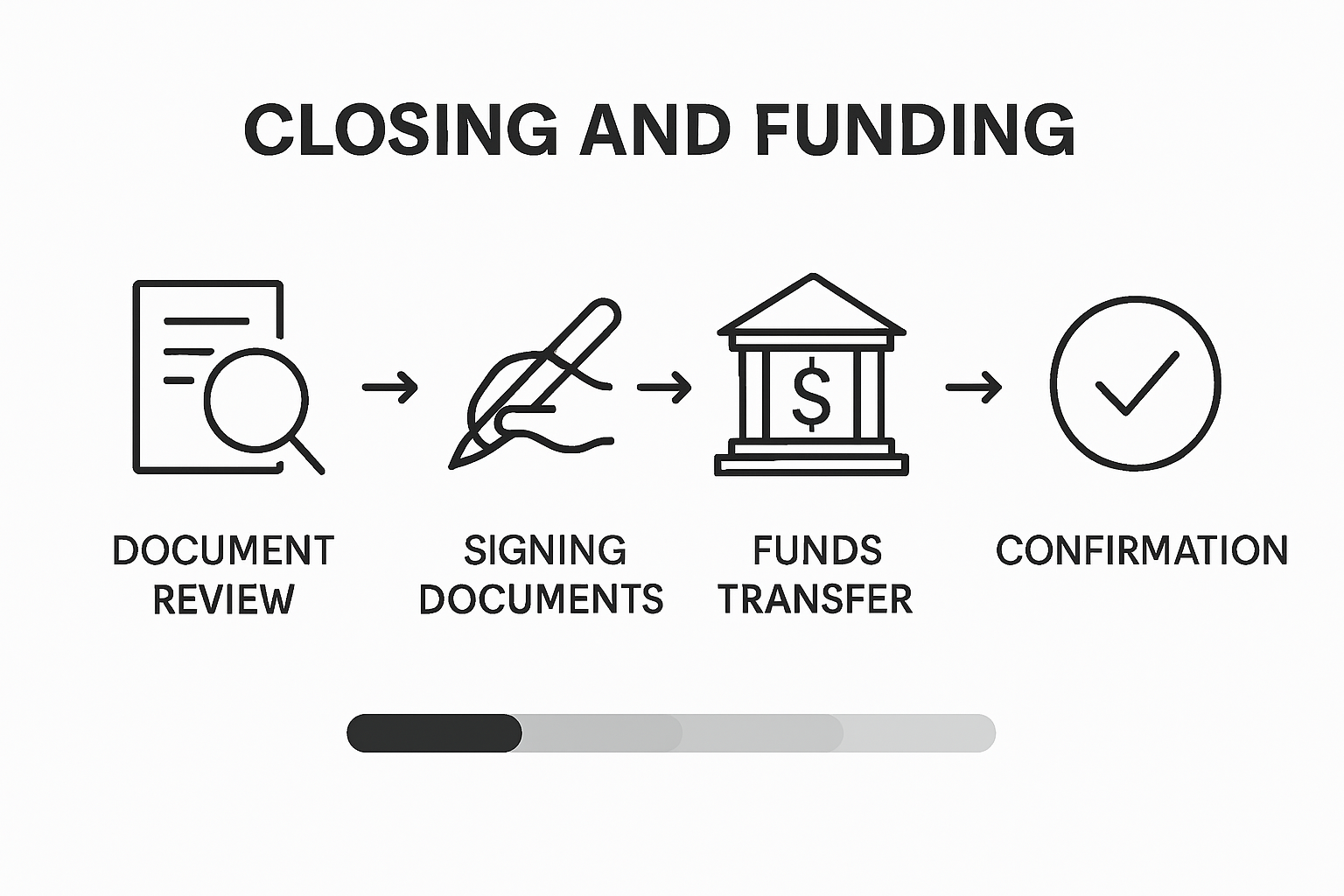
Infographic showing closing and funding steps

Be prepared to provide additional documentation or clarifications during the closing process. Some lenders might request last minute verifications of your financial statements or business projections. Maintain a professional and responsive approach. Have digital and physical copies of all relevant financial documents readily available. Your goal is to demonstrate organizational preparedness and financial reliability. After signing, confirm the exact timeline for fund disbursement and establish clear communication channels with your lending contact for any post closing questions.

Pro tip: Create a dedicated digital folder with high quality scans of all signed closing documents and store physical copies in a secure fireproof location for future reference.

Take Control of Your Commercial Financing Journey Today

Mastering the commercial financing workflow means overcoming challenges like organizing essential documentation, crafting compelling loan applications, and negotiating favorable terms. If you feel overwhelmed by financial assessments, loan complexities, or closing procedures, you are not alone. Many businesses struggle with aligning their financing options to strategic goals while managing lender demands and paperwork.

Craigburn Capital understands these pain points. We specialize in personalized commercial financing solutions designed to simplify each step from thorough financial review to closing. With access to exclusive competitive rates and tailored advice for diverse financial situations including private lending options, our experts empower you to confidently navigate financing hurdles. Visit Craigburn Capital for detailed resources and one-on-one guidance that can transform your loan application into a success story.

https://craigburn.com

Ready to move from confusion to clarity and secure funding that fits your business goals? Explore how our commercial financing services can make the process seamless. Don’t wait until financing roadblocks slow your growth. Contact Craigburn Capital now and turn your commercial ambitions into reality.

Frequently Asked Questions

How do I assess my financial needs before applying for commercial financing?

To assess your financial needs, conduct a thorough financial inventory that includes evaluating your income streams, existing debt, cash reserves, and investment returns. Create a detailed spreadsheet that captures your current financial metrics and then translate these into specific financial milestones you aim to achieve within the next 12 to 36 months.

What essential documents do I need to prepare for a commercial loan application?

Gather a comprehensive set of documents, including personal and business tax returns for the past three years, profit and loss statements, balance sheets, and business licenses. Create a dedicated digital file system to organize these records, ensuring they are readily accessible and clearly indexed for lenders.

How do I submit my loan application effectively?

Submit your loan application by carefully reviewing each lender’s specific application requirements and preparing a complete application package. Include a cover letter that summarizes your business goals and financial strategy to provide additional context for your application.

What should I look for when reviewing loan offers?

When reviewing loan offers, examine critical terms such as interest rate, loan duration, and prepayment penalties to understand how each could impact your cash flow. Create a comparison spreadsheet to analyze the strengths and drawbacks of each proposal objectively.

How can I prepare for the closing and funding process?

Prepare for the closing process by reviewing all legal and financial documents carefully, like promissory notes and funding agreements. Ensure you have both digital and physical copies of all relevant documents easily accessible to demonstrate your organizational preparedness and professionalism during the closing meeting.

How often should I review my financial situation?

Schedule a comprehensive financial review every six months to ensure your financial objectives align with changing market conditions and personal circumstances. This regular assessment helps you adapt and stay on track towards achieving your commercial financing goals.

7 Essential Commercial Mortgage Tips 2025 for Success

Over 20% of American commercial mortgage balances are set to mature in 2025, creating intense competition among investors and property owners. With lenders tightening rules and financial scrutiny on the rise, navigating this environment requires more than just luck. This guide reveals the practical strategies and critical updates every American business needs to simplify the process, meet lender demands, and secure favorable terms in today’s challenging mortgage market.

Table of Contents

Quick Summary

Takeaway Explanation
1. Prepare Thorough Documentation Comprehensive documentation is essential for mortgage approval; include financial statements, tax returns, and property-related documents.
2. Optimize Your Credit Score A strong credit score can lead to better loan terms; ensure timely bill payments and maintain low credit utilization.
3. Explore Diverse Loan Options Understand various loan types and lender options to find the best fit for your financial strategy and needs.
4. Plan for Down Payments and Closing Costs Be financially prepared for down payments typically ranging from 20% to 35%, and understand all associated closing costs.
5. Seek Professional Guidance Consulting a mortgage professional can help mitigate risks, clarify contract details, and secure favorable financing terms.

1. Understand the Latest Commercial Mortgage Requirements

Navigating the commercial mortgage landscape in 2025 requires strategic awareness of evolving lending standards. According to the Mortgage Bankers Association research, a substantial 20% of commercial mortgage balances are set to mature this year, making comprehensive understanding of requirements more critical than ever.

The current mortgage environment demands heightened financial scrutiny. Lenders have significantly tightened their evaluation criteria, focusing intensely on borrower financial health, property performance, and risk mitigation strategies. This means investors and business owners must prepare more robust documentation and demonstrate exceptional financial stability.

Key Documentation Requirements

  • Comprehensive business financial statements
  • Detailed property income and expense reports
  • Robust credit history demonstrating consistent performance
  • Projected cash flow analyses
  • Comprehensive business plan with growth projections

Risk Mitigation Strategies

Successful commercial mortgage applicants in 2025 will need to showcase:

  • Strong debt service coverage ratios
  • Proven track record of property management
  • Diversified income streams
  • Solid understanding of market trends

With delinquency rates increasing for commercial properties, lenders are more cautious than ever. Your ability to present a comprehensive, low-risk financial profile will significantly impact your mortgage approval chances.

Prepare meticulously. Research extensively. And approach your commercial mortgage application with strategic precision.

2. Compare Loan Types and Lender Options in 2025

The 2025 commercial mortgage landscape offers unprecedented diversity in loan types and lending strategies. Mortgage Bankers Association research indicates a projected 16% increase in commercial and multifamily borrowing, signaling a robust and competitive market for investors.

Primary Commercial Loan Types

  • Fixed Rate Mortgages: Predictable payments with stable interest rates
  • Adjustable Rate Mortgages (ARMs): Flexible rates tied to market conditions
  • Balloon Mortgages: Lower initial payments with a large final payment
  • SBA Loans: Government backed options for small business properties
  • Portfolio Loans: Customized lending solutions from individual financial institutions

Lender Comparison Strategies

Investors must scrutinize multiple factors when evaluating lending options. With commercial mortgage loan originations increasing 42% in the first quarter, competition among lenders is fierce.

Key Evaluation Criteria

  • Interest rates and terms
  • Loan to value ratios
  • Prepayment penalties
  • Closing costs
  • Flexibility of repayment structures

Successful commercial mortgage selection requires comprehensive research and strategic comparison. Do not rush. Analyze multiple lender offerings and negotiate terms that align with your specific investment goals.

3. Prepare Documents to Strengthen Your Application

Rising delinquency rates in commercial real estate have made lenders increasingly stringent about documentation. Your commercial mortgage application requires a strategic approach to showcase financial stability and reduce perceived lending risks.

Essential Documentation Checklist

  • Business Financial Statements

    • Detailed profit and loss reports
    • Balance sheets for the past three years
    • Cash flow projections
  • Personal and Business Tax Returns

    • Comprehensive federal and state tax documentation
    • Individual and corporate tax returns
    • Proof of consistent income streams
  • Property Related Documents

    • Current property appraisal
    • Detailed income and expense reports
    • Lease agreements
    • Property maintenance records

Strategic Documentation Preparation

With commercial real estate borrowing increasing by 16%, competition is fierce. Your documentation must tell a compelling financial story. Organize records chronologically, ensure accuracy, and highlight consistent financial performance.

Pro Tips for Document Preparation

  • Work with a certified accountant
  • Use professional financial software for tracking
  • Maintain digital and physical backup copies
  • Update documents quarterly
  • Be transparent about financial history

Remember: Comprehensive documentation is your strongest asset in securing favorable commercial mortgage terms. Treat your application like a professional business proposal.

4. Maximize Your Credit Score for Better Loan Terms

Commercial lending activity demonstrates the critical importance of credit scores with a remarkable 66% increase in commercial and multifamily borrowing during the second quarter of 2025. Your credit score is no longer just a number it is your financial passport to securing favorable lending terms.

Credit Score Impact Zones

  • Scores above 700: Prime lending conditions
  • Scores 650 to 700: Moderate lending terms
  • Scores below 650: Potential higher interest rates

Strategic Credit Score Optimization

  • Pay all business and personal bills on time
  • Maintain low credit utilization ratios
  • Minimize new credit applications
  • Resolve any outstanding collections
  • Monitor credit reports quarterly

With increasing commercial mortgage debt, lenders are scrutinizing credit profiles more intensely than ever. A strong credit score can translate into substantial savings through reduced interest rates and more flexible lending terms.

Advanced Credit Management Techniques

  • Establish business credit separately from personal credit
  • Use business credit cards strategically
  • Create a consistent payment history
  • Build relationships with multiple financial institutions
  • Maintain comprehensive financial documentation

Your credit score is a powerful financial tool. Treat it with the same level of care and attention you would give your most valuable business asset.

5. Explore Exclusive and Unadvertised Mortgage Rates

Commercial borrowing trends reveal significant opportunities for savvy investors who understand the nuanced world of unadvertised mortgage rates. A 36% increase in commercial and multifamily borrowing signals a dynamic lending landscape where strategic rate hunting can yield substantial financial advantages.

Strategies for Uncovering Hidden Rates

  • Connect with multiple mortgage brokers
  • Request rate comparisons from specialized lenders
  • Leverage professional networking groups
  • Attend commercial real estate finance conferences
  • Build relationships with regional banking institutions

Key Rate Discovery Techniques

  • Negotiate based on comprehensive financial documentation
  • Demonstrate strong business performance
  • Highlight consistent income and credit history
  • Understand lender specific underwriting preferences
  • Be prepared to discuss complex financial scenarios

With commercial mortgage debt continuing to rise, lenders are increasingly willing to offer customized rates for qualified borrowers. Your proactive approach can unlock rates significantly lower than standard advertised options.

Insider Rate Negotiation Tips

  • Request written rate quotes from multiple sources
  • Understand the total cost of financing
  • Evaluate both short term and long term rate implications
  • Consider portfolio lender options
  • Be willing to walk away from unfavorable terms

Remember: The best mortgage rates are rarely found on billboards or websites. True financial opportunity requires strategic research and professional networking.

6. Plan for Down Payments and Closing Costs Effectively

Commercial real estate borrowing activities highlight the critical importance of strategic financial planning for down payments and closing costs. A 42% increase in borrowing underscores the need for meticulous financial preparation.

Down Payment Breakdown

  • Typical commercial mortgage down payments: 20% to 35%
  • Factors influencing down payment requirements
    • Property type
    • Business financial health
    • Lending institution policies
    • Borrower credit profile

Closing Cost Components

  • Appraisal fees
  • Legal documentation charges
  • Title insurance
  • Property survey expenses
  • Origination fees
  • Environmental assessment costs

With total real estate borrowing and lending expanding, understanding comprehensive financing expenses becomes paramount.

Strategic Financial Preparation

  • Build dedicated savings account for down payment
  • Maintain robust cash reserves
  • Develop comprehensive budget projection
  • Consider alternative funding sources
  • Negotiate closing cost details

Remember: Successful commercial mortgage acquisition requires more than just meeting minimum requirements. Proactive financial planning transforms potential obstacles into strategic opportunities.

7. Use Expert Guidance to Avoid Costly Pitfalls

Increasing commercial mortgage delinquency rates underscore the critical need for professional expertise in navigating complex lending landscapes. The financial risks are real and potentially devastating without strategic professional support.

Red Flags in Commercial Mortgage Agreements

  • Ambiguous prepayment penalties
  • Floating interest rate structures
  • Unclear default consequences
  • Hidden administrative fees
  • Complex refinancing conditions

Benefits of Professional Mortgage Consultation

  • Comprehensive contract review
  • Risk assessment
  • Negotiation strategy development
  • Market rate comparisons
  • Customized financing recommendations

With 20% of commercial mortgage balances set to mature, professional guidance is not just recommended it is essential.

Key Consultation Strategies

  • Interview multiple mortgage professionals
  • Request comprehensive portfolio analysis
  • Understand complete financial implications
  • Evaluate long term strategic impact
  • Develop contingency financing plans

Remember: Smart investors invest in expertise. The right professional guidance can save you hundreds of thousands in potential financial missteps.

Below is a comprehensive table summarizing the key aspects of navigating the commercial mortgage landscape in 2025 and strategies for optimizing loan applications.

Topic Description Key Considerations
Latest Requirements 20% of commercial mortgages mature in 2025; intense scrutiny on borrower financial health and property performance. Prepare robust documentation, demonstrate financial stability.
Loan Types Fixed Rate, ARMs, Balloon, SBA, Portfolio loans available. Evaluate based on interest rates, terms, penalties.
Document Preparation Critical due to rising delinquency rates; requires systematic documentation. Use professional help, ensure accuracy, maintain regular updates.
Credit Score Importance Direct impact on lending terms; scores above 700 are preferred. Pay bills on time, keep low credit utilization.
Rate Discovery Unadvertised mortgage rates can offer savings. Network with brokers, negotiate, leverage business performance.
Financial Planning Essential for down payments (20%-35%) and closing costs. Build savings, budget carefully, consider alternative funding.
Expert Guidance Avoid pitfalls with professional mortgage consultation. Conduct risk assessments, understand full financial implications.

Take Control of Your Commercial Mortgage Success Today

Navigating the complex world of commercial mortgages in 2025 means facing tighter lending requirements, detailed documentation demands, and fierce competition for the best rates. The key challenges highlighted in “7 Essential Commercial Mortgage Tips 2025 for Success” show that without expert guidance and access to exclusive financing options, securing a favorable loan can feel overwhelming. Whether you need help understanding risk mitigation strategies or want to uncover unadvertised mortgage rates, you do not have to go it alone.

https://craigburn.com

At Craigburn Capital, we specialize in providing tailored commercial financing solutions to help you overcome these hurdles. Benefit from our expertise in private lending and commercial mortgage options that match your unique profile even if you have self-employed status or credit concerns. Act now to arm yourself with competitive interest rates and personalized strategies designed to maximize your approval chances and financial outcomes. Contact us today through Craigburn Capital to start building your custom mortgage plan and confidently secure the funding your business deserves.

Frequently Asked Questions

What documentation do I need to apply for a commercial mortgage in 2025?

To successfully apply for a commercial mortgage, gather comprehensive business financial statements, property income and expense reports, and a detailed credit history. Start organizing these documents now to ensure a smooth application process.

How can I improve my credit score before applying for a commercial mortgage?

Improving your credit score involves paying all bills on time, maintaining low credit utilization, and resolving any outstanding debts. Focus on these steps over the next few months to potentially boost your score by 50–100 points.

What are the typical down payment requirements for commercial mortgages?

Typically, down payment requirements for commercial mortgages range from 20% to 35% of the property’s value. Calculate your potential down payment now to ensure you have adequate funds ready when applying.

How can I identify unadvertised mortgage rates?

To uncover unadvertised mortgage rates, connect with multiple mortgage brokers and request rate comparisons from various lenders. Proactively reach out to these professionals to potentially save thousands on your mortgage.

What common pitfalls should I avoid when securing a commercial mortgage?

Avoid common pitfalls such as unclear prepayment penalties and floating interest rates. Carefully review all contract details and seek professional advice to ensure you understand your agreement completely.

Why is it important to consult a mortgage professional?

Consulting a mortgage professional is crucial because they can provide comprehensive contract reviews and negotiation strategies that protect your interests. Schedule a consultation to gain personalized insights and guidance tailored to your financial situation.

7 Essential First-Time Investor Mortgage Tips for Success

Most American first-time investors are surprised to learn that over 35 percent underestimate the true costs of property ownership. With so many mortgage options to consider, the process can quickly become confusing for anyone just starting. Knowing exactly how different loan types, credit factors, and hidden expenses shape your investment journey can help you make confident financial decisions and maximize your long-term gains.

Table of Contents

Quick Overview

Key Insight Explanation
1. Understand Mortgage Types Familiarize yourself with fixed-rate, adjustable-rate, and investment property loans to align with your goals.
2. Improve Your Credit Score Early Start enhancing your credit score 6-12 months before applying to secure better mortgage rates and terms.
3. Consider Total Investment Costs Don’t just budget for the down payment; account for maintenance, taxes, and management fees.
4. Obtain Mortgage Pre-Approval Gain a competitive edge by getting pre-approved, showing sellers you are a serious and prepared investor.
5. Compare Offers from Multiple Lenders Analyze offers from various lenders to find the best rates and terms, potentially saving thousands over time.

1. Understand Your Mortgage Options as a New Investor

As a first-time real estate investor, navigating mortgage options can feel overwhelming. Yet understanding the landscape is your first strategic step toward building a profitable investment portfolio.

Mortgage selection is more than just securing funds it’s about choosing a financial tool that aligns with your investment goals. The mortgage landscape offers diverse options for new investors, each with unique advantages and considerations.

Key Mortgage Types for Investors:

  • Fixed-Rate Mortgages: Provide predictable monthly payments with consistent interest rates
  • Adjustable-Rate Mortgages (ARMs): Offer lower initial rates that can fluctuate over time
  • Investment Property Loans: Specifically designed for real estate investment properties

Fixed-rate mortgages work best for investors seeking stability. Your interest rate remains constant throughout the loan term, allowing precise financial planning. Adjustable-rate mortgages might appeal to investors comfortable with potential rate changes and seeking lower initial payments.

When evaluating mortgage options, consider your investment strategy. Are you planning a short-term flip or a long-term rental property? Your investment timeline dramatically influences which mortgage structure makes the most sense.

Pro Investor Tip: Always calculate potential cash flow before selecting a mortgage. Your monthly mortgage payment should leave room for maintenance costs, potential vacancy periods, and a healthy profit margin.

Remember that mortgage qualification for investment properties differs from residential home purchases. Lenders typically require higher down payments and demonstrate stricter credit requirements. Prepare comprehensive documentation showing your investment potential and financial stability.

2. Assess Your Credit Score and Improve It Early

Your credit score is the financial passport to successful real estate investing. Think of it as your monetary reputation that lenders scrutinize before approving investment property mortgages.

Credit scores significantly impact your borrowing potential. Understanding how credit scores influence mortgage options can help you strategically position yourself for better loan terms and rates.

Credit Score Ranges for Investors:

  • Excellent: 750 and above
  • Good: 700 to 749
  • Fair: 650 to 699
  • Poor: Below 650

Investors with higher credit scores unlock more favorable mortgage conditions. Lenders view strong credit scores as indicators of financial reliability and lower risk. This translates into lower interest rates and more attractive loan terms.

Practical Credit Improvement Strategies:

  • Pay all bills consistently and on time
  • Reduce existing debt levels
  • Avoid opening new credit lines before applying for a mortgage
  • Maintain low credit card balances
  • Monitor your credit report for errors

Start improving your credit score at least 6 to 12 months before applying for an investment property mortgage. Small improvements can result in significant savings. A 50point increase could potentially save you thousands in interest over your loan term.

Pro Investor Tip: Request free credit reports annually and address any discrepancies immediately. Errors can unexpectedly lower your credit score and impact your investment financing opportunities.

Remember credit repair is a marathon not a sprint. Consistent financial discipline will gradually enhance your creditworthiness and open doors to better investment opportunities.

3. Calculate the True Costs Beyond the Down Payment

First time investors often make a critical mistake: focusing solely on the down payment while overlooking the comprehensive financial landscape of property investment. The down payment is just the beginning of your investment journey.

Rental property investments involve multiple hidden expenses that can significantly impact your overall financial strategy. Understanding these costs is crucial for maintaining a profitable investment.

Key Expenses Beyond the Down Payment:

  • Property Maintenance: Routine repairs and unexpected fixes
  • Property Taxes: Annual assessments that vary by location
  • Insurance Costs: Specialized coverage for investment properties
  • Potential Vacancy Periods: Lost rental income during tenant transitions
  • Property Management Fees: If you hire professional management

Most successful investors recommend budgeting 1 to 3 percent of the property’s purchase price annually for maintenance alone. This means a $250000 property could require $2500 to $7500 in maintenance expenses each year.

Smart Budgeting Strategies:

  • Create a dedicated emergency repair fund
  • Research local property tax rates before purchasing
  • Factor in potential vacancy rates for your specific market
  • Get comprehensive insurance quotes specific to investment properties
  • Consider potential renovation costs before purchasing

Pro investors treat their properties like businesses. Every dollar spent is an investment in long term profitability. Comprehensive financial planning means looking beyond the initial purchase price and understanding the full economic ecosystem of your investment property.

Remember that cash flow is king in real estate investing. A property that looks profitable on paper can quickly become a financial burden if you have not accurately calculated all associated expenses.

4. Get Pre-Approved to Strengthen Your Offers

In the competitive world of real estate investing, mortgage pre-approval is your strategic advantage. It transforms you from a casual browser to a serious contender in property negotiations.

The pre-approval process clarifies your financial boundaries and enhances credibility with sellers, signaling that you are a committed and prepared investor.

What Pre-Approval Really Means:

  • Verified lending capacity
  • Clear understanding of your budget
  • Increased negotiation power
  • Faster transaction processing
  • Demonstrates financial reliability

Pre-approval is more than a preliminary step. It is a powerful document that tells sellers you have already undergone rigorous financial screening. Lenders will examine your income, credit history, debt levels, and overall financial health to determine exactly how much they are willing to lend.

Critical Pre-Approval Documentation:

  • Proof of income
  • Tax returns from recent years
  • Bank statements
  • Credit report
  • Employment verification
  • Investment account statements

Most sellers will not take your offer seriously without pre-approval. In competitive markets, having this document can mean the difference between securing your ideal investment property and watching it slip away to another investor.

Pro investors treat pre-approval as their entry ticket to real estate opportunities. By demonstrating financial readiness, you position yourself as a credible and serious investor who understands the nuances of property acquisition.

Remember that pre-approval is typically valid for 60 to 90 days. Time your application strategically to align with your investment search and be prepared to update documentation if your search extends beyond the pre-approval window.

5. Compare Multiple Lenders for the Best Rates

Shopping for a mortgage is like hunting for a hidden treasure. Every fraction of a percentage point can translate into thousands of dollars saved over your investment property loan term.

First time investors should strategically compare offers from multiple lending institutions to secure the most advantageous financial package.

Key Comparison Points:

  • Interest rates
  • Loan origination fees
  • Closing costs
  • Prepayment penalties
  • Loan term flexibility
  • Down payment requirements

Most investors do not realize that rates can vary significantly between lenders. A mere 0.5 percent difference in interest rates could mean saving $30000 to $50000 over a 30 year mortgage term for an investment property.

Strategic Comparison Approach:

  • Request quotes from at least 3 to 5 different lenders
  • Compare annual percentage rates (APR), not just headline interest rates
  • Examine total loan costs, not just monthly payments
  • Consider both traditional banks and online lending platforms
  • Ask about special programs for real estate investors

Prepare a detailed spreadsheet when comparing offers. Track not just interest rates but all associated costs. Some lenders might offer lower rates but higher fees, which can offset initial savings.

Pro investors know that rate shopping is not about finding the absolute lowest number. It is about finding the most comprehensive financial package that aligns with your specific investment strategy and long term financial goals.

Remember that your credit score, down payment size, and investment property type will influence the rates you are offered. Always present yourself as a low risk, well prepared investor to maximize your negotiating power.

6. Know How Rental Income Factors Into Approval

Real estate investors have a powerful secret weapon in mortgage approval: potential rental income. Understanding how lenders evaluate this income stream can dramatically improve your financing opportunities.

Lenders typically assess rental income using specific calculation methods that protect both the investor and the lending institution.

Rental Income Verification Process:

  • Documented rental history
  • Professional property appraisal
  • Projected income potential
  • Market rental rate comparisons
  • Lease agreement documentation

Most lenders apply a conservative approach by considering only 75% of potential gross rental income. This 25% buffer accounts for potential vacancies, maintenance costs, and unexpected property management expenses.

Documentation Requirements:

  • Two years of tax returns showing rental income
  • Current lease agreements
  • Professional market rental analysis
  • Property condition report
  • Proof of property management experience

Investors with established rental properties have a significant advantage. If you can demonstrate consistent rental income through tax returns and lease agreements, lenders will view your application more favorably.

Some lenders will require a proven track record of property management. First time investors might need to provide additional documentation or work with specialized investment property lending teams.

Pro investors understand that rental income is not just additional revenue. It is a critical factor in mortgage approval that can transform your investment potential. Prepare comprehensive documentation and present a clear, professional case for your property’s income generation capacity.

7. Work with a Broker for Expert Investment Guidance

Real estate investment is a complex landscape where professional guidance can mean the difference between success and costly mistakes. A mortgage broker is your strategic partner in navigating this intricate financial terrain.

Mortgage brokers provide specialized guidance for investment property financing, offering insights that go far beyond simple loan application processing.

Broker Value Proposition:

  • Access to multiple lender networks
  • Specialized investment property expertise
  • Tailored mortgage product recommendations
  • Negotiation support
  • Complex financial scenario navigation

Unlike traditional bank loan officers who represent a single institution, mortgage brokers work independently to find the most suitable financing options for your specific investment strategy. They understand the nuanced requirements of investment property mortgages.

Key Broker Selection Criteria:

  • Proven track record with investment properties
  • Deep understanding of local real estate markets
  • Transparent fee structures
  • Strong network of lending relationships
  • Investment property financing specialization

Experienced brokers can help you understand complex financing structures, evaluate loan terms, and identify opportunities that align with your investment goals. They act as financial strategists who can translate complex mortgage language into actionable insights.

Most first time investors save significant money by working with brokers who can negotiate better rates and uncover unadvertised loan programs. Their expertise can potentially save you thousands in interest and fees over your investment property mortgage term.

Remember that a great mortgage broker is more than a transaction facilitator. They are your financial navigator, helping you make informed decisions that support your long term wealth building strategy.

This table summarizes key points and strategies for first-time real estate investors navigating mortgage options, credit considerations, costs, and lender selection.

Topic Key Details Considerations & Tips
Mortgage Options Fixed-Rate, ARM, and Investment Property Loans each have unique benefits. Match option to investment goals and timeline.
Credit Score Scores affect loan terms. Excellent: 750+. Good: 700-749. Improve scores by reducing debt and paying bills on time.
Costs Beyond Down Payment Maintenance, Taxes, Insurance, Vacancies, Management. Budget 1-3% of property price for maintenance.
Pre-Approval Proves lending capacity and enhances negotiations. Gather income proof, tax returns, and credit reports.
Lender Comparison Interest rates, fees, and terms vary significantly. Compare offers from 3-5 lenders using APR.
Rental Income for Approval Potential income considered, usually 75%. Provide rental history and market analysis.
Broker Guidance Offers access to multiple lenders and expertise. Choose brokers with investment property experience.

Take Control of Your First Investment Property Financing Today

Navigating mortgage options for your first investment property can feel overwhelming but you do not have to do it alone. Common challenges like understanding mortgage types, improving your credit score, calculating hidden costs, and securing the best lender rates require expert guidance tailored to your unique financial situation. At Craigburn Capital, we specialize in simplifying these complex steps with personalized mortgage solutions designed specifically for first-time investors.

https://craigburn.com

Empower your investment journey with competitive financing options, exclusive unadvertised rates, and dedicated support from mortgage professionals who understand the stakes. Visit Craigburn Capital today to discover how our private lending and specialized programs can help you confidently secure the right mortgage. Don’t wait—position yourself for success and make your real estate investment goals a reality now.

Frequently Asked Questions

What types of mortgages are best for first-time investors?

Fixed-rate mortgages and adjustable-rate mortgages are commonly recommended. Evaluate which option aligns with your investment strategy and risk tolerance before making a decision.

How can I improve my credit score before applying for an investment mortgage?

You can boost your credit score by paying bills on time, reducing existing debt, and monitoring your credit report for errors. Start this process at least six months before applying to see noticeable improvements.

What costs should I consider beyond the down payment when investing in real estate?

Consider expenses such as property maintenance, property taxes, and insurance costs. Budget for these expenses to ensure you can manage your investment effectively and maintain profitability.

Why is mortgage pre-approval important for first-time investors?

Mortgage pre-approval signals to sellers that you are a serious buyer with verified financial capacity. It can strengthen your offers in competitive markets, so seek pre-approval before starting your property search.

How can rental income impact my mortgage approval as a new investor?

Lenders often consider a percentage of potential rental income when evaluating your mortgage application. Have documents ready that demonstrate any current or projected rental income to improve your chances of approval.

What should I look for when choosing a mortgage broker for investment properties?

Select a mortgage broker with experience in investment properties and a strong network of lenders. Their expertise can help you find the best financing options that align with your investment goals.

Why Choose Commercial Mortgages for Business Growth

Over half of American businesses rely on commercial mortgages to secure and grow valuable real estate assets, fueling both expansion and stability. Yet many decision-makers misunderstand how these complex loans differ from residential financing, leading to costly missteps. Gaining clarity on commercial mortgages empowers American entrepreneurs and investors to make smarter choices, avoid common pitfalls, and unlock advantages that build long-term financial strength.

Table of Contents

Key Takeaways

Point Details
Commercial Mortgages vs. Residential Mortgages Commercial mortgages are designed for business purposes, focusing on property revenue potential rather than personal credit scores.
Types of Commercial Mortgages Options include conventional loans, CMHC-insured mortgages, and conduit loans, each with unique advantages suited to different business needs.
Qualification Criteria Lenders assess financial health using metrics like Debt Service Coverage Ratio (DSCR) and Loan-to-Value (LTV) ratios, necessitating extensive documentation.
Benefits and Risks While commercial mortgages offer property control and potential tax benefits, they also come with risks such as market volatility and hidden costs that require careful management.

Commercial Mortgages Defined and Debunked

A commercial mortgage represents a specialized financing tool designed to help businesses acquire, develop, or refinance properties used for commercial purposes. Unlike residential mortgages, these financial instruments are structured with unique parameters that cater specifically to business investment strategies. Commercial mortgages enable entrepreneurs and companies to secure real estate assets that can drive significant growth and generate long-term financial returns.

Commercial mortgages differ substantially from traditional home loans in several key aspects. While residential mortgages typically focus on individual housing needs, commercial mortgages are tailored to support business objectives. These loans can be used to purchase office buildings, warehouses, retail spaces, apartment complexes, and other income-generating properties. The lending criteria are more complex, often evaluating the potential revenue generation of the property and the financial health of the business, rather than solely examining personal credit scores.

The structure of commercial mortgages involves several critical components that distinguish them from standard lending products. Loan terms are generally shorter, ranging from 5 to 20 years, with interest rates that reflect the perceived risk of the commercial venture. Lenders typically require more substantial down payments, often between 25% to 35% of the property’s total value, compared to residential mortgage requirements. This higher upfront investment ensures that businesses have a significant financial stake in the property and demonstrates their commitment to the investment.

Understanding the nuanced landscape of commercial mortgage applications can significantly improve a business’s chances of securing favorable financing. Potential borrowers should prepare comprehensive documentation including detailed business plans, financial statements, property appraisals, and projected income statements. By presenting a clear, strategic vision and demonstrating robust financial management, businesses can position themselves as attractive candidates for commercial mortgage lending.

Types of Commercial Mortgages Explained

Commercial mortgages encompass a diverse range of financing options designed to meet the unique needs of businesses across different industries and investment strategies. Mortgage types vary significantly based on factors like property type, risk profile, and borrower financial characteristics. Understanding these variations can help businesses select the most appropriate financing solution for their specific commercial real estate objectives.

The primary categories of commercial mortgages include conventional loans, CMHC-insured mortgages, and conduit loans. Conventional loans represent the most traditional financing option, typically requiring substantial down payments and offering competitive interest rates for businesses with strong credit profiles. CMHC-insured mortgages provide additional security for lenders, often enabling borrowers to access more favorable terms by reducing the perceived risk. Conduit loans offer a more flexible approach, characterized by faster processing times and broader loan program selections, making them attractive for businesses seeking rapid financing.

Each commercial mortgage type carries distinct advantages and potential drawbacks. Conventional loans often provide the most straightforward terms but demand rigorous financial documentation and higher credit standards. CMHC-insured mortgages can offer lower interest rates and longer amortization periods, particularly beneficial for stable, income-generating properties. Conduit loans excel in scenarios requiring quick funding and accommodate more diverse property types, though they might include more complex structuring and potentially higher transaction costs.

Property manager reviews mortgage paperwork

Businesses considering commercial mortgages should conduct comprehensive financial analysis to determine the most suitable option. Factors like property type, intended use, projected revenue, current market conditions, and the company’s financial health all play crucial roles in selecting the right mortgage product. Consulting with experienced mortgage professionals can help navigate these complex decisions, ensuring businesses secure financing that aligns perfectly with their strategic growth objectives.

Key Features and Qualification Criteria

Commercial mortgages involve a complex evaluation process that goes far beyond traditional lending standards. Key features of commercial mortgage underwriting include comprehensive financial assessments that examine multiple dimensions of both the borrower’s financial health and the property’s potential income generation. Lenders meticulously analyze factors such as business cash flow, credit history, property appraisal, and projected revenue to determine loan eligibility and terms.

The qualification criteria for commercial mortgages typically revolve around several critical financial metrics. Debt service coverage ratio (DSCR) emerges as a fundamental benchmark, measuring a business’s ability to cover mortgage payments through its operational income. Most lenders require a DSCR of 1.25 or higher, indicating the borrower can comfortably manage debt obligations. Loan-to-value ratios represent another crucial element, with most commercial mortgage providers expecting down payments between 25% to 35% of the total property value, demonstrating the borrower’s financial commitment and reducing the lender’s potential risk.

Beyond financial metrics, lenders conduct extensive due diligence that includes reviewing detailed business plans, analyzing market conditions, and assessing the specific property’s potential for generating sustainable income. They examine factors like location, property condition, potential for appreciation, and the borrower’s industry track record. Businesses with established credit histories, consistent revenue streams, and clear growth strategies typically present the most attractive profiles for commercial mortgage approval.

Successful commercial mortgage applications require meticulous preparation and a comprehensive understanding of lender expectations. Borrowers should compile thorough documentation including three years of tax returns, detailed financial statements, business projections, and comprehensive property appraisals. By presenting a robust financial narrative that demonstrates stability, potential for growth, and a strategic approach to property investment, businesses can significantly enhance their chances of securing favorable commercial mortgage terms.

Benefits for Business Owners and Investors

Commercial mortgages represent a powerful financial strategy for businesses seeking to leverage real estate as a strategic asset. Potential investment benefits extend far beyond simple property ownership, offering sophisticated entrepreneurs multiple avenues for financial growth and long-term wealth accumulation. By transforming real estate from a cost center into a potential revenue generator, businesses can unlock significant economic opportunities.

The primary advantages of commercial mortgages include direct property control, equity building, and potential tax benefits. Business owners gain substantial advantages by owning their commercial premises, including the ability to customize spaces, eliminate unpredictable rental increases, and build substantial equity over time. Unlike traditional leasing arrangements, commercial mortgages allow businesses to transform monthly expenses into long-term asset appreciation, creating a powerful wealth-building mechanism that simultaneously serves operational needs.

Investors find commercial mortgages particularly attractive due to their potential for generating stable, predictable income streams. Commercial properties often feature long-term lease agreements that provide consistent revenue, making them an appealing option for risk-conscious investors seeking diversification beyond traditional investment vehicles. The ability to leverage commercial real estate allows investors to spread risk across multiple property types, industries, and geographic locations, creating a robust and resilient investment portfolio.

Beyond financial returns, commercial mortgages offer strategic flexibility that can dramatically enhance business growth potential. Entrepreneurs can use property appreciation to secure additional financing, expand operations, or reinvest in core business activities. The combination of potential tax deductions, equity accumulation, and operational control makes commercial mortgages a sophisticated financial tool for businesses looking to transform real estate from a mere overhead expense into a dynamic strategic asset.

Risks, Costs, and How to Avoid Pitfalls

Commercial mortgages represent a sophisticated financial instrument with inherent complexities that demand careful strategic planning. Understanding potential risks is crucial for businesses seeking to navigate the intricate landscape of commercial real estate financing. Default risk emerges as a primary concern, influenced by broader economic conditions, property market dynamics, and the borrower’s financial stability.

The financial risks associated with commercial mortgages extend beyond simple default potential. Loan selection requires meticulous evaluation of interest rate volatility, underwriting standards, and long-term economic projections. Businesses must conduct comprehensive due diligence, analyzing factors such as potential market fluctuations, property valuation trends, and their own long-term financial projections. Hidden costs can include substantial origination fees, appraisal expenses, legal charges, and potential prepayment penalties that can significantly impact the overall financial burden.

To mitigate potential risks, businesses should implement a multi-layered risk management strategy. This approach includes maintaining robust financial reserves, conducting thorough property and market research, and developing flexible contingency plans. Entrepreneurs should carefully analyze their debt service coverage ratios, ensure consistent cash flow projections, and maintain a conservative approach to borrowing. Diversifying investment strategies, maintaining multiple revenue streams, and establishing strong relationships with experienced financial advisors can provide additional layers of financial protection.

Successful navigation of commercial mortgage risks requires a proactive and strategic approach. Businesses should prioritize transparency in financial reporting, maintain excellent credit histories, and develop comprehensive business plans that demonstrate long-term viability. By understanding potential pitfalls, conducting thorough due diligence, and maintaining financial flexibility, entrepreneurs can transform commercial mortgages from potential financial risks into powerful tools for strategic business growth and asset accumulation.

Comparing Commercial vs. Alternative Financing

Business financing represents a complex ecosystem with multiple funding approaches, each offering distinct advantages and challenges. Commercial mortgage markets encompass diverse lending technologies, ranging from traditional bank financing to more innovative non-bank lending solutions. Understanding the nuanced differences between commercial mortgages and alternative financing options can help businesses make strategic funding decisions aligned with their specific growth objectives.

The primary alternatives to commercial mortgages include asset-backed commercial paper programs, private lending, equipment financing, and line of credit options. Asset-backed commercial paper programs operate distinctly from traditional mortgage structures, offering short-term debt instruments that can provide more flexible funding mechanisms. These alternatives often feature different underwriting standards, interest rates, and repayment structures compared to conventional commercial mortgages, allowing businesses to select financing that most closely matches their unique financial requirements.

Commercial mortgages distinguish themselves through several key characteristics that set them apart from alternative financing methods. Unlike unsecured lending options, commercial mortgages are directly tied to real estate assets, providing lenders with stronger collateral protection. This asset-backed nature typically translates into lower interest rates, longer repayment terms, and more substantial borrowing limits. Alternative financing solutions might offer faster approval processes or more flexible qualification criteria, but they often come with higher costs, shorter repayment periods, and more restrictive usage conditions.

Commercial mortgages versus alternative financing infographic

Choosing between commercial mortgages and alternative financing requires a comprehensive evaluation of business goals, financial health, and specific funding needs. Businesses should carefully analyze factors such as long-term growth strategies, cash flow projections, asset ownership objectives, and risk tolerance. While commercial mortgages offer stability and potential asset appreciation, alternative financing can provide more immediate liquidity and operational flexibility. The optimal financing strategy often involves a strategic combination of different funding sources, tailored to support the business’s unique financial landscape and growth trajectory.

Unlock Your Business Growth with Tailored Commercial Mortgage Solutions

Securing the right commercial mortgage can feel overwhelming with complex terms like debt service coverage ratio and loan-to-value expectations. You want a financing option that fits your unique business goals, offers competitive interest rates, and reduces risk while maximizing potential returns. At Craigburn Capital, we understand these challenges and specialize in crafting personalized commercial financing strategies that align with your vision and financial health. Whether you are purchasing income-generating properties or refinancing for expansion, we empower you with expert guidance and exclusive mortgage opportunities designed to help you build long-term equity.

https://craigburn.com

Don’t let complicated lending criteria hold your business back. Discover how our specialized commercial mortgage services can simplify the process and put you on the fast track to growth. Visit Craigburn Capital now to explore our full range of lending solutions including private lending and tailored mortgage programs. Take the first step toward financial confidence and secure your commercial property with trusted expertise. Contact us today and transform your real estate goals into thriving assets.

Frequently Asked Questions

What are the benefits of choosing a commercial mortgage for business growth?

Commercial mortgages offer several advantages, including direct property control, equity building, and potential tax benefits. They allow businesses to transform real estate into an asset that appreciates over time and offers a stable income stream.

How do commercial mortgages differ from residential mortgages?

Commercial mortgages are specifically tailored for business purposes, featuring different lending criteria. They generally require larger down payments, shorter loan terms, and consideration of the property’s income-generating potential, rather than just the borrower’s personal credit profile.

What key factors should a business consider when applying for a commercial mortgage?

Businesses should evaluate their financial health, projected revenue, property type, and market conditions. It’s important to prepare comprehensive documentation, including financial statements and detailed business plans, to demonstrate a strategic vision and financial stability.

What risks are associated with commercial mortgages?

Risks include default potential, interest rate volatility, and hidden costs. Businesses should conduct thorough due diligence and maintain financial reserves to manage these risks effectively, ensuring a proactive approach to managing their mortgage agreements.

First-Time Homebuyer Step by Step Guide to Success

Over 65 percent of American adults dream of owning their own home, yet many feel overwhelmed by the process and unsure where to start. Getting from wishful thinking to a set of keys means understanding your finances, navigating mortgage choices, and knowing exactly what to expect at each step. This guide explains the entire journey, breaking down the essential decisions every buyer must make to help you approach American homeownership with confidence and practical knowledge.

Table of Contents

Quick Summary

Main Insight Detailed Explanation
1. Assess Financial Readiness First Review your spending and financial health to determine how much home you can afford, aiming for housing expenses under 28% of your income.
2. Explore Mortgage Options Thoroughly Research different mortgage types and get pre-approved to understand borrowing power and show credibility to sellers.
3. Conduct Detailed Neighborhood Research Investigate neighborhoods carefully by examining local amenities and considering lifestyle factors to find a suitable location.
4. Craft a Competitive Offer Create offers based on market research and stay calm during negotiations, being ready to include contingencies for protection.
5. Complete Inspections Before Closing Hire a professional inspector to evaluate property condition and ensure there are no unexpected issues before finalizing your mortgage.

Step 1: Assess Financial Readiness and Set a Budget

Home buying starts with understanding your financial landscape and setting realistic expectations. Before diving into property searches, you need a clear picture of what you can actually afford. The goal here is building a budget that supports your homeownership dreams without creating financial strain.

Begin by reviewing your monthly spending and financial health. Pull your credit reports and calculate your total monthly income after taxes. Track every expense meticulously credit card bills, utilities, groceries, entertainment, and existing debt payments. Your target should be having a comfortable buffer between your income and potential mortgage costs.

Most financial experts recommend that your total housing expenses not exceed 28% of your gross monthly income. This means if you earn $6000 monthly, aim to keep mortgage payments around $1680 or less. Remember to factor in additional costs beyond the mortgage principal and interest property taxes, homeowners insurance, potential private mortgage insurance, and maintenance expenses. A good rule of thumb is budgeting an extra 1 to 3% of your home’s value annually for repairs and upkeep.

Pro tip: Create a dedicated savings account for your home purchase. Aim to save at least 3 to 6 months of living expenses as an emergency fund before committing to a mortgage. This provides a critical financial safety net and makes you a more attractive candidate to lenders.

As you move forward, you will now transition into evaluating your down payment strategy and exploring mortgage options that align with your budget.

Step 2: Explore Mortgage Options and Get Pre-Approved

Now that you have a solid understanding of your financial readiness, it is time to dive into mortgage options and secure your pre-approval. This critical step transforms your home buying dream from a concept into a concrete plan by establishing exactly how much house you can afford and demonstrating your credibility to sellers.

Start by researching different mortgage types and understanding their unique requirements, which include conventional loans, Federal Housing Administration (FHA) loans, Veterans Affairs (VA) loans, and specialized first-time homebuyer programs. Each loan type comes with distinct advantages and qualification criteria. Conventional loans typically require higher credit scores and larger down payments, while FHA loans offer more flexibility for buyers with lower credit scores or smaller savings.

To get pre-approved, you will need to gather comprehensive financial documentation. This includes recent pay stubs, W-2 forms, tax returns for the past two years, bank statements, proof of additional income sources, and a detailed list of your assets and debts. Lenders will perform a thorough review of your financial history, checking your credit score, debt-to-income ratio, and overall financial stability. A strong pre-approval letter not only tells you exactly how much you can borrow but also signals to sellers that you are a serious and qualified buyer.

Pro tip: Shop around and get pre-approval letters from multiple lenders. Interest rates and loan terms can vary significantly between financial institutions. Do not simply accept the first offer you receive compare at least three different lenders to ensure you are getting the most competitive rates and terms for your specific financial situation.

As you complete the pre-approval process, you will be ready to start your home search with confidence knowing exactly what price range you can afford and having a powerful tool to make your offer stand out in competitive real estate markets.

Step 3: Research Neighborhoods and Identify Ideal Homes

With your mortgage pre-approval secured, you are now ready to embark on the exciting journey of finding your perfect home. This step transforms your financial groundwork into a tangible property search, focusing on discovering neighborhoods and homes that align with your lifestyle and long-term goals.

Begin by researching comprehensive neighborhood characteristics and community resources that will impact your quality of life. Look beyond the physical house and evaluate critical factors such as local school districts, crime rates, proximity to work, public transportation, healthcare facilities, and future development plans. Utilize online tools, municipal websites, and local government resources to gather detailed insights about potential neighborhoods. Consider factors like walkability scores, community amenities, local parks, shopping centers, and the overall demographic mix.

Homebuyer researching neighborhood on street

As you investigate potential homes, create a structured checklist of your must-have features and nice-to-have amenities. This list might include specific requirements like number of bedrooms, square footage, kitchen layout, outdoor space, or architectural style. Compare your ideal home criteria against available properties in your target neighborhoods. Do not compromise on your core requirements, but remain flexible about cosmetic features that can be modified later. Consider attending open houses, scheduling private viewings, and driving through neighborhoods at different times of day to get a comprehensive understanding of the area’s character and potential challenges.

Pro tip: Leverage technology and local expertise during your search. Use real estate websites with advanced filtering options, consult local real estate agents familiar with specific neighborhoods, and connect with current residents through community forums or social media groups. These resources can provide nuanced insights that online data might not reveal.

As you complete your neighborhood and home research, you will be prepared to make an informed decision and move forward with confidence in selecting a property that meets both your immediate needs and future aspirations.

Step 4: Make an Offer and Negotiate Terms

With your perfect home identified, you are now entering the critical phase of making an offer and negotiating the purchase terms. This stage requires strategic thinking, emotional discipline, and a clear understanding of market dynamics to successfully secure your dream property.

Understand the complexities of crafting a competitive real estate offer that balances your financial constraints with market realities. Your offer should be based on comprehensive research including recent comparable sales in the neighborhood, current market conditions, the property’s condition, and your pre-approval amount. Work closely with your real estate agent to determine a strategic initial offer price that is attractive to the seller while protecting your financial interests. Include specific contingencies that safeguard your investment such as home inspection, appraisal, and financing contingencies which provide legal exit points if significant issues arise during the due diligence process.

Prepare for potential counteroffers by establishing your maximum budget and walking away point before negotiations begin. Sellers may respond to your initial offer with alternative terms or pricing, and your ability to remain calm and objective is crucial. Consider non price-related negotiation points such as closing date flexibility, inclusion of appliances or furniture, repair credits, or other concessions that could make your offer more appealing. Your pre-approval letter and ability to provide a substantial earnest money deposit can also strengthen your negotiating position.

Pro tip: Always maintain professional communication and emotional neutrality during negotiations. Real estate transactions are business agreements where personal attachment can undermine your strategic positioning. Document every communication, respond promptly to counteroffers, and be prepared to compromise on non critical aspects while holding firm on your core requirements.

As negotiations progress, you will move closer to finalizing the purchase agreement and preparing for the comprehensive home inspection and appraisal process.

Step 5: Complete Inspections and Secure Financing

You are now entering the most critical phase of your home buying journey where thorough due diligence meets financial finalization. This step transforms your offer into a concrete transaction by ensuring the property meets your expectations and your financing is rock solid.

Navigate the comprehensive home inspection process with meticulous attention to detail. Hire a professional home inspector who will conduct an exhaustive examination of the property’s structural integrity, electrical systems, plumbing, roof condition, foundation, and potential hidden defects. Review the inspection report carefully and understand that not every issue requires renegotiation. Focus on significant structural problems, safety concerns, or expensive repair needs that could impact the home’s value or your future living conditions. Consider requesting repair credits or price adjustments for major issues discovered during the inspection.

Simultaneously, finalize your mortgage by carefully reviewing loan estimates and understanding all associated terms and conditions. Compare the final loan documents against your initial pre-approval, paying close attention to interest rates, closing costs, monthly payment structures, and any potential prepayment penalties. Work closely with your mortgage professional to ensure all financial documentation is accurate and complete. Verify that your loan terms align precisely with your initial expectations and that you fully comprehend all aspects of the mortgage agreement.

Pro tip: Maintain open communication with both your real estate agent and mortgage professional during this phase. Request detailed explanations for any complex terms or conditions you do not immediately understand. Do not hesitate to ask questions or seek clarification about any aspect of the inspection report or loan documents.

As you complete these final verification steps, you will be preparing for the ultimate milestone of closing on your new home and taking possession of your first property.

Timeline infographic of first-time homebuying steps

Step 6: Finalize Closing and Move Into Your New Home

You have reached the pinnacle moment of your home buying journey where months of planning and preparation culminate in officially becoming a homeowner. This final step transforms your dream into reality as you prepare to take legal possession of your new property.

Navigate the complex closing process with thorough preparation and attention to detail. Review your closing disclosure documents meticulously at least three days before the scheduled closing date. These documents outline your final loan terms, closing costs, and financial obligations. Bring a certified or cashier’s check for your down payment and closing expenses, along with multiple forms of government issued photo identification. Confirm the exact amount required with your closing agent beforehand to avoid any last minute complications. Attend the closing with your real estate agent or attorney who can help you understand each document you will be signing.

Prepare for the physical move by creating a strategic transition plan. Schedule utility transfers, update your address with postal services, banks, and important contacts, and arrange professional movers or coordinate with friends and family for assistance. Conduct a final walkthrough of the property immediately before closing to ensure the home is in the condition agreed upon in your purchase contract. Check that all negotiated repairs have been completed, no new damages have occurred, and the property is clean and ready for your arrival.

Pro tip: Bring a printed checklist to your closing and verify each document carefully. Do not feel pressured to sign anything you do not fully understand. Ask questions, request clarifications, and take your time reviewing each document. Remember that closing agents and professionals are there to guide you through this process.

As you complete the closing and receive your house keys, you will have officially achieved the significant milestone of homeownership and begun your exciting new chapter of personal and financial growth.

Take Charge of Your First Home Purchase with Expert Mortgage Solutions

Navigating the steps from budgeting to closing can feel overwhelming for first-time buyers. This guide highlights key challenges like setting a realistic budget, securing mortgage pre-approval, and negotiating offers. You want confidence, clarity, and competitive rates that fit your financial situation. At Craigburn Capital, we specialize in tailored mortgage solutions that empower you through every stage of your home buying journey. Whether you need help with private lending, first-time homebuyer programs, or overcoming credit hurdles, our team is ready to assist.

https://craigburn.com

Ready to make your homeownership dream a reality without the stress and uncertainty? Visit Craigburn Capital today to explore options designed specifically for first-time buyers. Learn more about first-time homebuyer assistance and gain access to exclusive rates and personalized advice that can set you apart in a competitive market. Don’t wait until the last minute. Get expert support now and move confidently through every critical step toward buying your perfect home.

Frequently Asked Questions

What should I do first as a first-time homebuyer?

Start by assessing your financial readiness and setting a budget. Review your monthly income, expenses, and create a comfortable budget that supports your homeownership goals without financial strain.

How do I explore mortgage options as a first-time homebuyer?

Research different mortgage types and their requirements, including conventional, FHA, and VA loans. Gather necessary financial documentation and seek pre-approval to understand how much you can borrow before house hunting.

What factors should I consider when researching neighborhoods?

Evaluate key characteristics like local school districts, crime rates, and proximity to work. Use online tools to gather detailed insights about potential neighborhoods to ensure they align with your lifestyle goals.

How can I make a competitive offer on a home?

Craft a competitive offer based on your research of comparable sales and market conditions. Include contingencies for inspection and appraisal, and be prepared for counteroffers to strengthen your negotiation position.

What is the home inspection process, and why is it important?

The home inspection process involves hiring a professional to assess the property for defects and potential issues. This is crucial for understanding the home’s condition and can help you negotiate repairs or price adjustments if needed.

What should I do on closing day as a first-time homebuyer?

Review your closing disclosure carefully prior to the closing date and bring necessary payment methods and identification. Conduct a final walkthrough of the property to ensure it meets the agreed conditions before signing documents.

Mortgage Insurance in Canada – How It Impacts Homebuyers

Many Canadian homebuyers are surprised to discover that mortgage insurance rules differ sharply from American practices, with nearly 35 percent needing insurance simply due to low down payments. This key difference can shape how quickly families enter the housing market. Understanding Canada’s unique mortgage insurance requirements helps you avoid costly mistakes and gives you the clarity needed to plan smarter for your future home.

Table of Contents

Key Takeaways

Point Details
Mortgage Default Insurance is Mandatory Canadian homebuyers with down payments less than 20% must obtain mortgage default insurance to secure financing.
Primary Providers The Canada Mortgage and Housing Corporation (CMHC) is the main provider, alongside private insurers Sagen and Canada Guaranty, offering varying premium structures.
Eligibility Criteria Insurance eligibility primarily hinges on down payment size and factors like credit score and income stability, impacting approval and premiums.
Financial Impact Mortgage insurance premiums increase overall borrowing costs, necessitating careful financial planning for homebuyers to assess affordability.

Mortgage Insurance in Canada Explained

Mortgage insurance in Canada plays a crucial role in helping homebuyers secure financing when they cannot provide a substantial down payment. Mortgage default insurance is a specialized protection mechanism that enables lenders to approve mortgages for buyers with down payments less than 20% of a property’s value.

Unlike optional life or disability insurance products, mortgage default insurance is mandatory for homebuyers with smaller down payments. This insurance protects the lender, not the borrower, by guaranteeing that the mortgage will be repaid even if the homeowner defaults. Optional mortgage insurance products remain separate and can be purchased to cover additional risks like job loss or critical illness.

The primary provider of mortgage default insurance in Canada is the Canada Mortgage and Housing Corporation (CMHC). When you make a down payment between 5% and 19.99%, you are required to purchase this insurance, which is typically rolled into your mortgage payments. The insurance premium varies based on the size of your down payment, with smaller down payments resulting in higher insurance costs. Homebuyers should budget for these additional expenses when planning their mortgage strategy.

For many first-time homebuyers, mortgage insurance represents a critical pathway to homeownership. By allowing individuals to purchase homes with lower initial capital, this insurance model helps Canadians enter the real estate market more quickly and with greater financial flexibility. Understanding how mortgage insurance works can help you make more informed decisions about your home purchasing journey.

Types: CMHC, Private, and Lender Solutions

Mortgage insurance in Canada encompasses three primary providers, each offering unique approaches to protecting lenders and enabling homebuyers to secure financing. Mortgage default insurance is strategically offered by the Canada Mortgage and Housing Corporation (CMHC), a government-backed Crown corporation, and two private insurers: Sagen and Canada Guaranty.

The CMHC stands as the most prominent mortgage default insurance provider, functioning as the national housing agency. As a government entity, CMHC offers the most comprehensive and widely recognized insurance product. Private insurers Sagen (formerly Genworth Canada) and Canada Guaranty provide alternative options, creating a competitive landscape that benefits homebuyers by offering multiple insurance pathways. These providers enable lenders to extend mortgages to borrowers with down payments lower than the traditional 20% threshold.

Each mortgage insurance provider has distinct characteristics and pricing structures. CMHC typically offers the most standardized rates, while private insurers might provide more flexible terms for unique borrower situations. Homebuyers should carefully compare insurance premiums, which vary based on factors like down payment size, credit history, and property type. Private lending options can also intersect with mortgage insurance strategies, providing additional flexibility for borrowers who might not qualify through traditional channels.

Providers of mortgage insurance compared infographic

Understanding the nuanced differences between CMHC, Sagen, and Canada Guaranty is crucial for making informed mortgage decisions. While all three providers essentially offer the same core product—protection for lenders against potential mortgage defaults—their specific terms, premium calculations, and approval processes can vary significantly. Homebuyers are encouraged to work closely with mortgage professionals who can help navigate these complex insurance landscape and identify the most suitable option for their unique financial circumstances.

Eligibility, Application Process, and Coverage Triggers

Mortgage insurance eligibility in Canada primarily depends on several critical factors, with the most significant being the size of a homebuyer’s down payment. Optional mortgage insurance products provide additional protection that borrowers can voluntarily select during mortgage application or renewal processes.

To qualify for mandatory mortgage default insurance, homebuyers must meet specific criteria. Down payment is the primary determinant, with insurance required for purchases where the down payment is less than 20% of the property’s value. Lenders will typically assess additional factors including credit score, income stability, and debt-to-income ratio. Borrowers with credit scores below 600 might face more stringent requirements or potentially higher insurance premiums, making it crucial to maintain a strong credit profile.

The application process involves several key steps. First, potential homebuyers must provide comprehensive financial documentation, including proof of income, employment verification, and detailed credit history. Mortgage default insurers like CMHC, Sagen, and Canada Guaranty will evaluate these documents to assess risk. Private lending options can offer alternative paths for those who might not meet traditional insurance qualification standards, providing additional flexibility in the mortgage acquisition process.

Coverage triggers for mortgage insurance vary depending on the specific type of protection selected. Mandatory default insurance protects lenders in case of borrower default, while optional insurance products can cover scenarios such as job loss, critical illness, or death. Homebuyers should carefully review the specific terms of each insurance product, understanding exactly what circumstances would activate the coverage and what financial protections are included. The goal is to create a comprehensive safety net that provides financial security during unexpected life challenges.

Costs, Premiums, and Financial Impact on Borrowers

Mortgage insurance premiums represent a significant financial consideration for Canadian homebuyers, directly impacting the overall cost of homeownership. Optional mortgage insurance products can add substantial expenses to a borrower’s monthly budget, necessitating careful financial planning and assessment of individual risk tolerance.

Man calculating mortgage insurance premiums

The premium structure for mortgage default insurance is typically calculated as a percentage of the total mortgage amount, with rates varying based on down payment size. Homebuyers with down payments between 5% and 19.99% will face higher premiums, often ranging from 2.4% to 4% of the total mortgage value. These costs can be substantial – for a $400,000 mortgage, insurance premiums could translate to $9,600 to $16,000, which can be either paid upfront or rolled into the mortgage payments, increasing the overall borrowing expenses.

Factors influencing mortgage insurance premiums extend beyond down payment size. Credit score, property type, loan purpose, and borrower occupancy status all play critical roles in determining final costs. 7 Essential questions to ask mortgage brokers can help borrowers understand the nuanced pricing mechanisms and potential ways to minimize insurance expenses. Self-employed individuals or those with non-traditional income streams might encounter more complex premium calculations.

While mortgage insurance adds a financial layer to home purchasing, it simultaneously enables many Canadians to enter the housing market who would otherwise be unable to secure financing. The trade-off between higher upfront or ongoing costs versus the opportunity to own a home creates a complex financial calculus that requires strategic thinking. Borrowers should carefully model these additional expenses, understanding how insurance premiums impact their long-term financial planning and monthly budget allocations.

Mortgage insurance in Canada operates under a complex legal framework designed to protect both lenders and borrowers. Optional mortgage insurance products come with specific regulatory guidelines that ensure consumers have clear rights and cannot be unduly pressured by financial institutions.

The legal landscape for mortgage default insurance includes critical restrictions and requirements. Mortgage default insurance regulations specify that insurance is mandatory for home purchases with down payments less than 20%, but unavailable for properties valued over C$1.5 million. Borrowers must meet stringent credit and debt service requirements, with lenders prohibited from arbitrarily denying coverage. These regulations create a structured approach that balances risk management with consumer protection.

Important exclusions and obligations define the scope of mortgage insurance coverage. Key legal protections include restrictions preventing lenders from compelling borrowers to purchase optional insurance products as a condition of mortgage approval. This means consumers must provide explicit consent for additional insurance, protecting them from potential predatory lending practices. Self-employed individuals, investors, and borrowers with non-traditional income streams may face more complex qualification processes, requiring careful documentation and financial transparency.

Navigating the legal intricacies of mortgage insurance demands careful attention to detail. Borrowers should understand that while mandatory default insurance protects lenders, it does not provide direct financial protection for the homeowner. The insurance ensures mortgage availability for those with smaller down payments but does not cover personal financial risks. Consulting with mortgage professionals who can interpret these nuanced legal requirements becomes crucial in making informed decisions about home financing and insurance obligations.

Common Missteps and Alternatives for Buyers

Homebuyers often encounter complex challenges when navigating mortgage insurance options, with several common missteps potentially compromising their financial strategy. Optional mortgage insurance products require careful assessment to ensure they truly align with individual financial circumstances and risk management needs.

One significant misstep involves blindly accepting default insurance without exploring alternative protection strategies. Mortgage protection can take multiple forms, including personal life insurance, disability coverage, and specialized financial instruments that might offer more comprehensive or cost-effective protection. Guidelines for first-time buyers emphasize the importance of comparing multiple insurance products and understanding their specific terms, rather than accepting the first option presented by a lender.

Self-employed individuals and those with non-traditional income streams face unique challenges in mortgage insurance selection. These borrowers must be particularly vigilant about understanding exclusions, coverage limitations, and potential gaps in protection. Alternative strategies might include building larger down payments, maintaining robust emergency funds, or exploring private mortgage insurance options that offer more flexible underwriting standards. Sophisticated buyers often combine multiple risk management tools to create a comprehensive financial safety net.

Ultimately, successful mortgage insurance navigation requires a proactive approach. Buyers should conduct thorough research, consult multiple financial professionals, and develop a holistic strategy that addresses both mandatory default insurance requirements and personal risk management needs. The goal is not just securing a mortgage, but creating a sustainable long-term financial framework that provides security and flexibility.

Take Control of Your Mortgage Insurance Journey Today

Understanding mortgage insurance in Canada is essential for overcoming the challenges of securing financing with a smaller down payment. If the cost of mortgage default insurance premiums or the complexity of comparing providers like CMHC, Sagen, and Canada Guaranty feels overwhelming mortgage solutions tailored to your specific situation can make all the difference. Whether you are a first-time homebuyer navigating mandatory insurance or a self-employed individual seeking flexible options there are smarter ways to manage these costs and protect your investment.

https://craigburn.com

Discover personalized lending strategies and expert guidance at Craigburn Capital where competitive rates and exclusive programs are designed to empower you through every step of your homebuying journey. Don’t let mortgage insurance premiums hold you back. Get clear answers and customized mortgage options now by exploring private lending solutions or reviewing our essential questions to ask mortgage brokers. Take action today to turn the mortgage insurance challenge into your pathway to homeownership.

Frequently Asked Questions

What is mortgage insurance and why is it mandatory for some homebuyers?

Mortgage insurance is a type of protection required for homebuyers who make a down payment of less than 20% of the property’s value. It protects the lender by guaranteeing that the mortgage will be repaid even if the borrower defaults.

How do mortgage insurance premiums vary based on down payment size?

Mortgage insurance premiums are calculated as a percentage of the total mortgage amount. Borrowers with down payments between 5% and 19.99% face higher premiums, which typically range from 2.4% to 4% of the mortgage value.

What are the different types of mortgage insurance available in Canada?

The main types of mortgage insurance in Canada include mandatory mortgage default insurance provided by the Canada Mortgage and Housing Corporation (CMHC) and two private insurers: Sagen and Canada Guaranty. Each provider has unique terms and pricing structures.

What factors affect eligibility for mortgage default insurance?

Eligibility for mortgage default insurance primarily depends on the size of the down payment. Homebuyers need a down payment of less than 20%, and lenders also consider credit score, income stability, and debt-to-income ratio when assessing risk.

Mortgage Terms Explained: Keys to Smarter Home Buying

Most American homebuyers enter the mortgage process with misconceptions that make it harder to find the right loan. Nearly one in three Americans believe only perfect credit can secure a mortgage, yet government-backed options offer flexibility for many first-time buyers. With terminology ranging from principal to adjustable-rate confusion, understanding the basics is critical for making confident decisions. This guide clears up common myths and explains essential mortgage terms to help American buyers avoid costly missteps.

Table of Contents

Key Takeaways

Point Details
Understanding Mortgage Terms Familiarize yourself with key terms like interest rates, principal, down payment, and loan term to navigate the mortgage process successfully.
Be Aware of Misconceptions Many believe perfect credit is necessary for a mortgage; however, various programs cater to diverse financial backgrounds.
Evaluate Mortgage Types Choose from fixed-rate, adjustable-rate, and government-backed loans based on your financial situation and long-term goals.
Consider Financial Implications Recognize hidden costs and prepare a comprehensive budget to manage ongoing expenses beyond the mortgage payment.

Defining Mortgage Terms and Common Misconceptions

Navigating the mortgage landscape requires understanding key terminology and dispelling prevalent myths. Consumer mortgage terms can vary significantly across different lending environments, making financial literacy crucial for potential homebuyers.

Mortgage terminology encompasses several critical concepts that often confuse first-time borrowers. Interest rates, principal, down payment, and loan term represent foundational elements every homebuyer must comprehend. An interest rate represents the percentage charged by lenders for borrowing money, while the principal reflects the actual amount borrowed. Down payments signify the initial upfront percentage paid toward home purchase, typically ranging between 3% to 20% of total home value. Loan terms specify the duration over which mortgage repayment occurs, commonly structured as 15 or 30-year agreements.

Common misconceptions frequently derail potential homebuyers’ financial planning. Many individuals mistakenly believe they require perfect credit or massive savings to qualify for a mortgage. Government home loan programs offer diverse options that accommodate various financial backgrounds. Another prevalent myth suggests that adjustable-rate mortgages are always riskier than fixed-rate alternatives. While adjustable-rate mortgages can introduce financial variability, they might provide lower initial rates beneficial for specific buyer circumstances.

Understanding these nuanced mortgage terms empowers buyers to make informed decisions. By demystifying complex financial language and challenging widespread misconceptions, potential homeowners can approach mortgage acquisition with confidence and strategic insight.

Types of Mortgage Loans and Rates Explained

Mortgage loan types represent diverse financial pathways for homebuyers seeking tailored borrowing solutions. Understanding these variations enables potential homeowners to select financing strategies aligned with their unique financial circumstances and long-term goals.

The mortgage landscape encompasses several primary loan categories. Fixed-rate mortgages provide consistent interest rates throughout the loan duration, offering predictable monthly payments that simplify financial planning. Adjustable-rate mortgages feature interest rates that fluctuate based on market conditions, potentially starting with lower initial rates but introducing long-term payment uncertainty. Government-backed options like FHA and VA loans provide alternative financing routes for borrowers who might not qualify for conventional mortgage products, often featuring more flexible credit requirements and lower down payment thresholds.

Advisor explains mortgage loan types in bank

Interest rates play a critical role in determining mortgage affordability and overall borrowing costs. Rates fluctuate based on multiple factors, including credit score, loan term, down payment size, and broader economic conditions. Borrowers with stronger credit profiles typically secure more favorable interest rates, potentially saving thousands of dollars over the loan’s lifetime. Mortgage rate structures vary significantly, making comprehensive research and professional guidance essential for making informed financing decisions.

Selecting the appropriate mortgage type requires careful evaluation of personal financial health, future income projections, and long-term housing objectives. Potential homebuyers should consider factors like job stability, anticipated income growth, and personal risk tolerance when comparing different loan options. Consulting with experienced mortgage professionals can provide personalized insights tailored to individual financial scenarios, helping borrowers navigate the complex landscape of home financing with confidence.

Key Features: Terms, Amortization, and Payments

Mortgage payment structures involve complex financial mechanisms that directly impact long-term financial planning and homeownership sustainability. Understanding these intricate details helps borrowers make informed decisions about their home financing strategies.

Amortization represents a critical concept in mortgage financing, describing how loan payments are structured to progressively reduce principal while covering interest charges. Typically, early mortgage payments allocate a larger percentage toward interest, with subsequent payments gradually shifting to principal reduction. Standard mortgage terms include 15-year and 30-year options, each presenting unique advantages. Shorter-term loans often feature lower interest rates but require higher monthly payments, while longer-term mortgages provide more manageable monthly expenses at the cost of increased total interest paid over the loan’s lifetime.

Mortgage payments comprise multiple components beyond simple principal and interest calculations. Property taxes, homeowners insurance, and private mortgage insurance frequently factor into monthly payment structures. These additional expenses can significantly impact overall affordability, with some lenders requiring escrow accounts to manage these supplemental costs. Credit scores play a pivotal role in determining interest rates, with higher credit ratings typically qualifying for more favorable lending terms and potentially reducing long-term borrowing expenses.

Navigating mortgage terms requires careful financial assessment and strategic planning. Borrowers should evaluate their current financial stability, projected income growth, and long-term housing objectives when selecting mortgage structures. Consulting with financial professionals can provide personalized insights, helping individuals identify mortgage solutions that align with their unique financial circumstances and future goals. The right mortgage strategy balances immediate affordability with long-term financial health, transforming homeownership from a complex financial challenge into an achievable personal milestone.

Mortgage borrowers assume complex legal responsibilities that extend far beyond simple monthly payments. Understanding these obligations protects both lenders and borrowers, ensuring a transparent and legally compliant lending relationship.

Legal documentation forms the cornerstone of mortgage agreements, outlining precise expectations and potential consequences for non-compliance. Borrowers must meticulously review and comprehend loan contracts, which typically include clauses detailing payment schedules, default provisions, and potential foreclosure scenarios. Critical legal responsibilities include maintaining timely monthly payments, preserving property condition, maintaining appropriate insurance coverage, and promptly communicating any financial challenges that might impact repayment capacity. Failure to meet these obligations can result in significant financial penalties, credit score damage, and potential legal action.

Mortgage contracts typically include several key legal protections and requirements for borrowers. Property taxes, homeowners insurance, and mortgage insurance represent mandatory components that borrowers must consistently manage. Credit reporting mechanisms track borrower performance, with late payments potentially triggering negative consequences that extend beyond immediate financial penalties. Borrowers must understand their comprehensive legal responsibilities to maintain good standing and protect their financial future.

Navigating legal obligations requires proactive financial management and consistent communication with lenders. Borrowers should develop comprehensive strategies for meeting all contractual requirements, including establishing emergency funds, maintaining accurate financial records, and seeking professional guidance when facing potential challenges. Understanding the full scope of legal responsibilities transforms mortgage management from a potential source of stress into a structured pathway toward successful homeownership and long-term financial stability.

Financial Implications and Common Pitfalls

Mortgage financial landscapes involve intricate challenges that can dramatically impact long-term financial health. Understanding these complexities helps borrowers navigate potential risks and make more informed financing decisions.

Hidden costs represent a significant pitfall for many homebuyers, extending far beyond simple monthly mortgage payments. Borrowers frequently underestimate expenses like property maintenance, unexpected repairs, homeowners association fees, and annual tax assessments. These supplemental costs can quickly escalate, transforming what appeared to be an affordable mortgage into a financial strain. Smart buyers develop comprehensive budget projections that account for these additional expenses, creating financial buffers to manage potential economic fluctuations.

Infographic showing hidden mortgage costs breakdown

Interest rate structures pose another critical financial consideration for potential homeowners. Adjustable-rate mortgages can initially appear attractive with lower introductory rates, but long-term financial implications demand careful evaluation. Borrowers must carefully analyze potential rate increases, understanding how future market changes might impact monthly payments. Credit scores significantly influence interest rate offerings, with higher credit ratings typically qualifying for more favorable lending terms. Preparing comprehensive financial documentation, maintaining strong credit profiles, and developing realistic income projections can help mitigate potential lending risks.

Effective mortgage management requires proactive financial strategies and continuous education. Borrowers should establish emergency savings funds, maintain flexible financial approaches, and remain prepared to adjust strategies as economic conditions evolve. Professional financial counseling can provide valuable insights, helping individuals develop personalized approaches that align mortgage commitments with broader financial goals. By understanding potential pitfalls and maintaining strategic financial perspectives, homebuyers can transform mortgage acquisition from a potential source of stress into a structured pathway toward long-term wealth building.

Unlock Smarter Home Buying with Expert Mortgage Solutions

Understanding complex mortgage terms like interest rates, amortization, and legal obligations is the first step toward confident homeownership. If you feel overwhelmed by financial jargon or worried about finding the right mortgage fit—especially if you face challenges like imperfect credit or uncertain income—Craigburn Capital is here to help. We specialize in tailoring mortgage solutions that turn confusing terms into clear, manageable plans designed around your goals.

https://craigburn.com

Take control of your home financing journey today by visiting Craigburn Capital. Access competitive and exclusive mortgage rates, explore options for first-time homebuyers, self-employed individuals, and those needing flexible lending. Don’t let myths or hidden costs hold you back. Connect now for personalized guidance that empowers you to make smarter home buying decisions with confidence.

Frequently Asked Questions

What is a mortgage and what key terms should I know?

A mortgage is a loan specifically used to purchase real estate, and important terms include interest rate, principal, down payment, and loan term. Understanding these terms is crucial for navigating the mortgage process effectively.

What are fixed-rate and adjustable-rate mortgages?

Fixed-rate mortgages maintain a consistent interest rate throughout the loan term, resulting in predictable payments. Conversely, adjustable-rate mortgages have varying interest rates that may change based on market conditions, offering lower initial rates but potential long-term uncertainty.

What are common misconceptions about qualifying for a mortgage?

Many believe they need perfect credit or a large down payment to qualify. However, there are government home loan programs available that cater to diverse financial situations, often requiring less stringent credit and down payment criteria.

What additional costs should I consider when budgeting for a mortgage?

Homebuyers should account for hidden costs like property taxes, homeowners insurance, maintenance, and any homeowner association fees. These expenses can significantly affect overall affordability beyond the monthly mortgage payments.

First-Time Homebuyer Programs: Unlocking Homeownership Opportunities

Most American first-time buyers face a daunting obstacle when it comes to securing a home, with over 60 percent citing the down payment as the biggest barrier. Navigating the maze of assistance programs can feel confusing, but understanding your options opens new possibilities for affordable homeownership. This guide breaks down the essential facts, reveals surprising eligibility details, and shows how American families are leveraging special programs to turn their dreams into reality.

Table of Contents

Key Takeaways

Point Details
First-Time Homebuyer Programs These programs provide financial support through down payment assistance, favorable mortgage terms, and educational resources to facilitate homeownership for inexperienced buyers.
Types of Assistance Various options include government-backed loans, state and local grants, and private sector initiatives, each with unique eligibility requirements and financial benefits.
Eligibility Requirements Buyers usually must meet specific income limits and documentation criteria, including proof of income and credit history, to qualify for assistance programs.
Common Pitfalls Many first-time buyers make the mistake of underestimating total homeownership costs; thus, thorough financial planning and research are crucial to avoid common errors.

Defining First-Time Homebuyer Programs

First-time homebuyer programs represent strategic financial initiatives designed to help individuals transition from renting to homeownership by reducing barriers to entry. These specialized programs provide targeted support through multiple mechanisms, including favorable mortgage terms, down payment assistance, and educational resources tailored to inexperienced buyers. When exploring first-time homebuyer assistance, potential homeowners discover multiple pathways to make their property ownership dreams more accessible.

The core components of first-time homebuyer programs typically include several key financial supports. Down payment assistance remains a critical feature, with many programs offering grants or low-interest loans that help buyers overcome the significant upfront costs associated with purchasing a home. Credit score flexibility represents another crucial element, with some programs accommodating buyers who might not qualify for traditional mortgage products. These initiatives recognize that potential homeowners might have limited credit history or modest financial resources.

Unique program structures vary widely, but most share common objectives of expanding homeownership opportunities. Some programs target specific demographics like young professionals, veterans, or individuals in particular income brackets. Others focus on geographic regions or provide incentives for purchasing homes in developing neighborhoods. Guidelines for first-time buyers can help potential homeowners understand the nuanced requirements and benefits associated with these specialized financing options. By creating more inclusive pathways to property ownership, these programs play a vital role in supporting economic mobility and community development.

Successful navigation of first-time homebuyer programs requires thorough research and strategic planning. Prospective buyers should carefully assess their personal financial situation, understand program-specific requirements, and explore multiple assistance options. Consulting with mortgage professionals who specialize in first-time buyer support can provide personalized guidance through this complex landscape. The right program can transform homeownership from an intimidating challenge into an achievable milestone.

Major Program Types and Key Differences

First-time homebuyer programs encompass a diverse range of financial assistance strategies designed to support individuals entering the housing market. Government-backed loans represent a primary category of support, with Federal Housing Administration (FHA) loans standing out as a particularly accessible option. These specialized loans offer more lenient credit requirements and lower down payment thresholds, making homeownership achievable for buyers who might struggle with traditional mortgage standards.

Parent reviewing mortgage documents at kitchen

The landscape of first-time homebuyer programs includes multiple distinct types of financial support. Federal programs like FHA and VA loans provide structured pathways for specific demographics, including veterans and first-time buyers with limited financial resources. State-level initiatives often complement these federal options, offering targeted grants and low-interest loan programs. First-time homebuyer grants emerge as another critical support mechanism, providing direct financial assistance that does not require repayment and helping buyers overcome significant upfront purchasing barriers.

Comparison of federal, state, and private homebuyer programs

Private sector and nonprofit programs add additional layers of support to the homebuyer assistance ecosystem. Fannie Mae and Freddie Mac offer specialized low down payment programs, while local community organizations frequently develop hyper-targeted assistance models. These programs might focus on specific professions, such as teachers or healthcare workers, or provide incentives for purchasing homes in developing neighborhoods. Some innovative initiatives even combine down payment assistance with financial education, ensuring buyers not only receive monetary support but also develop the knowledge necessary for sustainable homeownership.

Understanding the nuanced differences between program types is crucial for prospective homebuyers. Each assistance model carries unique eligibility requirements, financial terms, and potential long-term implications. Buyers should carefully evaluate their personal financial situation, credit profile, and homeownership goals when exploring these diverse support options. Consulting with mortgage professionals who specialize in first-time buyer programs can provide personalized guidance through this complex landscape of financial opportunities.

Eligibility Criteria and Required Documentation

Qualifying for first-time homebuyer programs involves navigating a complex set of eligibility requirements that vary across different assistance models. First-time homebuyer assistance typically establishes specific parameters to determine program participation, with most initiatives defining a first-time buyer as an individual who has not owned a primary residence in the past three years. Income limitations represent another critical factor, with most programs establishing maximum household earnings to ensure support targets those who genuinely need financial assistance.

Documentation requirements for first-time homebuyer programs are comprehensive and demand meticulous preparation. Prospective buyers must typically compile an extensive portfolio of financial records, including but not limited to:

  • Proof of income (recent pay stubs, W-2 forms, tax returns)
  • Credit history reports
  • Bank statements demonstrating financial stability
  • Employment verification
  • Identification documents
  • Detailed information about current assets and debts

Beyond financial documentation, many programs impose additional eligibility criteria that extend beyond traditional lending standards. Some initiatives require participants to complete homebuyer education courses, which provide crucial insights into responsible homeownership, financial management, and the intricate process of property acquisition. Guidelines for first-time buyers often emphasize the importance of these educational components as a means of ensuring long-term housing stability and financial success.

The complexity of eligibility requirements underscores the importance of thorough research and professional guidance. Potential buyers should anticipate variations across different program types, recognizing that federal, state, and local assistance models may have distinct qualification parameters. Consulting with mortgage professionals who specialize in first-time homebuyer programs can provide personalized insights, helping individuals navigate the nuanced landscape of documentation and eligibility. Patience, meticulous preparation, and a proactive approach to understanding program specifics can transform the seemingly overwhelming process of qualifying for homeownership assistance into an achievable milestone.

Financial Benefits and Potential Savings

First-time homebuyer programs offer substantial financial advantages that can significantly reduce the economic barriers to homeownership. Upfront cost reduction emerges as a primary benefit, with many programs providing strategic mechanisms to minimize the initial financial investment required to purchase a home. These initiatives typically address the most challenging aspects of home buying, including down payment requirements, closing costs, and interest rate structures that can save buyers thousands of dollars during the purchasing process.

The financial benefits of first-time homebuyer programs extend across multiple dimensions of property acquisition. Key savings opportunities include:

  • Reduced down payment requirements (sometimes as low as 3-5%)
  • Lower interest rates compared to traditional mortgage products
  • Potential grants that do not require repayment
  • Assistance with closing cost coverage
  • Tax credits for first-time homebuyers
  • Reduced private mortgage insurance (PMI) rates

First-time homebuyer grants represent a particularly attractive financial support mechanism, providing direct monetary assistance that can dramatically lower the overall cost of home acquisition. These grants offer potential buyers a unique opportunity to receive financial support without the burden of repayment, effectively bridging the gap between savings and homeownership. Some programs provide grants ranging from $5,000 to $25,000, which can be applied directly to down payments, closing costs, or other home-purchasing expenses.

Beyond immediate financial relief, these programs create long-term economic advantages for participants. By reducing initial barriers to entry, first-time homebuyer programs enable individuals to build equity earlier, potentially accelerating personal wealth accumulation. Prospective buyers should approach these opportunities strategically, carefully evaluating program-specific benefits and understanding how each financial advantage aligns with their individual homeownership goals. Consulting with mortgage professionals can help buyers maximize these financial benefits and develop a comprehensive strategy for sustainable homeownership.

Common Mistakes and How to Avoid Them

First-time homebuyer programs can be challenging to navigate, and potential buyers often encounter significant pitfalls that can derail their homeownership journey. Financial miscalculation stands as the most prevalent error, with many buyers underestimating the comprehensive costs associated with purchasing and maintaining a home. Beyond the initial purchase price, prospective homeowners must account for property taxes, insurance, maintenance expenses, potential renovation costs, and unexpected repairs that can quickly erode financial stability.

Common mistakes in the first-time homebuyer process include:

  • Failing to get pre-approved for a mortgage before house hunting
  • Overlooking additional homeownership expenses beyond mortgage payments
  • Neglecting to thoroughly review credit reports and improve credit scores
  • Skipping home inspection processes
  • Making large financial purchases or changing jobs during mortgage approval
  • Emptying entire savings accounts for down payment and closing costs

First-time homebuyer grants can provide critical financial support, but buyers must carefully understand their specific eligibility and program requirements. Many individuals mistakenly assume these grants are universally available or apply broad assumptions about qualification criteria. Successful navigation requires meticulous research, understanding program-specific nuances, and maintaining realistic expectations about the level of financial assistance available.

Mitigating risks in the homebuying process demands a proactive and strategic approach. Prospective buyers should prioritize financial education, seek guidance from experienced mortgage professionals, and develop a comprehensive understanding of their personal financial landscape. Creating a robust financial buffer, maintaining stable employment, and avoiding significant financial disruptions during the mortgage approval process can significantly improve the likelihood of successful homeownership. Patience, thorough preparation, and a willingness to learn can transform potential pitfalls into opportunities for informed decision-making.

Empower Your Journey with Expert First-Time Homebuyer Support

Navigating the complexities of first-time homebuyer programs can feel overwhelming when facing the challenges of down payment assistance, credit flexibility, and eligibility requirements. You want to make informed decisions, avoid costly mistakes, and unlock the financial benefits designed to make homeownership achievable. At Craigburn Capital, we understand these hurdles and specialize in turning these barriers into stepping stones toward your new home.

https://craigburn.com

Take control of your homebuying experience today by partnering with mortgage professionals dedicated to your success. Visit Craigburn Capital to explore tailored solutions including first-time homebuyer assistance and practical guidelines for first-time buyers. Act now to access competitive rates, exclusive programs, and expert guidance designed to maximize your savings and secure your future. Your pathway to homeownership starts here.

Frequently Asked Questions

What are first-time homebuyer programs?

First-time homebuyer programs are financial initiatives designed to assist individuals transitioning from renting to owning a home by reducing barriers such as high down payments and strict credit requirements.

What types of financial assistance do first-time homebuyer programs typically provide?

These programs often offer down payment assistance, favorable mortgage terms, and educational resources tailored to inexperienced buyers, helping make homeownership more accessible.

How can I qualify for a first-time homebuyer program?

To qualify, you typically need to meet specific eligibility criteria, which often include being a first-time buyer (not having owned a home in the past three years), adhering to income limits, and providing comprehensive financial documentation.

What are common mistakes to avoid when applying for first-time homebuyer programs?

Common mistakes include failing to get pre-approved for a mortgage, underestimating homeownership costs, neglecting credit checks, and making major financial changes during the mortgage approval process.